

About the book, Narrow the Road 
- Genre: Southern Fiction, Literary Fiction, Coming of Age
- Publisher: Blackstone Publishing
- Pages: 306
- Publication Date: 26 August 2025
In this gripping coming-of-age odyssey, a young man’s quest to reunite his family takes him on a life-altering journey through the wilds of 1930s East Texas, where both danger and opportunity grow as thick as the pines.
With his father missing and his mother gravely ill, William Carter is struggling to keep his family’s cotton farm afloat in the face of drought and foreclosure. As his options wane, William receives a mysterious letter that claims to know his father’s whereabouts.
Together with his best friend Ollie, a mortician in training, William sets out to find his father and bring him home to set things right. But before the boys can complete their quest, they must navigate the labyrinth of the Big Thicket, some of the country’s most uncharted, untamed land. Along the way they encounter eccentric backwoods characters of every order, running afoul of murderers, bootleggers, and even the legendary Bonnie and Clyde.
But the danger is doubled when the boys agree to take on a medicine show runaway named Lena, eliciting the ire of the show’s leader, the nefarious con man Doctor Downtain. As William, Ollie, and Lena race to uncover the clues and find William’s father, Downtain is closing in on them, readying to make good on his violent reputation. With the clock ticking, William must decide where his loyalties lie and how far he’s willing to go for the people he loves.
Buy, read, and discuss this book:
Amazon | B&N | Publisher | Bookshop | Goodreads
About the author, James Wade 
James Wade is the award-winning author of Hollow Out the Dark, Beasts of the Earth, All Things Left Wild, and River, Sing Out. He is the youngest novelist to win two Spur Awards from the Western Writers of America, and a recipient of the MPIBA’s prestigious Reading the West Award. His work has appeared in Texas Highways, Writers’ Digest, and numerous additional publications. James lives and writes in the Texas Hill Country with his wife and children.
Connect with James:
Website | Instagram | Newsletter | GoodReads
My Thoughts 
James Wade has a rare knack for writing landscapes that feel lived in—haunted, even. His latest novel, Narrow the Road, doesn’t just take place in Depression-era East Texas; it breathes there. The dirt feels redder, the air heavier, and the people more worn down by life than lifted by it. That’s the first thing that struck me: the place itself isn’t just backdrop—it’s the pulse under the prose.
What’s remarkable about Wade’s evolution as a writer is how he’s learned to make that atmosphere serve the story without ever letting it smother it. His prose is taut but musical, the kind of writing that knows when to linger and when to move. Every sentence seems shaped by the weight of the times—bleak, yes, but never dull, never flat. There’s momentum here, the kind that sneaks up on you. You start reading for the language and suddenly realize you’ve been carried three chapters deep without coming up for air.
This book moves the way real life moves when choices are scarce and hope is a luxury. It’s not a gallop; it’s a steady, purposeful walk into whatever comes next. The characters—men and women alike—live with the kind of quiet desperation that feels heartbreakingly familiar. Wade writes them without judgment, just empathy and precision, as if he’s holding a lantern for them while they figure out whether to run or rest.

He’s been compared to the great chroniclers of the American undercurrent—Steinbeck, McCarthy, Grubb—but what separates Wade from those heavyweights is his restraint. He doesn’t wallow in the mud or linger on the dust. He gives you just enough—the smell of rain before it breaks, the rough edge of a prayer half-remembered—and trusts you to fill in the rest. That confidence makes the world he builds more immediate, more human.
The result is a novel that hums with tension but never forgets its heart. Wade’s sense of justice and mercy, his understanding of grief and endurance, give the story an emotional ballast that keeps it grounded even in its darkest turns. He’s writing about survival, but also about grace—the tiny kind that hides inside ordinary acts.
Narrow the Road feels like the work of a writer at full command of his gifts. It’s intimate and immense, brutal and quietly hopeful.
Goes well with: black coffee gone cold, a record that crackles between songs, and the sound of wind pushing through pine trees just before the rain.
Check Out the Other Participants in This Campaign
Click to visit the LONE STAR LITERARY LIFE CAMPAIGN PAGE for direct links to each reviewer participating.
And look for #LSLLNarrowtheRoad on your preferred social media platform.


 A shocking proposal that changes everything




















 About the Book, Survival
 About the Author, Lisa Harris
 My Thoughts








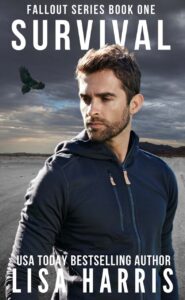
 The award-winning author of Comfort Songs, Comfort Plans, and Comfort Foods digs into the life of single-mom Anna Weber, an appraiser who gives value to other people’s found treasures. On assignment to research a handwritten sheet of music, Anna helps a stranded motorist, only to discover she’s rescued retired NFL quarterback Jack Moses. His confidence and fascination for solving problems makes him impossible for Anna to ignore even as they both dart along separate deadlines to save the finances at an inner-city school. Little does Anna know that as she wrestles with secrets from her past and a suspicious approach to people, Jack is running too—dodging women, pro athletes, and a future with no definable end zone.
 Kimberly Fish has been a professional writer in marketing and media for over thirty years, with regular contributions to area newspapers and magazines. As an accidental historian, she wrote two novels, The Big Inch and Harmon General, both based on factual events in Longview, Texas that changed world history. Kimberly also offers a set of contemporary women’s fiction, based in the Texas Hill Country, that reveal her fascination with characters discovering their grit and sweet, second chances; all four of these novels have won distinguished awards
 Opening a new Kimberly Fish novel – especially a Comfort Stories novel – is more than just the beginning of a good read. It’s a road trip back to the fictional home town we all wish we were from. It is, as described in this latest installment, Comfort Zone, “a town of free-thinkers,” full of entrepreneurial spirit, a love of art and nature, and kind hearts.



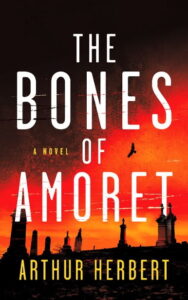 In this enigmatic follow up to his critically acclaimed debut novel The Cuts that Cure, Arthur Herbert returns to the Texas-Mexico border with this saga of a small town’s bloody loss of innocence.
 Arthur Herbert was born and raised in small town Texas. He worked on offshore oil rigs, as a bartender, a landscaper at a trailer park, and as a social worker before going to medical school. For the last eighteen years, he’s worked as a trauma and burn surgeon, operating on all ages of injured patients. He continues to run a thriving practice.

![XTRA TheBigEmpty-StaticMed ad[7102]](https://www.bibliotica.com/wp-content/uploads/2021/11/XTRA-TheBigEmpty-StaticMed-ad7102.jpg)

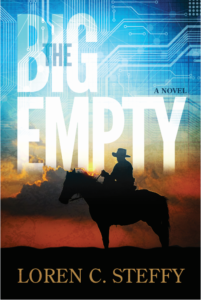 When Trace Malloy and Blaine Witherspoon collide on a desolate West Texas highway, their fender bender sets the tone for escalating clashes that will determine the future of the town of Conquistador.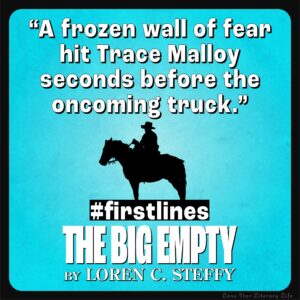
 Loren C. Steffy is the author of five nonfiction books. He is a writer at large for Texas Monthly, and his work has appeared in newspapers and magazines nationwide. He has previously worked for news organizations including Bloomberg and the Houston Chronicle, and he is a managing director for 30 Point Strategies, where he leads the 30 Point Press publishing imprint. His is a frequent guest on radio and television programs and is the co-host of the Rational Middle podcast. The Big Empty is his first novel. Steffy holds a bachelor’s degree in journalism from Texas A&M University. He lives in Wimberley, Texas, with his wife, three dogs and an ungrateful cat.
 Loren C. Steffy’s debut novel is the perfect blend of his journalistic experience and a flair for good storytelling.
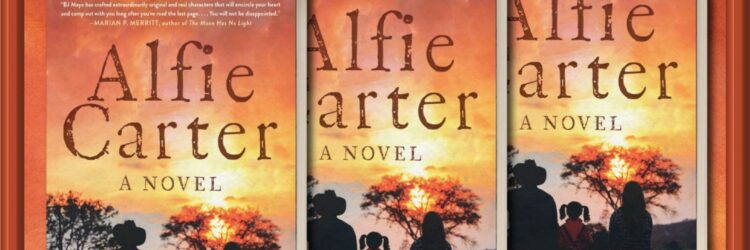
 The seemingly never-ending Cabinda War (1975—) has left multitudes dead in its wake and thousands of children homeless and orphaned.
 BJ Mayo was born in an oil field town in Texas. He spent the first few years of his life living in a company field camp twenty-five miles from the closest town. His career in the energy industry took him to various points in Texas, New Mexico, Colorado, Utah, Louisiana, Bangladesh, Australia, and Angola West Africa. He and his wife were high school sweethearts and have been married for forty-six years with two grown children. They live on a working farm near San Angelo, Texas.
 Alfie Carter is one of those novels that should be on everyone’s reading list, because it’s such a well-crafted, compelling story. Actually, it’s two stories that become entangled at the end of the book, but even though Jackaleena’s story begins in Africa and involves some horrific scenes of the type typically only seen in 30-second clips on CNN, and Alfie’s begins with him climbing a mountain to spend some time camping in order to get out of his own head, the themes are the same: identity, purpose, and faith.