
About the book, The Black-Marketer’s Daughter
- Category: Contemporary / Literary Fiction / Multicultural
- Publisher: Atmosphere Press
- Date of Publication: October 13, 2020
- Number of Pages: 166 pages
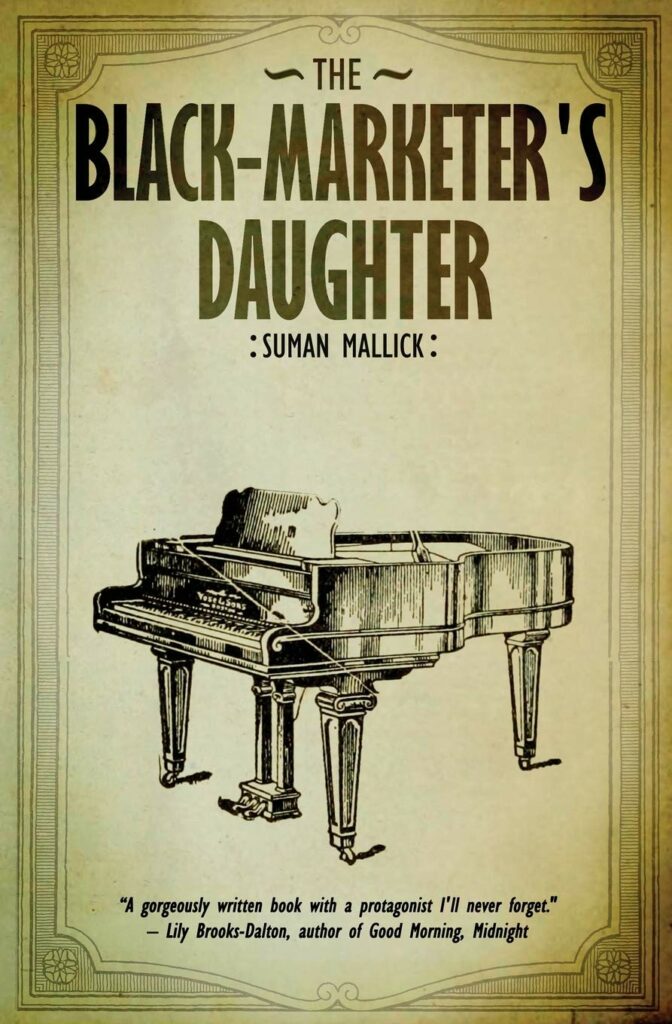 Zuleikha arrives in the US from Lahore, Pakistan, by marriage, having trained as a pianist without ever owning a real piano. Now she finally has one-a wedding present from her husband-but nevertheless finds it difficult to get used to her new role of a suburban middle-class housewife who has an abundance of time to play it.
Haunted by the imaginary worlds of the confiscated contraband books and movies that her father trafficked in to pay for her education and her dowry, and unable to reconcile them with the expectations of the real world of her present, she ends up as the central figure in a scandal that catapults her into the public eye and plays out in equal measures in the local news and in backroom deliberations, all fueled by winds of anti-Muslim hysteria.
The Black-Marketer’s Daughter was a finalist for the Disquiet Open Borders Book Prize, and praised by the jury as a “complicated and compelling story” of our times, with two key cornerstones of the novel being the unsympathetic voice with which Mallick, almost objectively, relays catastrophic and deeply emotional events, and the unsparing eye with which he illuminates the different angles and conflicting interests at work in a complex situation. The cumulative effects, while deliberately unsettling to readers, nevertheless keeps them glued to the pages out of sheer curiosity about what will happen next.
Praise for this book:
- “Mallick offers an impressively realistic depiction of a woman caught between tradition, family, and her own sense of empowerment.” ~ Kirkus Reviews
- “The Black-Marketer’s Daughter is a key-hole look at a few things: a mismatched marriage, the plight of immigrants in the U.S., the emotional toll of culture shock, and the brutal way Muslim women are treated, especially by men within their own community. Titling it—defining the heroine by her relationship to a man rather than as a woman in her own right—suggests how deeply ingrained that inequality can be.” ~ IndieReader Reviews
- “The Black-Marketer’s Daughter is the portrait of a woman who endures violence, intimidation, xenophobia and grief, and yet refuses to be called a victim. In this slender novel, Suman Mallick deftly navigates the funhouse maze of immigrant life in contemporary America—around each corner the possibility of a delight, a terror, or a distorted reflection of oneself.” ~ Matthew Valentine, Winner, Montana Prize for Fiction; Lecturer, University of Texas at Austin
Buy, read, and discuss this book:
Amazon | Bookshop.org | Goodreads
 About the author, Suman Mallick
Suman Mallick received his MFA from Portland State University and is the assistant managing editor of the quarterly literary magazine Under the Gum Tree. He lives in Texas.
Connect with Suman:
WEBSITE | TWITTER | AMAZON | GOODREADS | INSTAGRAM
My Thoughts
 Suman Mallick’s debut novel The Black-Marketer’s Daughter is more than just a story. It’s a sonata that unfolds one movement at a time, in lyrical language that compels, frustrates, infuriates, and finally delights the reader. It’s a portrait of the culture-within-a-culture of Muslim Pakistani immigrants to the United States, and specifically North Texas (where I also live) that exposes the harsh reality of assimilating into American society, of being a modern immigrant, and, yes, of the status of women in general, and abused women in particular. It’s also a celebration of diversity, of identity, and of personal strength and growth.
And all that in less than two hundred pages!
Zuleikha, our heroine, is a musician and a dreamer. She wants love, and wants to be in love. At one point, she even explains to someone that the books and DVDs her father sold on the black market to fund her piano lessons and her dowry taught her to fall in love with the idea of falling in love. It is her point of view through which this story unfolds, and that view is rich and complex. She’s intellectually curious, but has never really bothered to expose herself to current affairs, choosing the focus on the arts section of newspapers.
Iskander, her husband via an arranged marriage is not a villain, though parts of this story attempt to paint him as one, but is reserved, stoic to the point where I felt like I was reading about some of my husband’s midwestern relatives who are much the same. For the first half of the novel, he is simply there. An unremarkable presence in the life of a woman who is meant to be remarkable, and clearly a poor match for Zuleikha.
Mallick’s tale isn’t one of happy families, though. Rather it’s about what we do when we are desperate for love, and cannot find it. He writes about the darker events in this novel with the same craft he used to describe music, motorcycles, and a Ferris wheel ride at the state fair. There is only one violent scene, and it’s written so that you cannot look away, but must bear witness, because it represents many, many violent scenes that happen outside the pages of novels.
What I loved about this book was the language. Mallick’s writing is music The high points sing in lofty trills and glorious crescendos. The heavier moments thud like the bass notes on a piano keyboard, dark and thunderous, but still gripping. Even the parts of the story that were dark and disturbing were so carefully phrased that I couldn’t skip through them, but had to drink in every delicious word.
I also appreciated that Mallick didn’t pause his narrative to explain Muslim or Pakistani terms for white readers. Articles of clothing, items of food – these were referred to as Zuleikha and Iskander would have grown up calling them, and that made the story more real. He trusted us to either figure things out from context or look them up. It takes a confident author to trust his readers to meet him where he stands.
If I had one problem with this novel it was only that it was relatively short. 166 pages may have completed the story, but I wanted more.
If you want a novel that you can read in a day, but may also choose to savor, with dynamic characters and amazing language, read The Black-Marketer’s Daughter. You will be richer for the experience.
Goes well with: chicken biryani, lamb kebabs, and Murree’s classic lager.
Visit the Other Great Blogs on This Tour
(or check out the Lone Star Literary Life tour page for direct links to each post.)
| 1/6/21 | Promo | Hall Ways Blog |
| 1/7/21 | Review | The Clueless Gent |
| 1/7/21 | Guest Post | Momma on the Rocks |
| 1/8/21 | Review | Forgotten Winds |
| 1/8/21 | Author Interview | All the Ups and Downs |
| 1/9/21 | Review | Bibliotica |
| 1/10/21 | Excerpt | Texas Book Lover |
| 1/11/21 | Author Interview | That’s What She’s Reading |
| 1/11/21 | Review | It’s Not All Gravy |
| 1/12/21 | Playlist | Chapter Break Book Blog |
| 1/13/21 | Review | StoreyBook Reviews |
| 1/13/21 | Scrapbook Page | The Page Unbound |
| 1/14/21 | Author Interview | KayBee’s Book Shelf |
| 1/15/21 | Review | Reading by Moonlight |
| 1/15/21 | Review | Missus Gonzo |





 “And through these ages untold, the river did act as the lifeblood of all those things alongside it.
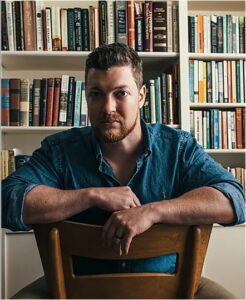 James Wade lives and writes in Austin, Texas, with his wife, Jordan. He has had twenty short stories published in various literary magazines and journals. He is the winner of the Writers’ League of Texas Manuscript Contest and a finalist of the Tethered by Letters Short Fiction Contest. All Things Left Wild is his debut novel.


 About the book, Christmas at the Marshmallow Cafe


 About the book, Christmas in Cockleberry Bay







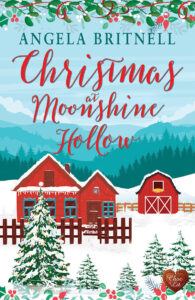 About the book, Christmas at Moonshine Hollow
 Angela grew up in Cornwall, England and returns frequently from her new home in Nashville, Tennessee to visit family and friends, drink tea and eat far too many Cornish pasties!



 Ellie says…


 About the book, New Beginnings at the Little House in the Sun
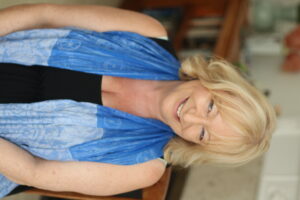 About the author, Chris Penhall


 QED Morningwood is a liar, braggart and teller of tall tales. When he shows up at the domino parlor with a mysterious Russian crate in the back of his pick-up truck, he confides to the players he is a ‘Shadow’ member of the NRA, not on their official membership roll, and has a load of rocket propelled grenades – all lies. The news spreads to the real Shadow NRA, the FBI and Homeland Security. Meanwhile, the Russian Ministry of Cultural Preservation sends an agent to retrieve the crate, the actual contents known only to the Russians.
 Rob Witherspoon was born and raised in rural Texas. He earned a BA in Physical Education, UT Arlington 1985 and a BS in Aerospace Engineering, UT Arlington 1990. He worked in the aerospace industry for 30 years before retiring in 2018. He lives in north central Texas with his wife and youngest daughter and has spent much of his life in rural communities and on the ranch. He combines his love for Texas, lying, the outdoors, engineering, and his children in his writing.



 About the book Forever 51
 A curious thing happens when you have the audacity to call yourself the death writer; people want to talk to you about death. A lot. This is all well and good for those daring types of writers like Mary Roach or Jessica Mitford, but for me it was initially problematic. Prior to declaring my morbid writing intention of exploring death professions during my first semester of Goucher College’s MFA program in 2008, I had little experience with death or grief, not to mention very little social engagement with the living. It wasn’t until after I finished the two years of research for this book that I was officially diagnosed with Social Anxiety Disorder and went through four months of Cognitive Behavioral Therapy through a research study at Southern Methodist University.