Book Review: The Last Christmas by Liz Fenwick

The Last Christmas


About the book The Last Christmas The Last Christmas 94D39922-8332-459F-997C-420AFCCE999C-THE LAST CHRISTMAS_KDP eBook_revised
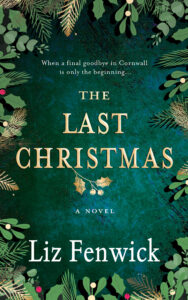
When a final goodbye in Cornwall is only the beginning…

Meredith Tremayne Russell has spent her life mapping the world, first in intelligence during WWII, and later as a professor. But at ninety-eight with time running out, she faces a journey she cannot chart, a return to her old Cornish home to sell it and to scatter her beloved husband’s ashes.

With her is her twenty-five-year-old granddaughter, Grace, a dyslexic who believes she is a failure in a family of academics. For Grace the trip is a welcome escape from her mother’s demands. But when she unlocks her great-grandmother’s abandoned art studio, she finds a legacy of a passionate artist and a French resistance fighter.

As Meredith relives the frozen December of her 1946 wedding, she understands her final mission isn’t to say goodbye to her old home, but to draw one last map—showing Grace how to navigate a life of her own making.

Buy, read, and discuss this book:

Amazon (US)  | Amazon (UK) | Direct from the Author | Goodreads

Win a Copy of this Book:

Live in the UK? Enter to win a paperback copy of this book. CLICK HERE TO ENTER.


About the author Liz Fenwick  Liz Fenwick

Liz Fenwick, dubbed ‘the queen of the Cornish contemporary novel’ by The Guardian,  is an award-winning author of emotional, immersive, feel-good fiction. Her books are filled with history, mystery and love. She loves stories that pull her into their world like they did when she was young so that’s what she writes.

When she’s not writing, she’s procrastinating on Instagram, plot walking, reading and painting. She lives in Cornwall with her husband and two mad cats.

Connect with Liz:

Facebook | Instagram | X (Twitter) | Tiktok 


My Thoughts QueenMAB1026

I’m new to Liz Fenwick’s work, but based on my recent devouring of The Last Christmas, I’ve been missing out on some incredible storytelling.


I read this book over the course of a week, allowing it to keep me company in a couple of waiting rooms and on a fairly long car ride (no, I wasn’t driving). When I finished it, I didn’t want to leave Kestle behind or say goodbye to nonagenarian Meredith Tremayne Russell (aka Merry) and her American granddaughter, twenty-five-year-old Grace. Instead, I wanted to stay for Christmas dinner, toast myself by the fire where the Yule log was burning, and enjoy a couple of retro cocktails.


The story is set in 2012, making it quasi-contemporary, but the year matters less than the setting. Fenwick writes with such a vivid sense of place—particularly fitting when one of her main characters was a wartime cartographer—that I felt as though I were experiencing the streets of Cornwall (including Grace’s dreaded double traffic circle) and the chilly December weather myself.


I appreciated the alternating points of view between Merry and Grace, and especially the way Grace’s dyslexia was woven into the story rather than mentioned once and forgotten. Merry, meanwhile, is a wonderful blend of wistful nostalgia and the raw practicality that comes from being ninety-eight years old. Both women feel fully realized, and their relationship gives the story much of its warmth.


The supporting characters are equally delightful, an assortment of helpful neighbors and old friends who make Kestle feel like a place where people have lived and loved for generations. Not all the relationships are so comfortable, however. Merry and Grace each have a fraught relationship with the same woman: Merry’s daughter, who is also Grace’s mother. For Merry, the distance is marked by a lack of communication, while Grace’s relationship with her mother is one of open contention, fueled by the weight of academic expectations. Grace finally stands up for herself, declaring, “I have a very good brain, just not an academic one, so back off.” It’s a satisfying moment, and one that speaks to the novel’s larger themes of family, identity, and finding one’s own way.


If certain elements of the plot felt predictable (no spoilers here!), that didn’t detract from the overall reading experience. It was the journey that mattered, and the journey of this book was beautifully mapped.


Goes well with: A pink gin followed by proper fish and chips, preferably in a riverfront pub on a chilly late-autumn evening.


Visit the Other Great Participants on this Tour
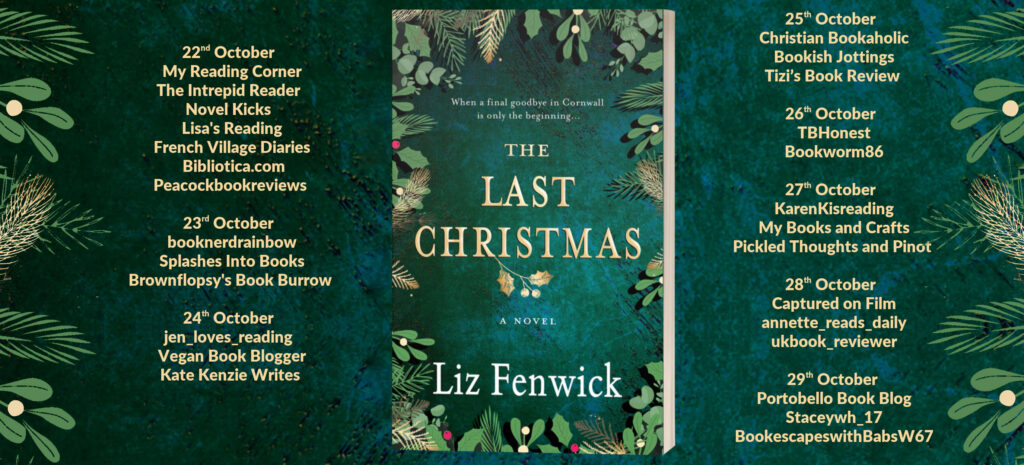
The Last Christmas Full Tour Banner

Book Review: Narcissi by Babette Fraser Hale

04 Campaign Banner

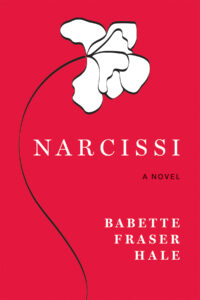
About the book, Narcissi: A Novel NARCISSI cover

  • Genre: Women’s Fiction / Texas Fiction
  • Publisher: Winedale Publishing
  • Publication Date: October 15, 2026

Ten women fall for Cole Burnett, a traveling Texas writer. He is the kind of man whose need for freedom should send lovers running in the opposite direction. But he has a lanky charisma and the gift of listening, rare enough at any time. The women he encounters in Narcissi, a novel-in-stories, find his attention compelling, and they all get hurt, or cause hurt. But hurt is never the whole story.

Each woman brings her own complicated life into her time with Cole, conflicts with husbands, traumas survived, needs postponed, children. And children grow up with questions.

Burnett understands that loneliness compels him toward the women he meets. But none of them seems to reach where the loneliness resides, where whatever’s missing pushes him to keep moving, to find a purpose for his future. Later, after the death threat, traveling becomes a way to stay alive.

Buy, read, and discuss this book:

Amazon | Barnes & Noble | Goodreads | TAMU Press |Brazos Bookstore

Watch the reel for this book:


About the author, Babette Fraser Hale Babette Fraser Hale

Babette Hale is the author of A Wall of Bright Dead Feathers, winner of the 2022 Troncoso Award for debut fiction from the Texas Institute of Letters, and a memoir, This Familiar Heart, about her relationship with her late husband, Leon Hale.

In addition to writing fiction, she has been a magazine feature writer, columnist, book editor, publisher and part owner of a bookstore. She lives in Texas and is a member of the Texas Institute of Letters.

Connect with Babette:

Website |  Instagram | TikTok | Amazon | GoodReads | Facebook


My Thoughts QueenMAB1026

I recently had the opportunity to interview Babette Fraser Hale for Lone Star Literary Life, and one of the first things I told her was how much I loved her use of language, which manages to be both precise and lyrical. Consider the opening of the first chapter: “Free is not exactly what Cole Burnett feels, walking away from the house. But he is certainly unencumbered.” In just two sentences, we have a sense of how Cole thinks, and even how he sounds.

“I do love a really good sentence,” Hale told me, and Narcissi is built from a whole lot of them.

We discover later that Cole, a Texas writer, writes a monthly magazine column called “Slow Travel,” which is also a fitting description of this book: a slow journey through the life and loves of a writer, beginning in 1980, with plenty of unexpected turns along the way.

But while Cole is the central character, this “novel in stories” is really about the women he encounters. Each is distinctly herself. There is no particular type, no interchangeable parade of romantic interests. Hale gives these women agency, personality, and histories of their own, while allowing us to experience Cole’s story through their eyes.

04 Caption Banner Narcissi

Nor does the narrative unfold like a catalogue of relationships. The interconnected stories revisit several women, linger with them, diverge, and return. It’s an elegant structure, so deftly crafted that when the novel shifts perspectives, the transition feels entirely natural.

At roughly 300 pages, Narcissi is a substantial read, but it’s also one rich with discovery. Cole gradually comes to understand his complicated relationship with intimacy and his seemingly insatiable wanderlust. The women, meanwhile, make discoveries of their own, often at stages of life when conventional fiction might suggest that reinvention is no longer possible.

And readers are invited to make discoveries, too. Perhaps the most important is that understanding why someone behaves as he does isn’t the same as absolving him of responsibility. Explanation is not excuse, and empathy needn’t erase accountability.

In another writer’s hands, Narcissi might have been merely the story of a literary man with a wandering eye and a reluctance to commit. Instead, Babette Fraser Hale flips that script, offering something far more nuanced: a deeply human exploration of longing, connection, self-discovery, and the ways we are all fallible and perfectly imperfect.

And she does it, sentence by beautiful sentence.

Goes well with: a chopped beef sandwich and a Shiner bock enjoyed at a picnic table outside the local BBQ place. 


Visit the Other Great Participants in this Campaign

To learn more about the book, look for #LSLLNarcissi on your preferred social media platform.

Click to visit the Lone Star Literary Life Campaign Page for direct links for each reviewer participating.

LSLL