The Sunday Salon: A Tale of Three Lauras

Over the last week or so, I’ve been living on the prairie. Not the North Texas prairie that is still crusty with drought, despite recent and forthcoming rain, though of course, technically our city IS on the prairie, but the prairie as brought to life by Laura Ingalls Wilder and two of her modern fans.
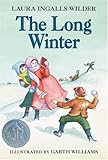
The Long Winter

I grew up reading the Little House… books, and re-read them when I moved to South Dakota to marry Fuzzy in 1995. They have new dimension when your husband is from a town just half an hour from the real Little Town on the Prairie, and your new niece and nephews attend Laura Wilder Elementary School!

I read The Long Winter last winter (and early Spring) after we returned home from a trip to Iowa in early February (for a family funeral) and after I found the amazing blog/website Beyond Little House. The members of that site were in the middle of a read-along of that book, and I wanted to participate, but was so busy…and then life exploded in other ways.

During the intervening years, I’ve visited a few of the home sites (De Smet, many times, Plum Creek, Walnut Grove, keep meaning to visit Independence, but never have), read a good portion of the published literature about Mrs. A. J. Wilder, and considered a Laura project of my own.

That consideration has been sparked, recently, by two new(ish) Laura-related books by fans who are roughly my age.
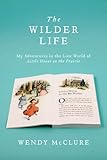
The Wilder Life

The first I encountered is a humorous memoir by Wendy McClure. It’s called The Wilder Life: My Adventures in the Lost World of Little House on the Prairie, and it’s about the author’s journeys to the various homesites, and her attempts to bring a bit of “Laura World,” as she calls it, into her own world. (It’s at this point that I must confess: My mother used to make sunbonnets for me, I dressed as Laura for Halloween, 1977, and I have boiled syrup to pour over snow, but I have never considered buying a churn and making my own butter.)

McClure’s book resonated with me for another reason – her partner’s name (at least, the one in the book) is the same as Fuzzy’s real name.

Unlike McClure, however, I loved the television show. Oh, I knew it wasn’t accurate, but just as I’ve often said of the Harry Potter movies, that show was what might have resulted had the real Laura sold her story to the media herself. Also? It was fun to watch. My friend Jill would come over on Monday nights and we’d do our homework while waiting to see if Laura and Almanzo would finally kiss.

I was, however, a fan of the books first, and there were times in Colorado when there were three feet of snow on the ground and school was closed for days because the buses couldn’t get over the pass that I had the barest glimpse of what that Long Winter might have been like. (After my first real winter in South Dakota, I realized that Colorado winters were mild by comparison. I also realized that as much as I might like to imagine living on the prairie in a claim shanty, I’m a modern woman, and I am DONE with serious winter.)
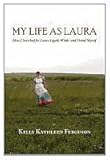
My Life as Laura: How I Searched for Laura Ingalls Wilder and Found Myself

I devoured McClure’s book and wanted more. Coincidentally, I was led to my other Laura-book of this week, another memoir, by a woman just two years older than I am. Her name is Kelly Kathleen Ferguson, and her book – which I read in one day, and finished while soaking in a tub of lavender-scented bubbles – is My Life as Laura: How I Searched for Laura Ingalls Wilder and Found Myself.

Ferguson is a bit wilder than McClure, in that – on a mission of self discovery – she donned a prairie dress, and wore it on a two week marathon visit to all of the midwestern homesites of the Ingalls and Wilder clans. Her book is also funny, candid, and, at times, poignant, and as I read it I almost – ALMOST – wanted to be single again, so I could just uproot myself and move to another city and write.

Her description of her time at Prairie Manor, specifically, made me want to go back to Dakota and spend the night there, even though I HATE the prairie in summer. I was even ThisClose to calling Fuzzy’s family and asking if we could drive up and crash their Thanksgiving, just so we could drive a few miles on the Laura Ingalls Wilder Memorial Highway during the trip.

But that’s the beauty of books – they allow you to live vicariously through another person, and then, put them down having learned something about yourself as well as something about the author.

I enjoyed both of the books I read this week, and have arranged to interview Ms. Ferguson for All Things Girl. I’ve also started a fresh re-reading of all the Little House books, because even if I don’t do anything with it, I have to write the Laura-related story that has been perking in my brain for the last 16 years.

And if I’m sort of wishing I could have a Christmas party where we all get a tin cup, a penny, and a stick of candy, in a room decorated by paper chains and popcorn strings, well, I know of at least two women who probably have the same kind-of wish.

The Sunday Salon: Monster Mash?

Illustration from Mary Shelley's Frankenstein

When we think of monsters – not monstrous people or monstrous acts – but Hollywood-style monsters, two of the first that come to mine have to be Frankenstein and Dracula.

Two years ago, as part of an English/Literature tutorial for a friend’s son, we studied Bram Stoker’s Dracula, and noted the differences in the way the character was written and the way he’s appeared since. For example: Dracula can walk about during the day, but his powers are limited to that of an ordinary person; his powers include the ability to take the forms of bat or wolf, fog, or elemental dust.

Then, too, there’s the ending – or rather, the ending of the Count, not quite the ending of the novel:

By this time the gypsies, seeing themselves covered by the Winchesters, and at the mercy of Lord Godalming and Dr. Seward, had given in and made no further resistance. The sun was almost down on the mountain tops, and the shadows of the whole group fell upon the snow. I saw the Count lying within the box upon the earth, some of which the rude falling from the cart had scattered over him. He was deathly pale, just like a waxen image, and the red eyes glared with the horrible vindictive look which I knew so well.

As I looked, the eyes saw the sinking sun, and the look of hate in them turned to triumph.

But, on the instant, came the sweep and flash of Jonathan’s great knife. I shrieked as I saw it shear through the throat. Whilst at the same moment Mr. Morris’s bowie knife plunged into the heart.

It was like a miracle, but before our very eyes, and almost in the drawing of a breath, the whole body crumbled into dust and passed from our sight.

I shall be glad as long as I live that even in that moment of final dissolution, there was in the face a look of peace, such as I never could have imagined might have rested there.

The Castle of Dracula now stood out against the red sky, and every stone of its broken battlements was articulated against the light of the setting sun.

More than one more modern author, among them Fred Saberhagen, has looked at this death scene, and noted that since 1) You can’t kill a vampire with a knife, and 2) Dracula crumbled into dust, he was not actually killed at the end of the novel. A novel, which by the way, he appears on only 58 pages of. The rest of the 200+ pages are spent talking about him, his powers, his deeds, and everyone else’s life. Like the shark in Jaws, Dracula-the-character is scariest when we don’t actually see him.

But Dracula was a past project.

For the last month, I’ve been reading mysteries, partly because I love them, but partly because it’s autumn, and I think mysteries go well with lengthening shadows and crisper evenings, but the book I began this morning takes me back into classic monster fare.

It’s Mary Shelley’s Frankenstein, which, I’m almost embarrassed to admit, I’ve never actually read. I remember seeing Boris Karloff as the Monster in the old movie, and being chilled at the scene with the little girl, the Monster, and the flower. I remember reading riffs on Frankenstein, and of course I know that Rocky Horror for all its silliness is still derivative of Shelley’s work.

So as the nights lengthen further, the weather grows cooler even where I live, in Texas, and the shadows turn into puppet creatures beckoning us to explore the dark and deep parts of our psyches, I’m about to take a break from conventional mysteries and thrillers, leave the comfort of cozy novels, and begin reading Frankenstein.

The Sunday Salon.com

Banned Books Week

Banned Books Week

September 24-October 1st is Banned Books Week, the week when bookstores, libraries and teachers encourage people to explore a “frequently challenged” or banned book. Some of my favorite books – everything from the Little House series, to Huckleberry Finn and the Harry Potter books to The Color Purple and The Catcher in the Rye have been banned or challenged by people who believe that protecting their kids from free thought and different ideas is somehow good.

I’m fortunate. I was born into a family of avid readers and free thinkers, and taught to make my own decisions. Books – banned and not – taught me much about life, love, and the inherent goodness of people.

So, go read a banned book this week. Even better, if you’re a parent or caregiver, read one with your child, and discuss the themes that caused it to be challenged by censors.

Celebrate your freedom to read.

Sunday Salon: Bookless?

The Sunday Salon.com

September is nearly over, and I’m pretty sure I haven’t finished reading a single book. As is my custom, I have several started, but nothing is capturing my attention. I could blame work, or the weather, or any number of other things, but the reality is that I just haven’t been able to fall into anything I’m reading.

I have this urge to invite people over just to read plays or short stories and discuss them. Not books. I have no patience for book clubs and book groups, because I read too quickly (most of the time), and by the time everyone else has finished the book, I’ve read five others. I was this way in school, too, which made literature classes difficult for me. I wish it had occurred to me to ask for the exam work as soon as I finished reading a book; it never did.

And so, this blog lies empty-ish, and I skipped posting anything to Sunday Salon last week, and I want to read, I do, but my brain won’t engage.

On the other hand, I’ve written twelve pages of a story I’m working on for fun, and five of my novel, so the month hasn’t been completely useless.

Sunday Salon: Re-discovery

The Sunday Salon.com

Have you ever bought or borrowed a book, either because it looked interesting, or because a friend recommended it, and then found that you’ve actually read it before?

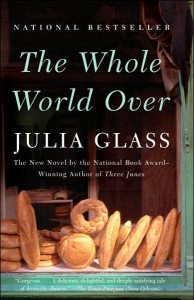
That happened to me recently. I was exchanging emails and blog comments with my friend Becca, because I’d mentioned that one of my favorite books to re-read was Bread Alone. She suggested I might like The Whole World Over, by Julia Glass. Later that weekend, I bought a copy at the local used bookstore, in hardcover, for under $5.

That evening in the bubble bath, I cracked open the book, only to find the opening pages eerily familiar. Sure, there’d been a sense of deja vu when I’d looked at the cover in the store, but I’d just assumed I’d seen similar cover art. Nevertheless, I began reading the book anew.

And the thing is, I don’t mind this sort of rediscovery. I remember that I’d enjoyed the book the first time I’d read it, but I read very quickly, so there are times when, depending on my mood in the moment, certain things catch my attention differently. Example: When I was little, and read Little Women for the first time, the part that I cried through was when Beth died. When I read it again as a young adult, who’d had some experience with love and relationships, I was moved by the scene where Jo refuses Laurie, because on one level, we want these two brash kids to be together, but anyone who’s had a best friend of the opposite gender knows that those relationships never work when they cross into romance.

The Whole World Over, then, is going to remain my “bathtub book” for the next couple of weeks. I know the story well enough that I don’t need to race through it to see what happens, but that doesn’t mean I won’t appreciate a slow, savoring read of it while I soak in lavender-scented bath bubbles.

What about you? Do you ever “re-discover” a book? Do you embrace the situation, or feel cheated out of a new story?

Happy Birthday, Roald Dahl

James and the Giant Peach

Roald Dahl, author of two of my favorite children’s books, James and the Giant Peach and Charlie and the Chocolate Factory was born on September 13th, 1916. My first introduction to his work was in a grade school classroom in Georgetown, CO. I was in second grade, but taking some classes with third-graders, and one or two with fourth-graders. I don’t remember which class, exactly, had a teacher who spent the last twenty minutes of every day – or maybe every Friday – reading us great stories.

James and the Giant Peach was one of those stories. Another was From the Mixed-Up Files of Mrs. Basil E. Frankweiler, but that book is by E. L. Konigsburg and thus relegated to another post.

Charlie and the Chocolate Factory

In any case, while I was researching something completely different, I came upon a newsletter from Cambridge University talking about the celebration of Roald Dahl Day next week, and about the 50th anniversary of James and the Giant Peach.

The essay is by Professor Maria Nikolaejeva. An excerpt is below, and the full text of the essay can be found here

Dahl is one of those many writers who are significantly more famous for their children’s books than their works for a general (that is, adult) audience. Although his short stories are truly brilliant, he would hardly be hailed exclusively for them among the “50 greatest British writers since 1945” (The Times, 5 January 2008). The fact that this canon includes a number of children’s writers (beside Dahl, C S Lewis, Philippa Pearce, Allan Garner, Philip Pullman and Rosemary Sutcliff) is remarkable in itself; it demonstrates that children’s literature cannot any longer be dismissed as second-rate; and I would argue that Roald Dahl has contributed substantially to this recognition, repeatedly mentioned as the best-loved, best-selling author without the, regrettably, still derogatory appellation “children’s”.

(I refrained from changing the punctuation from British to American.)

The Sunday Salon: Shifting Seasons

The Sunday Salon.com

Labor Day weekend doesn’t really have a lot of significance when you work from home as a writer. My “office” is the Internet, which never closes, and there are weeks when I choose to work Saturday and Sunday and skip Monday and Tuesday, and other weeks when I work a more conventional schedule. It depends on deadlines and whether or not I’m feeling at all creative.

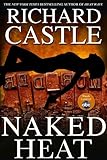
Naked Heat

In the part of Texas where I live, Labor Day weekend doesn’t bring much of a temperature change, either. Sure, the days of being able to swim instead of sweat for exercise are dwindling, and the nights are getting a little cooler, but summer often lingers into October here, at least, if you go by the thermometer.

Long years of conditioning, however, have marked this weekend as the time when I shift my reading away from summer “beach” books (and I mean that literally – last year I read all of Elin Hilderbrand’s Nantucket novels; this year I still have Summer Rental and Maine to finish) to other types of books.

For some reason, I read a lot of mysteries in the fall. Maybe it’s because the falling leaves and cooling days lend a touch of unpredictability to my mood, or maybe it’s because the earlier sunsets and lingering darkness in the morning are sort of murky and shadowy.

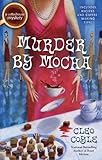
Already in the last week or so, I finish last year’s “Castle” tie-in Naked Heat, and I’m half-way through Cleo Coyle’s latest coffeehouse mystery, Murder by Mocha.

Murder by Mocha

I’ll read other stuff of course, but for me, fall is Mystery Season.

What about you? Does your reading shift with the calendar, or do you simply read whatever your mood calls for?

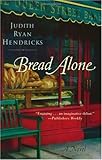
30-Day Book Meme #5: Bread Alone

Bread Alone, by Judith Ryan Hendricks

The 30-Day Book Meme asks me to write about a book “that makes me happy,” and the first title that popped into my head is Bread Alone by Judith Ryan Hendricks. I love this book so much – about a woman who is dumped and left mostly penniless by her cheating husband, moves to Seattle, works in a bakery, and eventually rediscovers her best self, her romantic self, and her love of baking and fabulous bread.

Partly, I love this book because it’s a cafe story, and partly it’s because – except for the cheating husband part – she’s living one of my fantasies. I’ve bought and given away multiple copies of this novel. It’s well written, draws you in, and has vivid characters.

If only it came with freshly-baked sourdough, it’d be just about perfect.

The Sunday Salon: Free Kindle-ing

The Sunday Salon.com

It was roughly a year ago that I received my Kindle e-reader as a birthday present from my aunt. I fell in love with it almost immediately, although I confess that the ability to have a new book in just a few seconds means that I spend far more on ebooks than I ever did on physical ones, especially since I still buy paperbacks to read in the bath!

Soon after I received my Kindle, I was introduced to ereaderIQ.com, a website that compiles new releases, price changes, and even free books for ereaders, and helpfully shoots you a daily email message with links to them.

Now, some of the free books are obviously free because they’re self-published (which that doesn’t mean they’re BAD, though it often means they’re either explicit sexual or explicitly Christian), but others are the first books in established series that are free to garner new audiences, or free because they’re backlisted, or free because they’re previews…

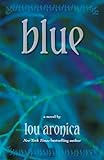
Blue, Lou Aronica

The thing is I’ve discovered some amazing work that people are literally giving away for free. The week before my nephew died, I downloaded a free book called Blue, by Lou Aronica, which was about a divorced father trying to maintain a relationship with his teenaged daughter, while she struggled with a relapse of cancer. It sounds really sad, and I guess parts of it are, but it was also a lovely fantasy, a brilliant father-daughter piece, and actually, I found it to be full of healing and hope.

I didn’t review it, because – well, I didn’t review anything, or maintain any of my blogs, really, between April and August. But I thought it was a great read, and I heartily recommend it.

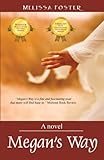
Then, last week, as part of my self-indulgent birthday week of reading as much as possible, I downloaded a free copy of Megan Foster’s award-reading novel Megan’s Way. I finished it on Thursday or Friday, and tweeted about it, and ended up in a brief chat with the author. It, too, was a lovely book with a really beautiful parent-child relationship at its heart – this time with the title character – Megan – and her teen daughter Olivia.

Megan's Way, Melissa Foster

More magical realism than true fantasy, this was exactly the book I needed to read at the time that I downloaded it, and I loved it so much that I’m eager to read more of Foster’s work. Look for the review of Megan’s Way here on this blog in the next day or so (I meant to get it done over the weekend but life conspired against me).

These are just two examples of books I’ve read for free (or very little money) via my Kindle. Do I still love cracking open a paperback, or going to a reading and buying a signed copy? Of course! But I love being able to have a portable library as well.

My only dislike of my Kindle – and the technology in general – is that not EVERY book is lendable. After all, every hardcover and paperback is.

Booking through Thursday: History

btt2

On Thursday, August 25th, Booking through Thursday asked:

Sometimes I feel like the only person I know who finds reading history fascinating. It’s so full of amazing-yet-true stories of people driven to the edge and how they reacted to it. I keep telling friends that a good history book (as opposed to some of those textbooks in school that are all lists and dates) does everything a good novel does–it grips you with real characters doing amazing things.

Am I REALLY the only person who feels this way? When is the last time you read a history book? Historical biography? You know, something that took place in the past but was REAL.

When I was fourteen, I read Nicholas and Alexandra several times, and loved it every time. Some of my go-to books are biographies, published journals, etc. Madeleine L’Engle’s Crosswicks quartet are a series of her jounals turned into books, that were contemporary (more or less) when originally published, though have become historical now.

I love biographies, but the most recent I’ve read, those of Hilary Clinton and Queen Noor, are more contemporary than not. I love memoirs, but most of those I’ve read recently, like Carlos Eire’s Waiting for Snow in Havana, and my birthday-book from my aunt this year, Under the Big Top: A Season with the Circus have also been fairly contemporary as they both take place in the 20th and 21st centuries.

I know I’ve read things that are truly historical, but nothing of that ilk is speaking to me just now.