Review: Chasing the Sun, by Natalia Sylvester

About the book, Chasing the Sun Chasing the Sun

Hardcover: 304 pages

Publisher: New Harvest (June 3, 2014)

Partially inspired by her grandfather’s kidnapping in Peru, CHASING THE SUN: A Novel (Lake Union/New Harvest; on sale June 3, 2014) is Natalia Sylvester’s suspenseful debut about a man whose wife is kidnapped just as their marriage is falling apart.

After going out for an errand, Marabela Jimenez doesn’t return home and her husband suspects she has left him – again. Only, the next day a letter arrives in the mail that reads:

 Querido Andres,

I’m being held by three men who say they’ll keep me safe as long as you cooperate. They say that means no cops and no media. They say they’ll call when they’re ready to talk to you. Kiss our children for me and tell them not to worry. Keep me in your thoughts as I will be keeping you in mine.

Marabela

Despite their crumbling relationship, Andres quickly realizes he must do whatever it takes to get Marabela home. He can’t possibly afford the ransom the kidnappers demand or handle this threat to his family alone so he hires a consultant to help negotiate with the terrorists. He also reaches out to his estranged mother, who has never cared for Marabela and even reconnects with an old friend who may hold the key to his past and his wife’s future. As each day passes without the return of his wife, Andres is forced to come to terms with whether or not what he and Marabela have left is worth saving and how far he’ll go to bring her home.

Set against the backdrop of the political turmoil and terrorist threats of 1992 Peru, CHASING THE SUN is a story of how trauma has a way of exposing our most difficult truths and healing past wounds and regrets.

Buy, read, discuss

Amazon | Barnes & Noble | Books-a-Million | Goodreads


About the author, Natalia Sylvester Natalia-Sylvester_credit-Eric-Sylvester-286x300

Natalia Sylvester was born in Lima, Peru. She came to the U.S. at age four and grew up in South Florida, where she received a B.A. in creative writing from the University of Miami. A former magazine editor, Natalia now works as a freelance writer in Austin, Texas.

Connect with Natalia

Website | Facebook | Pinterest | Twitter


My Thoughts

Despite the fact that this novel opens with a kidnapping, and is mainly focused on a marriage that is falling apart rather than one that is coming together, the author’s sense of place, her vivid descriptions, her three-dimensional characters, are all so compelling that I literally could not put it down, reading it straight through in a single evening.

And not even in the bath.

It’s heart-achingly honest, sad but with bright moments, and ultimately so completely truthful that I felt as though I knew these people. And maybe that’s why it works, because while the situation is anything but normal, the characters are as real, as substantial, as our own family members, friends, and neighbors.

I really like that, unlike any other novel dealing with the same subject, the focus would have been on the one who was kidnapped, the wife, Marabela. Instead, it’s very much Andres’s story, and in choosing to make him our POV character, in choosing to have him be sympathetic, author Sylvester forces us to look at our own culture, our own relationships, and see exactly how we cast our gender and familial roles.

Chasing the Sun is simply brilliant. Deep, satisfying, literary brilliance.

Goes well with arroz con mariscos (though I prefer mine without octopus) and a really good wine.


TLC Book Tours

This review is part of a virtual tour hosted by TLC Book Tours. For more information, and the complete list of tour stops, click HERE.

Review: Cutting Teeth, by Julia Fierro

About the book, Cutting Teeth Cutting Teeth by Julia Fierro

Hardcover: 336 pages

Publisher: St. Martin’s Press (May 13, 2014)

One of the most anticipated debut novels of 2014, Cutting Teeth takes place one late-summer weekend as a group of thirty-something couples gather at a shabby beach house on Long Island, their young children in tow.

Nicole, the hostess, struggles to keep her OCD behaviors unnoticed. Stay-at-home dad Rip grapples with the reality that his careerist wife will likely deny him a second child, forcing him to disrupt the life he loves. Allie, one half of a two-mom family, can’t stop imagining ditching her wife and kids in favor of her art. Tiffany, comfortable with her amazing body but not so comfortable in the upper-middle class world the other characters were born into, flirts dangerously, and spars with her best friend Leigh, a blue blood secretly facing financial ruin and dependent on the magical Tibetan nanny everyone else covets. Throughout the weekend, conflicts intensify and painful truths surface. Friendships and alliances crack, forcing the house party to confront a new order.

Cutting Teeth is about the complex dilemmas of early midlife—the vicissitudes of friendship, of romantic and familial love, and of sex. It’s about class tension, status hunger, and the unease of being in possession of life’s greatest bounty while still wondering, is this as good as it gets? And, perhaps most of all, Julia Fierro’s warm and unpretentious debut explores the all-consuming love we feel for those we need most, and the sacrifice and compromise that underpins that love.

Buy, read, discuss

Amazon | Barnes & Noble | Books-A-Million | Goodreads


About the author, Julia Fierro Julia Fierro

Julia Fierro’s debut novel, Cutting Teeth, was listed as one of the “Most Anticipated Books of 2014” by HuffPost Books, The Millions, Flavorwire, Brooklyn Magazine, and Marie Claire. Her work has been published, or is forthcoming, in Guernica, Ploughshares, Poets & Writers, Glamour, and other publications, and she has been profiled in the L Magazine, The Observer, and The Economist.

Connect with Julia

Website | Facebook | Pinterest | Twitter


My Thoughts

Julia Fierro is an awesome writer.

I know that sounds really flippant, but seriously, she’s created this group of “mommies,” – a bunch of women, and one man – who are largely unlikeable, self-entitled, damaged people, and managed to make their lives and stories not only seem interesting, but in the process also made them into characters we can care about.

As a child-free woman in her early forties, I’m pretty certain Cutting Teeth was not written with me in mind, and, in truth, I found myself wanting to knock some sense into these people, make them wake up and realize that while their children really are not the little princes and princesses of the world, they are, in fact, actual (very small, unformed) people, and should be treated accordingly.

I also had to fight urges to crawl into the book and remind these women that it’s unhealthy (and kind of annoying) when women describe themselves as Moms or Mommies first, and only talk about their careers or the rest of their interests as things they squeeze in around the child. (This tendency annoys me in real life, as well.)

If these two statements make it seem like I didn’t “like” this book, you’re misreading. I did like it. I liked it well enough that even though I felt rather like a bug-eyed alien looking into a strange, new, world, I could accept these characters as people who could exist outside the scope of their pages.

And speaking of pages, Julia Fierro crafts an excellent story. The constant changing of POV means we get to see the way each character perceives herself, and the way each of them is perceived by the others. As well, while the women are incredibly three-dimensional, she did a good job of not making the men interchangeable hipsters or guys in pastel golf shirts and khakis (a peeve of mine that often comes up around this type of year.) Rip, the father in the group of “mommies,” Michael, and Josh are all just as dimensional as the women in their lives.

And yes, these people are largely unlikeable, so it’s pretty amazing that you end up feeling for them at the end. Cutting Teeth has struck the sweet spot of summer reading. Fast-paced enough to take to the beach, it’s also meaty enough to really sink your teeth into (no pun intended). Read it. You might find yourself shaking your fist at the characters, but you won’t be disappointed in the story.

Goes well with homemade lemonade and tuna-fish sandwiches. Followed by cocktails.


TLC Book Tours

This review is part of a blog tour sponsored by TLC Book Tours. For more information, and the complete list of tour stops, click HERE.

Review: Midsummer, by Carole Giangrande

About the book, Midsummer Midsummer

• Paperback: 150 pages
• Publisher: Inanna Poetry and Fiction Series (April 2014)

All her life, Joy’s been haunted by a man she’s never met — her visionary grandfather, the artist Lorenzo. At work on digging a New York subway tunnel, his pickaxe struck the remains of an ancient Dutch trading ship — and a vision lit up the underground, convincing him that he was blessed. As it turned out, his children did well in life, and almost a century later, his granddaughter Joy, a gifted linguist, married the Canadian descendant of the lost ship’s captain.

Yet nonno’s story also led to the death of Joy’s cousin Leonora, her Aunt Elena’s only child. It was a tragedy that might have been prevented by Joy’s father Eddie, a man who’s been bruised by life and who seldom speaks to his sister. Yet in the year 2000, he has no choice. Wealthy Aunt Elena and Uncle Carlo are coming from Rome to New York City to celebrate their fiftieth wedding anniversary. They’ve invited the family to dine at the sky-high restaurant in one of the Twin Towers — above the tunnel where nonno Lorenzo saw his vision long ago. On the first day of summer, Elena and Eddie will face each other at last.

Midsummer is a story of family ties and fortune, and of finding peace as life nears its close, high above the historic place where nonno’s story began.

Buy, read, and discuss Midsummer

Amazon | Barnes & Noble | Add to Goodreads

About the author, Carole Giangrande Carole Giangrande

Born and raised in the New York City area, Carole Giangrande now resides in Toronto, Canada.

Her novella, A Gardener On The Moon was co-winner of the 2010 Ken Klonsky Novella Contest, and is published by Quattro Books. She’s the author of two novels (An Ordinary Star and A Forest Burning), a short story collection (Missing Persons), all published by Cormorant, and two non-fiction books. Her new novella, Midsummer, will be published in April 2014 by Inanna.

She’s worked as a broadcast journalist for CBC Radio (Canada’s public broadcaster), and her fiction, articles and reviews have appeared in Canada’s major journals and newspapers. Her 50-part literary podcast Words to Go has been downloaded over 20,000 times in 30 countries. She comments as The Thoughtful Blogger, and she’s recently completed a novel. She’s a dual citizen of the United States and Canada.

Connect with Carole

Website | Facebook | Twitter


My Thoughts

You know how, when you have a large family gathering, one where the assembled family spans the generations, and everyone knows a different piece of family history, so you’re never entirely certain where things begin and end and what the real truth of any story might be? That’s the feeling I got from reading Carole Giangrande’s novella Midsummer, and in that sense, it was a lot like coming home, spending time around the seemingly-huge round dining table in my Italian grandmother’s house, hearing family stories.

But where my family is one ruled by drama and comedy, Giangrande’s story is a much calmer, more poetic look at family dynamics, and love and loss, and at the way history informs us.

Told mostly in the first person voice of Joy, granddaughter of Lorenzo, a manual laborer who finds the remains of a Dutch sailing ship in old (old) Manhattan, we are treated, not just to her life and perceptions, but also to those of her Aunt Elena, keeper of the family stories, her sheltered cousin Leonora, her father, and her own family, Dutch-born Adrian, and their two sons.

The language of the novella is absolutely luxurious, a blend of English and Italian that rolls of the tongue like honey wrapped around a Vivaldi symphony. More than once, I found myself reading passages out loud because I loved the language so much, to the amusement of my husband (and the confusion of my dogs). It’s also incredibly poignant as the action in the story takes place, not just in a world where the twin towers haven’t yet fallen, but in a world where they’re just being built. Passages like the one below, then, had a special resonance for this Jersey-girl-turned-Texan, who grew up in a Jersey shore community that was decimated by that disaster:

Because we were standing on an island, I imagined us gazing out over the sea, then turning to watch these two grey forms, their strange fragility of arches and latticework unmoored as they drifted upward, hovering over the city. Mesmerized, I began to wonder what was in the air down here, as all at once I stood inside the noon of midsummer, in an unknown June when the elegant towers would leave no shadow, would vanish into light.

Lyrical, languid, brilliant, Midsummer is a fast read for a slow and sultry afternoon. I highly recommend it.

Goes well with Caprese salad and iced tea.


TLC Book Tours

This review is part of a blog tour sponsored by TLC Book Tours. For more information, and the complete list of tour stops, click HERE.

Review: The Dirty Book Murder: an Antiquarian Book Mystery, by Thomas Shawyer

About the book The Dirty Book Murder: an Antiquarian Book Mystery The Dirty Book Murder

Publisher: Alibi (May 6, 2014)
Sold by: Random House LLC

In this smart, fast-paced mystery debut, Thomas Shawver introduces a charming, unlikely hero from the rarefied world of antique books.

Book merchant Michael Bevan arrives at the Kansas City auction house hoping to uncover some hidden literary gold. Though the auction ad had mentioned erotica, Michael is amazed to find lovely Japanese Shunga scrolls and a first edition of a novel by French author Colette with an inscription by Ernest Hemingway. This one item alone could fetch a small fortune in the right market.

As Michael and fellow dealer Gareth Hughes are warming up for battle, a stranger comes out of nowhere and outbids them—to the tune of sixty grand. But Gareth is unwilling to leave the auction house empty-handed, so he steals two volumes, including the Colette novel. When Gareth is found dead the next day, Michael quickly becomes the prime suspect: Not only had the pair been tossed out of a bar mid-fistfight the night before, but there is evidence from Michael’s shop at the crime scene.

Now the attorney-turned-bookman must find out who wanted the Colette so badly that they would kill for it—and frame Michael. Desperate to stay out of police custody, Michael follows the murderer’s trail into the wealthiest echelons of the city, where power and influence meet corruption—and mystery and eroticism are perverted by pure evil. Unfortunately for Michael, one dead book dealer is only the opening chapter in a terrifying tale of high culture and lowlifes.

Buy, read, and discuss:

Amazon | Barnes & Noble | Books-a-Million | Goodreads

About the author, Thomas Shawyer

Thomas Shawver is a former marine officer, lawyer, and journalist with American City Business Journals. An avid rugby player and international traveler, Shawver owned Bloomsday Books, an antiquarian bookstore in Kansas City.


My Thoughts

I stayed up all night reading The Dirty Book Murder, not because I’d forgotten that I was supposed to review it, but because it was that good. It opens a bit slowly, with main character Michael Bevan going to an auction because there’s some rare Japanese erotica he might want for his used bookstore, but very quickly turns into a fast-paced neo-noire murder mystery replete with mobsters, movie stars, and an estranged daughter.

It’s also got enough literary references, references, I might add, that are relevant to the plot, to make any bibliophile want to start tracking the various times Collette, Hemingway, and others are invoked by characters in the story.

And then there’s a hint of romance, though this book is in no way a love story, unless it’s a love of reading and literature, and the preservation thereof.

Author Shawyer shares a few traits (per his bio) with his main character, but he manages to do so in a way that is very much “write what you know,” and not at all “annoying author insertion.”

This book should appeal to both those who like their mysteries a little bit cerebral, but it should also be great for those who were raised on hard-boiled detective novels, as there’s a bit a both.

Goes well with Shepherd’s pie and Irish beer.


TLC Book Tours

This review is part of a virtual tour sponsored by TLC Book Tours. For more information, and the complete list of tour stops, click HERE.

Review: Return to the Beach House, by Georgia Bockoven

About the book Return to the Beach House Return to the Beach House

• Paperback: 384 pages
• Publisher: William Morrow Paperbacks; Original edition (May 13, 2014)

Over the course of one year, in a charming cottage by the sea, eight people will discover love and remembrance, reconciliation and reunion, beginnings and endings in this unforgettable sequel to Georgia Bockoven’s The Beach House and Another Summer.

Alison arrives at the beach house in June to spend a month with her restless grandson before he leaves for his first year of college. More than a decade earlier, Alison lost her beloved husband, and has faced life alone ever since. Now she discovers a new life and a possible new love.

August brings together four college friends facing a milestone. During summer’s final days, they share laughter, tears, and love—revealing long-held secrets and creating new and even more powerful bonds.

World-class wildlife photographer Matthew and award-winning war photographer Lindsey arrive at the beach house in January, each harboring the very real fear that it will mark the end of their decade-long love affair. Alone in the house’s warm peace, they are forced to truly look at who they are and what they want, discovering surprising truths that will change their lives forever.

Buy, read, discuss

Amazon | Barnes & Noble | IndieBound | Add to Goodreads


About the author, Georgia Bockoven Georgia Bockoven

Georgia Bockoven is an award-winning author who began writing fiction after a successful career as a freelance journalist and photographer. Her books have sold more than three million copies worldwide. The mother of two, she resides in Northern California with her husband, John.


My Thoughts

I’d read the original The Beach House a couple of summers ago, and I love beach novels, so when I was offered the chance to read and review the latest installment in Georgia Bockoven’s collection, I didn’t just jump at the chance, I swan dove. Or maybe cannonballed. Whatever.

Having spent a significant chunk of my life living in San Francisco and San Jose, I feel a special kinship with Return to the Beach House. I’ve always wanted to rent one of those houses in Santa Cruz or Capitola or anywhere else along the Northern California coast for the summer, or February, or pretty much ever. If I were rich, I’d buy one, and live there full time.

But that’s about me, and not the novel.

Here’s what I love about this book: it’s a novel, but it’s also an anthology, because while everything is tied together by this wonderful house – so much so that the house itself really becomes a character, it’s also separate stories. Alison and her grandson Christopher are one story. The four “alphabet girl” friends are another.

The glimpses into the life of Julia, who owns the house, make lovely bookends, and further serve to tie everything together, and the stories are always related by theme, but if reading a traditional novel is too much for you in this 140-character world, this book will be palatable because of the way it’s crafted.

Conversely, if you’re not a fan of novellas or short stories, you needn’t worry, because there is enough continuity, enough of a through-theme, to keep everything feeling relevant and related.

Bockoven’s characters, especially the women, are vibrant, realistically portrayed people, and her sense of place is equally vivid. I could smell the salt, hear the surf, and feel the coarse, damp, Pacific coast sand under my toes.

Read this book, if you love great characters, and a story that’s light enough for summer without being at all frothy or fluffy. Read this book, if you want a summer beach read that is deeply satisfying. But definitely read this book.

Goes well with fresh fish from Phil’s Fish Market in Moss Landing, pasta, and San Francisco sourdough, with any local microbrew beer, or a California wine. (Fetzer “Sundial” Chardonnay is my fave.)


TLC Book Tours

This post is part of a blog tour hosted by TLC Book Tours. For more information, and the complete list of tour stops, click HERE.

Review: Danger in her Words, by Barbara Barth

About the book, Danger in Her Words Danger in her Words


Genre: Romance/Suspense

Publisher: Gilbert Street Press

Publication Date: February 19, 2014

Paperback: 238 pages

A TV sitcom pitch gone wrong turns dog-column writer Susan Meyers in a tailspin. Sex Sells was the topic of the day at the writers’ convention. Susan decided to try something new and a steamy romantic novel seemed just the answer. A widow who hadn’t dated in three years, Susan was out of practice with men and sex. She turned to an online dating site to find inspiration for her book and unleashed a predator with the words she wrote. Tucked an hour away from her friends in a small town where she kept to herself, with only her tiny dog for company, Susan felt safe from the world. Little did she know her life was about to change.

A romp of a story about writing and finding yourself in this book within a book. If you love girl-talk, farmhouses, antiques, country towns, a touch of murder, a sprinkle of suspense, and a bit of naughty fun, come join Susan as she learns about life from her character Jamie. Two widows looking for love in all the wrong places might still get it right if they live long enough.

Buy, read, discuss.

Amazon | Barnes & Noble | Goodreads


About the author, Barbara Barth Barbara Barth

Barbara Barth likes a lot of things: turquoise jewelry, surfing the ‘net, and margaritas, to name a few. Then there are the dogs. As many as her house can hold! This Georgia antique dealer and jewelry maker published a hobby newsletter for 13 years. After her husband died she recorded the year that followed in a series of essays. When she isn’t writing you can find her at the local thrift shops or pounding another nail into the wall to hang the paintings she can’t resist. She published a memoir The Unfaithful Widow and Danger in her Words is her debut novel.

Connect with Barbara

Website | Blog | Blogspot Blog | Facebook Author Page | Facebook Discussion Page | Twitter


My Thoughts

When I was offered the chance to read and review Barbara Barth’s first novel Danger in Her Words, I jumped at the chance. Why? Because someday I’m going to be hawking my own first novel, and supporting other women writers is just good karma. Also, I’d just read a bunch of heavy novels, many of which took place in the Interwar period – the span of years between World War I and World War II. I wanted something light, and fun, and if it was a little bit salacious, so much the better.

What I got was a wonderful novel that’s really two stories in one. In one story, author Susan is settling into her life in huge farmhouse in a quiet village, and starting a new career as a fiction writer, while also opening herself to the possibility of a new relationship. She’s funny, and smart, and what I love about her is that she’s not twenty. (As someone who is also a couple of decades beyond twenty, reading about protagonists who are closer to my age, even if we don’t share the same experiences, is immensely gratifying.)

I also love that she has a dog. I work in dog rescue, and have three of my own (plus a foster-dog, most of the time) so if there’s a dog in a story, I’m much more likely to find that story relevant. Daisy is an adorable addition to an already great novel.

The second story is the novel Susan is writing, about a woman named Jamie who is obviously based in part on Susan. Jamie, too, is looking for love, or at least really good sex. Preferably both.

Both the actual novel, Danger in her Words, and the novel-within-the-novel are technically romantic suspense, and author Barth handled both the romance and the suspense well in both cases. A creepy stalker who trawls the internet for victims is incredibly plausible, but Barth never makes her novel preachy, though her characters are all self-aware, making internal observations when they engage in behavior that’s less than safe.

Similarly, the sex scenes are delicious, keeping the reader in the mood and never straying too far into silliness or too far the other direction into tab-A/slot-B clinicality. (Is that a word? It is now.)

I loved reading this book. I found the characters to be bright, realistic, and appealing, and it made me want to go live in a farmhouse (though, mine would have to be in a town where there actually is a Starbucks).

In fact, there’s only one thing I disliked about this novel, and I’m hesitant to write it, because it’s a personal thing, but I’m going to in the interest of honesty. In some of the sex scenes, the author uses the word ‘dick’ in reference to male anatomy. Now, this is a perfectly appropriate use of the word; it’s just that for me the word ‘dick’ isn’t at all sexy. When I use it, it’s a pejorative, as in Wil Wheaton’s go-to admonishment, “Don’t be a dick.” (For the record, I prefer ‘cock.’ Now you know.)

But that’s a minor thing, and, as I said, it’s my issue, and should in no way imply that Barbara Barth wrote anything other than a wonderful sexy novel that you should all go buy and read right now.

Goes well with homemade fried chicken and sweet tea from a local diner.


This review is part of a blog tour hosted by WOW – Women on Writing via their blog The Muffin. For more information, and the complete list of tour stops, click HERE.

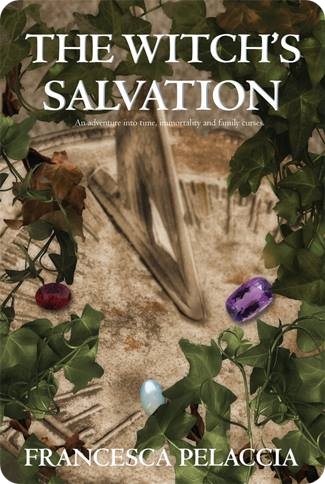
Spotlight on The Witch’s Salvation, by Francesca Pelaccia

About the book The Witch’s Salvation The Witch's Salvation

Title: The Witch’s Salvation
Author: Francesca Pelaccia
Publisher: Francesca Pelaccia
Pages: 388
Genre: Historical Fiction/Paranormal
Format: Paperback, Kindle

A witch who demands humanity.


The immortal families who denied her of it.


Two mortals commanded to right the wrong.


That is the fate of the urban princess Anasztasia and the renegade prince Matthias, born shockingly mortal to two immortal families. If they go back in time and restore the witch’s humanity, she will grant them immortality. She will also break a 550 year-old curse that imprisons Matthias’s family in their ancestral homeland and exiles Anasztasia’s family from it.

But to make their lives their own, the heirs must return to the most dangerous day in their families’ past, Easter Sunday, 1457. This is the day Vlad III, aka Dracula, massacred nobles.


How can Anasztasia and Matthias reverse the past when their families won’t speak of their sins? How can they refuse when the witch owns their lives?

Buy, read, and discuss:

Amazon | Goodreads


Read an excerpt from The Witch’s Salvation The Witch's Salvation

Prologue

In a cave shaped by five centuries of the earth’s temper, the wind’s hand, and the sky’s will, a witch stirs from beneath the dry leaves and twigs that make up her resting place. She pushes herself through, then brushes the blanket of brittle leaves from her furrowed face and shriveled limbs. But after five centuries of sleeping and waking in a bed of earth, she does not recognize foliage from skin.

She plants her emaciated feet on rough stones and drags herself across the cave to the aged branches of her door, her steps shaky like those of an infant learning to walk. The door grinds as it opens with one silent command. The world outside her hovel is as it is inside—dark, dank, musty, the bottom layers of centuries of overgrowth and the absence of human vanity. Yet she hears everything, worms burrowing, insects feeding, foliage breathing. They have been her companions and teachers through the ages as much as they have been her nourishment.

Her bones slipping against the shell of her body, she stumbles toward the ragged stump of an ancient beech. Over five centuries ago, she snapped the sapling from its roots, nurturing its swell to remind herself of the passage of the years, the turn of the centuries, and the approach of salvation. It is as old and as dead in life as she is, but it has kept her will strong and focus sharp.

Instead of resting her frail body on it, or sipping from the water trickling over one of its gnarled roots and collecting in a hollow at its base, she climbs onto it. She crawls to the middle, appearing no bigger than a rodent on a master’s grand table. Her pupils are dull and worn away, but she finds the first ring with her fingertips and begins to count. One, two, three, four, five…It is slow and meticulous work for one taught only the basics of language and numbers by those she once served. But her voice is strong, her need to count a hunger, her focus unrelenting.

Once she had magnificent eyes. Dark, almost black, alert and alive, eager to see the world, to touch it and to know it. Her hair matched the black of her eyes. Long and thick, it shone brighter than those nobles with marigold hair. Once, she was a young woman, until the nobles of the two warring families tore her from her family, wrenched her life from her body and her soul from her flesh, turning her into what she is now. Once, she had a name, a lovely, rhythmic name. But that was robbed from her, too, and she inherited another name. Strigoaic. Witch. A witch who was once a girl. A girl who once had a life. A life now trapped in death.

The Strigoaic counts the rings without stopping, her voice moaning through the clearing and the dense trees around it. She stops when her fingers grasp a ring larger and more pronounced than the others. Her heart begins to thump as it did when she first discovered it, as it did in her human life. Slipping over the edge of the stump, her fingers never leaving that ring of hope, she begins to count again, but from one, to two, to three, all the way to eighteen.

She lowers her head, a drop of blood falling from her eyes.

Crawling back onto the stump, she lies on it, the pulse of the ancient tree pounding against her palms and heating her chilled skin.

The time has come. After centuries of waiting, the time has come to summon those two nobles who robbed her of her humanity. But it is not them she wants. She has already punished them. She imprisoned one noble and his family in the boundaries of the earth once known as their homeland of Wallachia, while the other noble and his family she exiled from it. Unwise about her sorcery, however, she imprisoned and exiled them for eternity to an immortal life.

That will right itself in time, too. Now she wants—no, needs—the last born of each family. She decreed them, and she will have them. Clawing her fingers through the flesh of the stump, she lets a shrill break from her lips that shakes birds and trees and mountains.

The time has come to get her name back.


About the author, Francesca Pelaccia Francesca Pelaccia

The Witch’s Salvation is Francesca Pelaccia’s debut novel and the first book of The Witch’s Trilogy.

A teacher and now at long last an author, Francesca has written in other genres but enjoys creating and writing time-travel fantasies. Francesca blogs on the craft of writing, especially as it relates to genre, and reviews books.

Currently she is working on the second book of The Witch’s Trilogy entitled The Witch’s Monastery.

Connect with Francesca:

Website | Twitter | Facebook | Goodreads


More Info The Witch's Salvation

This post is part of a virtual book tour. For more information, and the complete list of tour stops, visit the tour page at PUMP UP YOUR BOOK.

Review: Lovers at the Chameleon Club, Paris 1932 by Francine Prose

About the book Lovers at the Chameleon Club, Paris 1932 Lovers at the Chameleon Club, Paris 1932

• Print Length: 448 pages
• Publisher: Harper (April 22, 2014)

Paris in the 1920s. It is a city of intoxicating ambition, passion, art, and discontent, where louche jazz venues like the Chameleon Club draw expats, artists, libertines, and parvenus looking to indulge their true selves. It is at the Chameleon where the striking Lou Villars, an extraordinary athlete and scandalous cross-dressing lesbian, finds refuge among the club’s loyal denizens, including the rising photographer Gabor Tsenyi, the socialite and art patron Baroness Lily de Rossignol, and the caustic American writer Lionel Maine.

As the years pass, their fortunes—and the world itself—evolve. Lou falls in love and finds success as a race car driver. Gabor builds his reputation with vivid and imaginative photographs, including a haunting portrait of Lou and her lover, which will resonate through all their lives. As the exuberant twenties give way to darker times, Lou experiences another metamorphosis that will warp her earnest desire for love and approval into something far more sinister: collaboration with the Nazis.

Told in a kaleidoscope of voices, Lovers at the Chameleon Club, Paris 1932 evokes this incandescent city with brio, humor, and intimacy. A brilliant work of fiction and a mesmerizing read, it is Francine Prose’s finest novel yet.

Buy. Read. Discuss.

Amazon | Barnes & Noble | Indie Bound | Add to Goodreads


About the author, Francine Prose Francine Prose

Francine Prose is the author of twenty works of fiction. Her novel A Changed Man won the Dayton Literary Peace Prize, and Blue Angel was a finalist for the National Book Award. Her most recent works of nonfiction include the highly acclaimed Anne Frank: The Book, The Life, The Afterlife and the New York Times bestseller Reading Like a Writer.

The recipient of numerous grants and honors, including a Guggenheim and a Fulbright, a Director’s Fellow at the Dorothy and Lewis B. Cullman Center for Scholars and Writers at the New York Public Library, Prose is a former president of PEN American Center, and a member of the American Academy of Arts and Letters and the American Academy of Arts and Sciences. She lives in New York City.


My Thoughts

As I was getting ready for the last day of Dallas Comic-Con on Sunday, I was listening to Weekend Edition on NPR, and this book – Lovers at the Chameleon Club, Paris 1932 was mentioned. Immediately, I grabbed my phone and tweeted, “Does anyone ELSE get excited when a book they’re already reading is mentioned by @NPR or @NPRbooks?” It was gratifying to learn that I am not the only one.

I had to leave the room before the show was over, so I didn’t get to hear the whole story, but that doesn’t matter. It was nice to know I was ahead of the curve on this book. At least, a little bit.

The Interwar period has been sort of haunting me lately, and Lovers… is just one of those pleasantly insistent ghosts. Told in many voices – a family historian, a young photographer, etc., it unfolds like a flower, or one of those paper “cootie catchers” we all made in childhood. There are stories within stories, and all involve rich characters, lush descriptions, and enough of the politics of the day to make you feel as if the Nazis are peering over your shoulder as you read.

I mean, seriously, Francine Prose nails it when it comes to “ominous.”

She also nails it when it comes to her vision of an underground club in Paris. What could have come off as a poor man’s La Cage aux Folles, instead, is so well described that I could smell the smoke from the cigarettes (I’m betting they were Gauloises) in their holders, and hear the soft, bubbling fizz of champagne and the gentle clinks and clicks of glassware and tableware. I could also envision the clothes, because we all know that the ambiguous cross-gender counterculture embraces the BEST couture in any age.

But it’s the story that’s important, and in telling Lou Villars’s story, Francine Prose shows us a spiral into evil, deception, and betrayal that manages to be gripping, sad, horrifying, and poignant all at once.

What would you do for love? What would you do for notoriety? For success? For money? For survival?

Lovers at the Chameleon Club, Paris 1932 asks these questions, and if the answers aren’t always happy ones, at least they are finely crafted and brutally, brilliantly honest.

Goes well with champagne, dahling…or possibly absinthe.


TLC Book Tours

This review is part of a virtual book tour hosted by TLC Book Tours. For more information, and the complete list of tour stops, click HERE.

Review: Little Island, by Katharine Britton

About the book Little Island Little Island

Paperback: 320 pages

Publisher: Berkley Trade (September 3, 2013)

Grace
Flowers
By the water
Have fun!

These are Grace’s mother’s last words – left behind on a note. A note that Grace interprets as instructions for her memorial service. And so her far-flung clan will gather at their inn on Little Island, Maine, to honor her.

Twenty years ago, a tragedy nearly destroyed the Little family – and still defines them. Grace, her husband Gar, and their three grown children, Joy, Roger and Tamar each played a role in what transpired. But this weekend, they will discover that there is more than pain and heartbreak that binds their family together, when a few simple words lift the fog and reveal what truly matters.

Watch the book trailer HERE. Read an excerpt HERE.

Buy. Read. Discuss.

Amazon | Barnes & Noble | Books-a-Million | Add to Goodreads


About the author, Katharine Britton Katharine Britton

Katharine Britton has a Master’s degree in Creative Writing from Dartmouth College, and a Master’s in Education from the University of Vermont. Her screenplay, “Goodbye Don’t Mean Gone,” was a Moondance Film Festival winner and a finalist in the New England Women in Film and Television contest. Katharine is a member of the League of Vermont Writers, New England Independent Booksellers Association, and The New Hampshire Writer’s Project. She has taught at Institute for Lifelong Education at Dartmouth, Colby-Sawyer College, and The Writer’s Center in White River Junction.

When not at her desk, Katharine can often be found in her Norwich garden, waging a non-toxic war against the slugs, snails, deer, woodchucks, chipmunks, moles, voles, and beetles with whom she shares her yard. Katharine’s defense consists mainly of hand-wringing, after the fact.

Katharine’s first novel Her Sister’s Shadow was published in 2011 by Berkley Books (Penguin, USA). Little Island is her second novel. She is currently working on another manuscript.

Connect with Katharine

Website | Facebook | Pinterest | Twitter


My Thoughts

Maybe it’s because I was practically born on the beach, and grew up with sand and salt on my skin and in my hair, but I have a special fondness for “beach books.” I don’t mean the fluffy, light reading that people bring to the beach. I mean, well, I guess you could call them “contemporary coastals” – books that take place on or near the coast, and typically include a beach house, cottage, or the like.

Little Island takes place in a coastal inn, a family-run business on the water, which, in my personal categorization system, makes it a “beach book.” But like most of the books of this type, it’s actually a gripping drama that centers on the concepts of family, love, obligation, and belonging.

Some of the novel is told in first person, mainly those chapters from Joy’s point of view. I’m not sure if this makes Joy an unreliable narrator, but it does mean that I felt more connected to Joy. It is through her eyes that I experienced the rest of the story.

The setup is classic: everyone gathers for a memorial service. The result is anything but typical, and we see a fabulous collection of relationships – Joy’s parents, aging but still active, Joy’s twin siblings who are younger than she is, but were always the ones to exclude her, Joy’s twin nieces who are less than thrilled to be in their mother’s care during the novel, and of course Joy herself, because even though she has a husband and has just sent her son off to college, her real journey is one of self.

I think that’s why I responded to this novel so strongly. I mean, author Katharine Britton has given us an amazing setting (seriously, I want to live at this inn), three-dimensional characters, and a rich story with background characters who may not show up much but are nevertheless integral to the plot, but – for me – this was about the journey Joy has – the one we women all have at one time or another in our lives – to finding herself.

I was strongly reminded by the lines Samantha speaks near the end of the Sex and the City movie: “I’ve been in a relationship with myself for fifty years and that’s the one I need to work on.”

If you’re looking for fast-paced action or kinky sex, this is not the book for you. If, however, you want an absorbing read, a character-driven story, and a level of detail that allows you to smell the salt air, you should click over to your favorite bookseller’s website, and buy Little Island right now. You won’t regret it.

Goes well with fried clams and cold beer.


TLC Book Tours

This review is part of a virtual book tour sponsored by TLC Book Tours. For more information, or the complete list of tour stops, click HERE.

Review: The Runaway Highlander by R.L. Syme

About the book, The Runaway Highlander

The Runaway Highlander

Publication Date: April 15, 2014
Formats: eBook, Paperback
Series: The Highland Renegades

Anne de Cheyne has a choice. She can play the dutiful daughter and allow her mother to sell her to a greasy English sheriff, or she can take control of her own life and find her own match. After a frightening run-in with her promised husband reveals a dark secret, she makes a desperate choice. Flight.

Aedan Donne needs easy money and no-questions-asked. When Milene de Cheyne offers him enough to pay all debts, requests complete silence, and pays half up front, just for a simple recovery, he can’t believe his luck… until he meets his mark. Anne’s beauty and passion ignite something Aedan can’t ignore, even as she leaves him in the dust. Suddenly, he finds himself wanting to capture the runaway Highland lady for himself.

The Highland Renegades Series

Book One: The Outcast Highlander
Book Two: The Runaway Highlander
Book Three: The Pirate Highlander — Coming Soon!

Buy the book, and start enjoying the romantic adventure of The Runaway Highlander

Amazon UK | Amazon US | Barnes & Noble | CreateSpace


About the author, R. L. Syme

R.L. Syme

R.L. Syme works at a youth theatre, teaching kids performing arts and musical performance classes/camps when she’s not writing. Otherwise, she’s putting her Seminary degree to good use writing romance novels. Let not all those systematic theology classes go to waste…

Connect with R.L. Syme

Website | Blog | Facebook | Twitter | Pinterest


My Thoughts

I have a thing for men in kilts. There, I’ve admitted it. Now, I realize that Aedon Donne, the ‘hero’ of this novel does not likely wear a kilt, as he’s supposed to be working for the English king, and all, but in my head, every move is accompanied by a healthy dose of swirling tartan and well-muscled legs, and if you asked protagonist Anne de Cheyne, I’m pretty sure she’d agree with me.

I make fun, but the truth is that this book is a deliciously gritty, saucy romantic adventure of the kind that brings to mind old Eroll Flynn movies, if he’d made Highlander films instead of playing pirates all the time. Rooted in history, but not enslaved to it, this story has strong women, brave men, and a perfect balance of justice and romance.

The dialogue never seems stilted, as can happen in period pieces, and the characters never seem too contemporary, either. I haven’t read the first novel in this series, but if The Runaway Highlander is anything to go by, it must be a fantastic, satisfying read.

A little romance now and then is a good thing. When it’s written as well as R.L. Syme has written her books, it’s a truly excellent thing.

Goes well with anything but haggis. (Seriously, I wanted hearty stew and fresh brown bread when I was reading this.)


The Runaway Highlander

Virtual Book Tour Schedule

Wednesday, May 14
Spotlight & Giveaway at Passages to the Past

Thursday, May 15
Review at Bibliotica

Monday, May 19
Guest Post & Giveaway at Susan Heim on Writing

Tuesday, May 20
Review at A Bookish Girl (The Outcast Highlander)

Wednesday, May 21
Review at A Bookish Girl (The Runaway Highlander)

Thursday, May 22
Interview & Giveaway at A Bookish Girl

Friday, May 23
Guest Post at Layered Pages

Monday, May 26
Review at My Not So Vacant Bookshelf

Tuesday, May 27
Review at So Many Books, So Little Time

Thursday, May 29
Guest Post at Historical Fiction Connection

Friday, May 30
Review at Lily Pond Reads
Review at From the TBR Pile

Monday, June 2
Review at The Mad Reviewer
Review at Bibliophilia, Please

Tuesday, June 3
Review at The Most Happy Reader

Wednesday, June 4
Interview at The Most Happy Reader

Thursday, June 5
Review at A Bibliotaph’s Reviews

Friday, June 6
Review at Historical Fiction Obsession

Monday, June 9
Review at Svetlana’s Reads and Views

Wednesday, June 11
Review at Fic Central

Thursday, June 12
Review at Reviews by Molly
Interview at Books and Benches

Friday, June 13
Review & Giveaway at To Read or Not to Read