Review: Love & Treasure, by Ayelet Waldman

About the book, Love & Treasure Love & Treasure

Hardcover: 352 pages
Publisher: Knopf (April 1, 2014)

A spellbinding new novel of contraband masterpieces, tragic love, and the unexpected legacies of forgotten crimes, Ayelet Waldman’s Love and Treasure weaves a tale around the fascinating, true history of the Hungarian Gold Train in the Second World War.

In 1945 on the outskirts of Salzburg, victorious American soldiers capture a train filled with unspeakable riches: piles of fine gold watches; mountains of fur coats; crates filled with wedding rings, silver picture frames, family heirlooms, and Shabbat candlesticks passed down through generations. Jack Wiseman, a tough, smart New York Jew, is the lieutenant charged with guarding this treasure—a responsibility that grows more complicated when he meets Ilona, a fierce, beautiful Hungarian who has lost everything in the ravages of the Holocaust. Seventy years later, amid the shadowy world of art dealers who profit off the sins of previous generations, Jack gives a necklace to his granddaughter, Natalie Stein, and charges her with searching for an unknown woman—a woman whose portrait and fate come to haunt Natalie, a woman whose secret may help Natalie to understand the guilt her grandfather will take to his grave and to find a way out of the mess she has made of her own life.

A story of brilliantly drawn characters—a suave and shady art historian, a delusive and infatuated Freudian, a family of singing circus dwarfs fallen into the clutches of Josef Mengele, and desperate lovers facing choices that will tear them apart—Love and Treasure is Ayelet Waldman’s finest novel to date: a sad, funny, richly detailed work that poses hard questions about the value of precious things in a time when life itself has no value, and about the slenderest of chains that can bind us to the griefs and passions of the past.

Buy, read, and discuss Love & Treasure

Amazon | Barnes & Noble | Books-a-Million | Goodreads


About the author, Ayelet Waldman Ayelet Waldman

Ayelet Waldman is the author of the recently released Love and Treasure (Knopf, April 2014), Red Hook Road and The New York Times bestseller Bad Mother: A Chronicle of Maternal Crimes, Minor Calamities and Occasional Moments of Grace. Her novel Love and Other Impossible Pursuits was adapted into a film called “The Other Woman” starring Natalie Portman. Her personal essays and profiles of such public figures as Hillary Clinton have been published in a wide variety of newspapers and magazines, including The New York Times, Vogue, The Washington Post, and The Wall Street Journal. Her radio commentaries have appeared on “All Things Considered” and “The California Report.” Her books are published throughout the world, in countries as disparate as England and Thailand, the Netherlands and China, Russia and Israel, South Korea and Italy.

Connect with Ayelet

Website | Book Clubs | Facebook | Twitter


My Thoughts

You wouldn’t think that a novel that spends fully half it’s pages dealing with the immediate aftermath of the Holocaust could be magical and amazing, but Ayelet Waldman’s Love & Treasure manages to be so.

To be clear, those magical moments come between a lot of candid, even gritty, scenes. The first half of the book is the story of Jack Wiseman, an ethnic Jew and American soldier, in Europe at the end of World War II. Largely due to circumstance he is put in charge of a warehouse which holds the contents of a train, which, in turn, was full of the stolen, stripped down belongings – everything from ceramics to jewelry to bed linens to art – of Hungarian Jews who were either sent to concentration camps or sent to forced labor camps by the Nazis.

The second half of the book is mostly the story of Jack’s granddaughter Natalie, and her quest to fulfill her grandfather’s dying wish: track down the owner of a necklace he took from the warehouse, and return it. To do this, she travels to Europe and Israel, hooking up with an art dealer named Amitai who operates just at the surface, or maybe slightly below, the law. He isn’t a bad person, but he doesn’t make high-percentage choices. Also, he’s not that interested in the necklace – he’s trying to track down a painting done by the same artist. (He is, however, increasingly interested in Natalie.)

The problem is that Natalie’s story, which I referred to as the second ‘half,’ ends in such a way that it feels like an ending, but there’s a third part of the story, the history of the necklace’s original owner.

Don’t get me wrong, I loved learning the story of the necklace, loved a glimpse into early twentieth century feminism in Europe, it just felt like the novel would have been even more magical and amazing than it already is if Jack had been part one, Natalie had been part two, and the rest had been woven through in bits and glimpses.

But that’s me, who sometimes likes books to be ideally structured even though life never actually is, and the reality is that this minor structural issue didn’t detract from the story in any way. Jack’s section is heartbreaking, Natalie’s is a grand adventure, and all the rest? Quiet magic and amazing history.

Is this a beach read? Maybe not.
But it’s a great book for a lazy summer Sunday.

Goes well with: Organic eggs scrambled with spinach, salmon and cream cheese, a toasted bagel with butter, and a few chunks of really ripe cantaloupe.


TLC Book Tours

This review is part of a blog tour sponsored by TLC Book Tours. For more information, and the complete list of tour stops, click HERE.
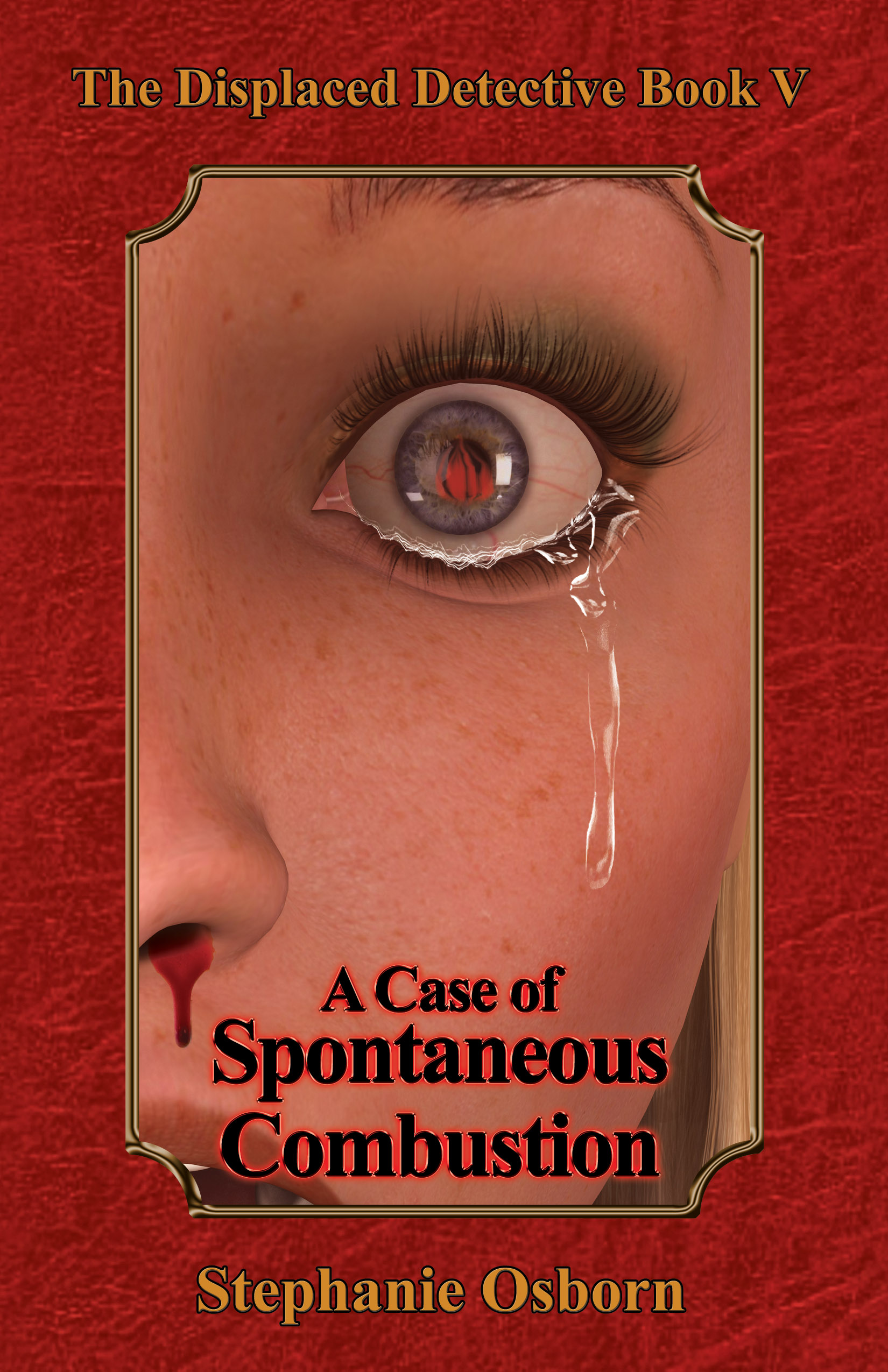
Review: A Case of Spontaneous Combustion (Displaced Detective #5), by Stephanie Osborn

About the book, A Case of Spontaneous Combustion A Case of Spontaneous Combustion

Publisher: Twilight Times Books
Print Length: 344 pages

When an entire village on the Salisbury Plain is wiped out in an apparent case of mass spontaneous combustion, Her Majesty’s Secret Service contacts The Holmes Agency to investigate. Unfortunately Sherlock Holmes and his wife, Dr. Skye Chadwick-Holmes, have just had their first serious fight, over her abilities and attitudes as an investigator. To make matters worse, he is summoned to England in the middle of the night, and she is not — and due to the invocation of the National Security Act in the summons, he cannot even wake her and tell her.

Once in London, Holmes looks into the horror that is now Stonegrange. His investigations take him into a dangerous undercover assignment in search of a possible terror ring, though he cannot determine how a human agency could have caused the disaster. There, he works hard to pass as a recent immigrant and manual laborer from a certain rogue Mideastern nation as he attempts to uncover signs of the terrorists.

Meanwhile, alone in Colorado, Skye battles raging wildfires and tames a wild mustang stallion, all while believing her husband has abandoned her.

Who — or what — caused the horror in Stonegrange? Will Holmes find his way safely through the metaphorical minefield that is modern Middle Eastern politics? Will Skye subdue Smoky before she is seriously hurt? Will this predicament seriously damage — even destroy — the couple’s relationship? And can Holmes stop the terrorists before they unleash their outré weapon again?

Buy, read, and discuss A Case of Spontaneous Combustion

Amazon | Barnes & Noble | Add to Goodreads

Please note: at this time, this title is only available in digital formats. A print edition is planned.


About the author, Stephanie Osborn Stephanie Osborn

Veteran of more than 20 years in the civilian space program, as well as various military space defense programs, she worked on numerous space shuttle flights and the International Space Station, and counts the training of astronauts on her resumé. Her space experience also includes Spacelab and ISS operations, variable star astrophysics, Martian aeolian geophysics, radiation physics, and nuclear, biological, and
chemical weapons effects.

Stephanie holds graduate and undergraduate degrees in four sciences:
astronomy, physics, chemistry and mathematics, and she is “fluent” in several
more, including geology and anatomy.

In addition she possesses a license of ministry, has been a duly sworn, certified police officer, and is a National Weather Service certified storm spotter.

Her travels have taken her to the top of Pikes Peak, across the world’s highest suspension bridge, down gold mines, in the footsteps of dinosaurs, through groves of giant Sequoias, and even to the volcanoes of the Cascade Range in the Pacific Northwest, where she was present for several phreatic eruptions of Mount St. Helens.

Now retired from space work, Stephanie has trained her sights on writing. She has authored, co-authored, or contributed to more than 20 books, including the celebrated science-fiction mystery, Burnout: The mystery of Space Shuttle STS-281. She is the co-author of the “Cresperian Saga,” book series, and currently writes the critically acclaimed “Displaced Detective” series, described as “Sherlock Holmes meets The X-Files.” She recently released the paranormal/horror novella El Vengador, based on a true story, as an ebook.

In addition to her writing work, the Interstellar Woman of Mystery now happily “pays it forward,” teaching math and science through numerous media including radio, podcasting and public speaking, as well as working with SIGMA, the science-fiction think tank.

The Mystery continues.

Connect with Stephanie

Website | Twitter


My Thoughts

Sherlock Holmes and Skye Chadwick-Holmes are back in the fifth installment of Stephanie Osborn’s fabulously entertaining Displaced Detective series, and while this story is complete in one volume (unlike the others which were pairs of companion stories), it feels just as meaty and satisfying as its predecessors.

What I really love about this series is that Osborn bases her mysteries in real (if sometimes theoretical) science, and that she relays the science in ways that are easy for people like me, who were music and theater majors, to understand. From the moment the mass disappearance (death) of an entire town was described, I was able to make reasonably accurate guesses about the technology that caused it, but this in no way spoiled the story, because knowing the cause wasn’t enough, the real mystery was as much in the “why” as in the “how.”

As well, I love that, a year into their marriage, Skye and Sherlock are evolving as individuals and as a couple. While they are separated from each other for much of this story, when they do come together, the reasons for their separation explained, we see two people who have become better because of their relationship. Anyone can write “falling in love” reasonably well. Writing about a couple who can stay in love takes finesse, which Osborn has in great amounts.

Over the last several years, Sherlock Holmes has been reintroduced to us in many, many guises, and the beauty of the character is that there’s room for every version, and enjoying one doesn’t mean you can’t enjoy others. Regular visitors to this blog know that I’m a massive fan of Laurie R. King’s Sherlock Holmes/Mary Russell series, and that I especially love that she’s incorporated early feminism and the art culture of the early twentieth century into her work.

This doesn’t mean that I like Osborn’s work any less. In fact, I think these two series make really good bookshelf buddies, because both give us a glimpse at Holmes as a married man, and both do it in unique ways.

Back to Stephanie Osborn’s latest offering, though, I’ll confess that at one point I, who was an original viewer of Sex and the City felt that Skye and Sherlock’s relationship was a bit too restrained, even when they were out of the public eye, until Skye herself reminded one of their friends, and we readers as well, that Holmes is from a more restrained time and culture. It’s worth noting, also, that the relationship they have is absolutely true to the characters Osborn has created, and that these are genre-defying science-fiction/mysteries and not romance novels.

While A Case of Spontaneous Combustion is best enjoyed after reading books 1-4 of the Displaced Detective series, fast reads all, it also has enough backstory to be a satisfying standalone.

Goes well with: Falafel, with extra-garlicky tahini sauce, tart strained yogurt and cucumbers, and a side of tabouleh, with mint tea.

Review: Supreme Justice, by Max Allan Collins

About the book, Supreme Justice Supreme Justice

Paperback
Publisher: Thomas & Mercer (July 1, 2014)
Pages: 338

A new standalone thriller from the creator of The Road to Perdition and the Nathan Heller series.

After taking a bullet for his commander-in-chief, Secret Service agent Joseph Reeder is a hero. But his outspoken criticism of the president he saved—who had stacked the Supreme Court with hard-right justices to overturn Roe v. Wade, amp up the Patriot Act, and shred the First Amendment—put Reeder at odds with the Service’s apolitical nature, making him an outcast.

FBI agent Patti Rogers finds herself paired with the unpopular former agent on a task force investigating the killing of Supreme Court Justice Henry Venter. Reeder—nicknamed “Peep” for his unparalleled skills at reading body language—makes a startling discovery while reviewing a security tape: the shooting was premeditated, not a botched robbery. Even more chilling, the controversial Venter may not be the only justice targeted for death…

Is a mastermind mounting an unprecedented judicial coup aimed at replacing ultra-conservative justices with a new liberal majority? To crack the conspiracy and save the lives of not just the justices but also Reeder’s own family, rising star Rogers and legendary investigator Reeder must push their skills—and themselves—to the limit.

Buy, read, and discuss Supreme Justice

Amazon | Barnes & Noble | Books-a-Million | Add to Goodreads


About the author, Max Allan Collins Max Allan Collins

Max Allan Collins has earned fifteen Private Eye Writers of America “Shamus” nominations, winning for his Nathan Heller novels, True Detective and Stolen Away, and receiving the PWA life achievement award, the Eye.

His graphic novel, Road to Perdition, the basis for the Academy Award–winning film starring Tom Hanks, was followed by two novels, Road to Purgatory and Road to Paradise. His suspense series include Quarry, Nolan, Mallory, and Eliot Ness, and his numerous comics credits include the syndicated Dick Tracy and his own Ms. Tree.

He has written and directed four feature films and two documentaries. His other produced screenplays include The Expert, an HBO World Premiere, and The Last Lullaby. His coffee-table book The History of Mystery received nominations for every major mystery award and Men’s Adventure Magazines won the Anthony.

Collins lives in Muscatine, Iowa, with his wife, writer Barbara Collins. They have collaborated on seven novels and are currently writing the Trash ‘n’ Treasures mysteries.


My Thoughts

It was a bit weird reading this novel even as the real-world conservative-dominated SCOTUS is chipping away at women’s rights, voting rights, and the separation between church and state. In fact, at times I felt myself wishing that there actually was a conspiracy to replace the conservatives on the bench. But aside from that, I thoroughly enjoyed this novel.

Both of the main characters were fascinating, dimensional people, and the dialogue throughout the book as as snappy as Aaron Sorkin ever wrote on The West Wing. Collins has written for the screen before, and it shows, because Supreme Justice feels like it would translate really well to television (HBO, maybe?) or film.

A gripping plot, fantastic characters, and well-paced action all combine to give the reader a satisfying, suspense-filled experience.

Goes well with a juicy steak, a baked potato, and a craft beer.


TLC Book Tours

This review is based on an ARC provided by TLC Book Tours, and is part of a blog tour they organized. For more information, including the complete list of tour stops, click HERE.

In their Words: Interview with Anna Castle

Murder by Misrule

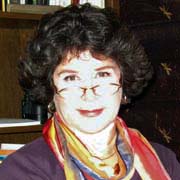
Last month, I reviewed Anna Castle’s historical mystery Murder by Misrule. Anna was kind enough to also grant me an interview, which we conducted via email. As you can see, she’s funny, interesting, and as unique as the book (series, actually) she’s created.

Melissa A. Bartell (MAB): Before we talk about your novel Murder by Misrule, let us get to know you. If you had to pick an historical figure to represent every 5-7 years of your life, who would they be and why?

Anna Castle (ANNA): This question is too hard for me! First, I’m not a navel-gazer; there are a hundred things I would rather think about than my personal history. Second, as a writer of historical fiction, it’s my job to uncover the complex layers of the people of the past, not to sum them up with short labels.

Anna Castle

It does sound like a fun game to play with the clan after Thanksgiving dinner, though. You could put historical figures on cards and let people draw one and decide who it matched, at what period of their life. (OK, I’m going to patent that idea, but I’ll split it with you, since it was your question.)


MAB: What draws you to historical fiction? What draws you to write at all?

ANNA: The time-traveling: writing stories is my way of working through the past and figuring out how a person could live and work and play back then and over there.

As for writing, when it’s going well, it’s the most fun thing there is. It’s like building and exploring at the same time, without any sharp things nicking your fingers or clouds of mosquitos swarming around your head.


MAB: You chose Francis Bacon as the lead in your novel; what about his story made you want to put him in a mystery?

ANNA: He’s the natural choice. Bacon was the most articulate advocate of inductive reasoning: study the facts, formulate a hypothesis, test, and refine.

He didn’t actually do much in the way of either scientific or criminal investigation, but he spent a lot of time thinking and writing about how such investigations ought best to be pursued.

All I do is put him on task by giving him urgent problems to solve.


MAB: There’s a big difference between contemporary Texas and Elizabethan England. What challenged you the most in creating your version of that period?

ANNA: The weather! Summer in Texas lasts from May through October. It seldom snows in Austin. We do not have fog. We rarely get that chilly drizzle that is so typical of English weather, nor that sweet, soft, delicious spring rain. Love that rain! Mad dogs and Englishmen go out in the summer sun; maybe made cats and Texans go out in the winter rain.

One of the main reasons I go there is to inhabit their climate, see where the sun stands and how the wind blows. It surprises me every time that I can walk outdoors in a wool sweater in June and not be hot. I’ve even gotten sunburned in England! Who’d’ve thunk it?

MAB: Were there any cultural similarities that surprised you when you were doing research? If so, what?

ANNA: Not so much. Sixteenth century England is the root of both our cultures, after all. I’m as much like the people of Bacon’s time as a modern Englishwoman; more, maybe, in terms of dialect. I’m there to study the past, so I only pay enough attention to contemporary culture to keep from getting run over by a bus.

It does seem to me that English and American cultures are in many ways reconverging, since we swim in the same big media pool. I am sometimes surprised by the depth of familiarity with American history that crops up in British television. Like one detective saying to the other, “Houston, we have a problem,” or “Not quite ‘How did you enjoy the play, Mrs. Lincoln?'” Tiny bits, but ubiquitous.

Murder by Misrule

MAB: This novel is set in the period of Misrule. Tell us a bit about that, and why you picked it as the perfect time of year for a murder mystery?

ANNA: I remember thinking of the first murder as a demented chase scene through the yew labyrinth in the Queen’s garden, drunken retainers from a pageant at the nearby Accession Day festivities chasing a sore-footed barrister. I liked the topsy-turviness of that scene. It got cut somewhere around draft 3, but it was the seed from which the rest of the story sprang.

I connected it to Gray’s Inn when I learned that they used to make a big deal of the season of Misrule. Young law students were obliged to remain in residence over the Christmas break, both to keep them from coming back late for the January term and to give them some of the social polish their parents expected them to acquire.

These restless young gentlemen had to be entertained. Why not bump a few of them off to make things more interesting?


MAB: Aside from Francis Bacon, do you have a favorite character in your novel? If so, who, and why?

ANNA: I love all my characters, even the villains. Even the walk-ons and the snivelly ass-kissers. So I don’t have a favorite, but I do have an avatar, so to speak — Mrs. Anabel Sprye. She’s me, which is why she’s writing a book.


MAB: Is there a specific scene in the novel that you’re particularly proud or fond of? Can you share it with us?

ANNA: This is one of those questions that’s easy to pose and impossible to answer. Pick a scene, any scene — I sweat them all. Far easier to point out the scenes that fell short of my grandiose dreams, but that would be foolish and self-defeating and we don’t go there.

MAB: Francis Bacon spends a lot of time reading. Similarly, the writers of our own time are also readers. What are some of your favorite books and authors? What are you reading now?

ANNA: All writers are readers first. If not, they shouldn’t be writing.

On my desk at this moment: John W. Weatherford, Crime and Punishment in the England of Shakespeare and Milton (proof that I couldn’t invent anything half as wacky as the truth); Anthony Esler, The Aspiring Mind of the Elizabethan Younger Generation (a fascinating if somewhat strained 60’s psychological analysis of my main guys); and my Kindle, on which I’m reading Eric Mayer & Mary Reed’s 10 for Dying; Katie Graykowski’s Perfect Summer; and Shakespeare’s Works.

MAB: What’s a typical day in the life of Anna Castle? Take us through one.

ANNA: I get up a little after daylight and screw around on the net for 30 minutes or so while drinking that all-important first cup of coffee. Then I write through lunch. Then I do chores or similar, go to the gym, come back and do writing biz for as long as it takes. And then my day is done.

Sometimes I break early to have lunch with a friend, which I like better than going out for dinner. Sometimes I blow it all off and go hiking.

MAB: Writing can be a solitary activity. How do you deal with it?

ANNA: Writing is most assuredly a solitary activity. That’s one of the things we like about it. If we wanted a busy environment, we would get jobs. I like the solitude. I like the silence. I like living in the past inside my head.

MAB: What advice would present-day Anna give to her sixteen-year-old self?

ANNA: Do not smoke that cigarette.

MAB: Will there be more Francis Bacon mysteries? What’s next for you?

ANNA: There will indeed be more. Book 2 is due to my editor on Sunday. Plot-a-thon for book 3 is slated for August, but probably going to get slipped to September because I think book 2 needs a lot of editing. Then again, I always think that at this stage.

I have another series of humorous regional modern mysteries in the sub-genre formerly known as ‘cozy’ which I plan to launch sometime in the coming year, as soon as I can think of a tagline that doesn’t sound like Prince’s new name.

And there are short stories leaping up and down in the back of my mind clamoring for attention. I’m looking forward to getting back into my newly rehabbed house and writing up a perfect storm.

Connect with Anna

Website | Blog | Facebook | Twitter

Buy, read, and discuss Murder by Misrule

Amazon | Barnes & Noble | Smashwords | Add to Goodreads

Review: A Life of Death, by Weston Kincade

My Thoughts

Weston Kincade sent me this book directly, months ago, in multiple installments, which is how it was originally published. More recently, he asked people to re-post reviews for the current “complete” edition.

As my original review was lost in a database glitch, I sat down to re-read Kincaid’s work, in order to update my thoughts, and I’m not sorry.

On the surface, Kincaid’s story is a simple mystery, but once you look past the surface, you see a family drama, a battle between natural and supernatural, and a close look at what it means to be a victim, and to overcome victimhood.

Kincade’s characters are all fully realized, dimensional people, but what I really liked about them is that they’re not all “pretty” people. They are human, they get into fights, aren’t all rich and well-to-do, and sometimes, aren’t even all that likeable.

And yet, the story – Alex’s story, and that of his son – is compelling. You want to find out why Alex sees the visions he does, and you really care about his relationship with his son.

Marketed primarily to YA/NA audiences, A Life of Death has something for everyone, of every age, which is as it should be when it comes to good storytelling.

Goes well with Open face meatloaf sandwiches and RC cola.

Review: The Bone Church by Victoria Dougherty

About the book, The Bone Church The Bone Church

Publication Date: April 15, 2014
Pier’s Court Press
Formats: eBook, Paperback

In the surreal and paranoid underworld of wartime Prague, fugitive lovers Felix Andel and Magdalena Ruza make some dubious alliances – with a mysterious Roman Catholic cardinal, a reckless sculptor intent on making a big political statement, and a gypsy with a risky sex life. As one by one their chances for fleeing the country collapse, the two join a plot to assassinate Hitler’s nefarious Minister of Public Enlightenment and Propaganda, Josef Goebbels.

But the assassination attempt goes wildly wrong, propelling the lovers in separate directions.

Felix’s destiny is sealed at the Bone Church, a mystical pilgrimage site on the outskirts of Prague, while Magdalena is thrust even deeper into the bowels of a city that betrayed her and a homeland soon to be swallowed by the Soviets. As they emerge from the shadowy fog of World War II, and stagger into the foul haze of the Cold War, Felix and Magdalena must confront the past, and a dangerous, uncertain future.

Buy, read, and discuss The Bone Church

Amazon | Amazon UK | Barnes & Noble | Book Depository | IndieBound | Add to Goodreads


About the author, Victoria Dougherty Victoria Dougherty

Victoria Dougherty writes fiction, drama, and essays that often revolve around spies, killers, curses and destinies. Her work has been published or profiled in The New York Times, USA Today, International Herald Tribune and elsewhere.

Earlier in her career, while living in Prague, she co-founded Black Box Theater, translating, producing and acting in several Czech plays. She lives with her husband and children in Charlottesville, Virginia.

Connect with Victoria

Website | Facebook | Goodreads | Pinterest | Twitter


My Thoughts

I was expecting The Bone Church to be a bit dark, a bit gritty, and incredibly honest, and this novel was all of those things. What surprised me was that amidst all the grit and darkness, there were these great moments of lyrical beauty and haunting spirituality.

Some of these moments were small – a comparison to the scent of coffee and oranges, the description of the texture of one of the many, many “Infant of Prague” statuettes that glutted the market, but it’s in those small moments, in those details, that Victoria Dougherty’s work really shines.

The story itself is gripping. We are sympathetic to Magdalena’s plight from the beginning, watching as she loses her identity and later, her marriage. We root for Felix, even when his behavior becomes a bit questionable. All of the other characters, many of whom would be easily interchangeable “stock” cold war figures in another author’s hands, have their own complications, secrets, and truths as well.

Put together, the setting, the characters, the period, even the weather, give us a picture of a part of history we typically only see from the point of view of much greater powers, and also serve forth a meaty story, rich with depth and intrigue.

Read this if you want something that manages to combine the best of LeCarre with the best of Sue Monk Kidd – a weird blending, but that’s how it felt to me. Read this if you want to be both entertained and enlightened.
Read The Bone Church if you want a good story that will linger with you for days after you’ve read it.
But definitely, read it.

Goes well with Lapsang souchong tea and navel oranges.


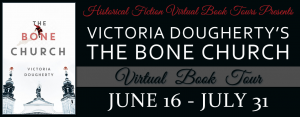
Bone Church Blog Tour

This review is part of a blog tour sponsored by Historical Fiction Virtual Book Tours (HFVBT), who graciously arranged for me to have a copy of the book. For more information, and the complete list of tour stops, click the banner above, or just click HERE.

Review: Star Trek: The Next Generation: The Light Fantastic by Jeffrey Lang


My Thoughts

I pre-ordered the digital edition of this book several months ago when it was first announced, so I knew it would be arriving on my Kindle around 2:00 this morning. I was pleasantly surprised when it actually showed up at midnight, because I’m very nocturnal. Translation: by the time I went to bed around 2 AM, I’d read 81% of this novel.

The Light Fantastic is the sequel to Lang’s own Immortal Coil, which, I confess, left me conflicted when I first read it. The adult part of me, the part that is an improviser and a writer, really liked it, though I felt that Data and Rhea’s relationship was both too fast, and not believable (this despite the fact that I liked Rhea as a character). The part of me that was 16 or 17 when TNG premiered on TV and crushed on Data had other issues, but adult-me was able to ignore them.

But then David Mack gave us is Cold Equations trilogy, and those expanded upon Data 2.0’s mindset and choices, and gave us better insight into the Fellowship of AI, and left a door open for more with this beloved character.

And now Lang has wrapped up a truly amazing arc. We get to find out how Data’s been spending the last two years of his life. We get a glimpse into his life with the newly restored Lal, his daughter, who is in the midst of the android equivalent of adolescence, and then she’s abducted – by Moriarty – yes, the hologram – and we’re thrown into a story that is both a mystery and a story about what it means to grow up, grow old, raise children, and explore one’s identity.

Data as a father is both hilarious and heartbreaking – especially as he’s still acclimating to his new body and his permanently engaged emotions.
Lal as a teenager is also hilarious, and frustrating, and it gave me new respect for the way my own mother must’ve felt when I was a teenager myself.

Geordi, of course, is along for the ride, because no Sherlock can be without his Watson, and along the way we are introduced to a few favorite characters from both TNG and TOS.

Overall, The Light Fantastic is a truly satisfying read, and if Data doesn’t sound exactly the way we’re accustomed to him sounding, well, he himself states in the novel that he isn’t entirely certain how much of him is HIM, and how much is leftover Noonian Soong.

The tag, of course, teases a new mystery, and I have no idea if that will pan out, or if the soft canon of the novels will eventually merge with the soft canon of the STO game and the Countdown to Trek 2009 (in which Data was Captain of the Enterprise), but if it doesn’t, I would totally buy a series of intergalactic mysteries featuring Data and LaForge.

Goes well with French-pressed coffee and a chocolate croissant.

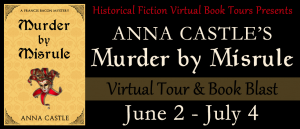
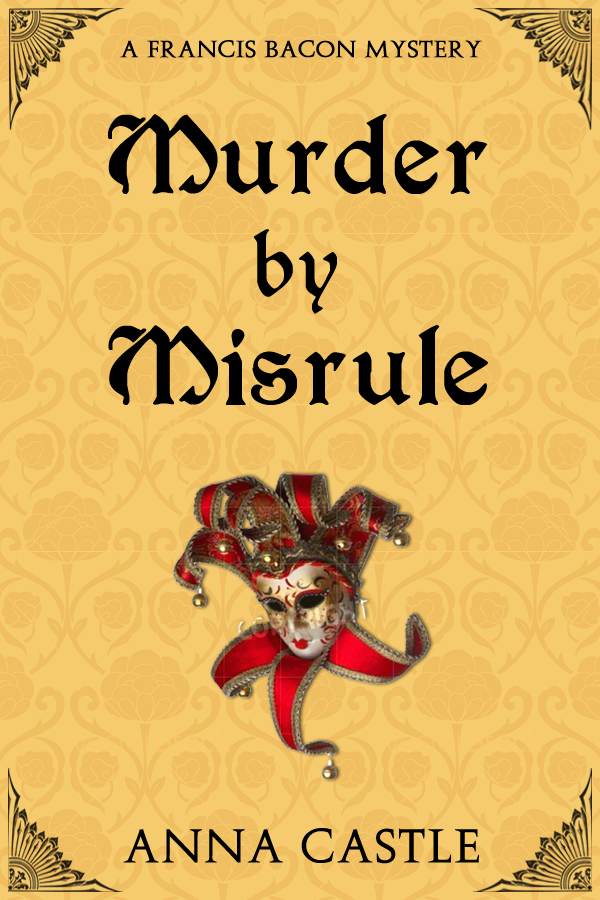
Review: Murder by Misrule, by Anna Castle

About the book, Murder by Misrule Murder by Misrule

Publication Date: June 8, 2014
Formats: Ebook, Paperback
A Kirkus Indie Books of the Month Selection for July.

Francis Bacon is charged with investigating the murder of a fellow barrister at Gray’s Inn. He recruits his unwanted protege Thomas Clarady to do the tiresome legwork. The son of a privateer, Clarady will do anything to climb the Elizabethan social ladder. Bacon’s powerful uncle Lord Burghley suspects Catholic conspirators of the crime, but other motives quickly emerge. Rival barristers contend for the murdered man’s legal honors and wealthy clients. Highly-placed courtiers are implicated as the investigation reaches from Whitehall to the London streets. Bacon does the thinking; Clarady does the fencing. Everyone has something up his pinked and padded sleeve. Even the brilliant Francis Bacon is at a loss and in danger until he sees through the disguises of the season of Misrule.

About The Francis Bacon Mystery Series

This series of historical mysteries features the philosopher-statesman Francis Bacon as a sleuth and spymaster. Since Francis prefers the comfort of his own chambers, like his spiritual descendent Nero Wolfe, he sends his pupil, the handsome young Thomas Clarady, out to gather information. Tom loves the work, not least because he meets so many interesting people, like Lord Burghley, Sir Walter Raleigh, and Christopher Marlowe. Murder by Misrule is the first book in the series.

Buy, read, and discuss Murder by Misrule

Amazon | Barnes & Noble | Smashwords | Add to Goodreads


About the author, Anna Castle Anna Castle

Anna Castle has been a waitress, software engineer, documentary linguist, college professor, and digital archivist. Historical fiction combines her lifelong love of stories and learning. She physically resides in Austin, Texas, and mentally counts herself a queen of infinite space.

Connect with Anna

Website | Blog | Facebook | Twitter


My Thoughts

It would never have occurred to me to cast Francis Bacon as the lead in a mystery. I mean, I’m reasonably familiar with his place in history, and I spent more than one summer doing Shakespeare camp when I was in high school (yes, there IS such a thing), but still, it takes a very special author to come up with a premise like this one.

Anna Castle is clearly a very special author, because not only did she come up with the premise, she makes it work. No, not work, she makes it sing, dance, and speak in perfect Latin quips alternating with iambic pentameter. Her portrayal of Francis Bacon may not be identical to the way he’s presented in history classes, but that’s okay, because he’s totally believable as a rather delicate intellectual who relies on his minion (assistant) to do the heavy lifting – or fencing, as the case may be.

Written in contemporary language, Murder by Misrule is both a glimpse into the life of those who were part of the Inns at Court (more like dorms than our modern perception of an inn) and a rollicking adventure centering around a murder. There’s political intrigue, career advancement, and, of course, the season of Misrule to contend with.

Promotional materials compare Castle’s version of Francis Bacon to Nero Wolfe. As someone who cut her mystery-loving teeth on the latter, I have to say that while I see the resemblance, I think Bacon is a richer character, and the world he inhabits, and those he shares it with, all feel more real to me than Rex Stout’s version of New York ever did, and for me, his era was also an historical period.

If you want a great story, full of amazing characters, and good dose of history (with maybe a little bit of embellishment) you simply must read Murder by Misrule. You won’t be sorry.

Goes well with a rainy day, a hearty stew, brown bread, and a good stout.


Murder by Misrule

This review is part of a blog tour organized by Historical Fiction Virtual Book Tours, who provided me with an ARC of the book so I could review it impartially. For more information, or the complete list of tour stops, click HERE.

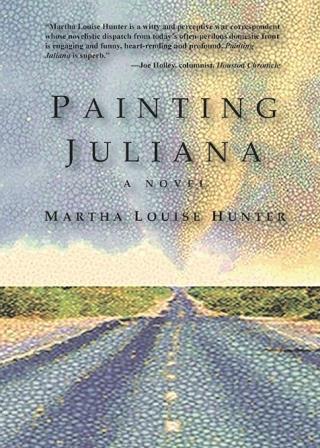
Review: Painting Juliana, by Martha Louise Hunter

About the book, Painting Juliana Painting Juliana

Hardcover: 362 pages
Publisher: Goldminds Publishing, LLC (May 20, 2014)

A young girl’s terrifying nightmare, five mysterious oil paintings and a red, flaming firebird all carry the same message:

Stand still, look up and let the funnel cloud suck you up inside.

It’s the last thing Juliana Birdsong wants to hear. Now a woman who’s losing everything, she’s still running from the dream, and it’s catching up fast. When her Alzheimer’s-stricken father’s canvases come to life exposing secrets, heartbreak and yearnings that mirror her own, Juliana discovers that some memories can be a blessing to forget.

Hit with devastating loss and betrayals, her old life stripped away, Juliana has no choice but to call on the person who’s never helped her before. Steering the chrome handlebars of a vintage motorcycle down a long, tapering highway, she must face her defining moment. It’s the only way she’ll gain the strength and courage to begin painting Juliana.

Buy, read, and discuss:

Amazon | Barnes & Noble | IndieBound | Add to Goodreads


About the author, Martha Louise Hunter Martha Louise Hunter

Martha Louise Hunter has an English degree from the University of Texas. After writing magazine features, working in politics and owning homebuilding and interior design companies, she now has an estate jewelry collection, www.marthasjewelrycase.com.

With four children between them, she and her husband, David live in Austin, Texas. This is her first novel.

Painting Juliana was awarded finalist in the Writers League of Texas Mainstream Fiction Contest.

Connect with Martha

Website | Blog


My Thoughts

As the daughter of a type-A, independent woman who is also a staunch feminist, and as someone who is all those things herself, it’s always a little bit difficult for me to empathize with the kind of women, who, like the Juliana we meet at the beginning of this novel, sublimate all their dreams and desires and let their husbands rule their lives.

For the first few chapters, then, I wanted to grab the lead character and shake some sense into her.

Then my mad “willful suspension of disbelief” skills took over, and I was able to simply experience her story, which is wonderfully told by author Martha Louise Hunter.

I particularly liked Juliana’s interactions with her Alzheimer’s-stricken father, and with her brother and his partner. Those two (three) relationships helped form the picture of how Juliana became the woman we first encounter, but also let us see that she really did have a core of steel, just just needed to use it.

Weaving through the novel was Juliana’s discovery of her father’s artwork, and her response to it, and her eventual assistance in giving him his art back, because while her father was painting pictures, it was very clear that Juliana was painting herself a whole new life.

Hunter’s characters and dialogue never felt flat or false, and even though I initially didn’t particularly like Juliana, I found myself rooting for her in the end, and even applauding her ballsy-est moves.

If you want a great summer read that has a bit more depth than the typical “beach novel,” but isn’t asking you to remember chunks of European history in order to follow the plot, and if you enjoy reading about adult women who reinvent themselves, this novel should appeal to you.

Goes well with anything Tex-Mex and a pitcher of margaritas.


TLC Book Tours

This review is part of a blog tour sponsored by TLC Book Tours, who provided me with a copy of the book. For more information, and the list of tour stops, click HERE.
Review: Bee Summers, by Melanie Dugan

About the book, Bee Summers Bee Summers

The spring she is eleven years old, Melissa Singer’s mother walks out of the house and never returns. That summer her father, a migratory beekeeper, takes her along with him on his travels. The trip and the people she meets change her life. Over the years that follow, Melissa tries to unlock the mystery of her mother’s disappearance and struggles to come to terms with her loss.

Buy, read, discuss

Amazon | Barnes & Noble | Goodreads


About the author, Melanie Dugan Melanie Dugan

Melanie Dugan is the author of Dead Beautiful (“the writing is gorgeous,” A Soul Unsung), Revising Romance, and Sometime Daughter.

Born in San Francisco, Dugan has lived in Boston, Toronto, and London, England, and has worked in almost every part of the book world: in libraries and bookstores, as a book reviewer; she was Associate Publisher at Quarry Press, where she also served as managing editor of Poetry Canada Review and Quarry Magazine. She has worked in journalism, as a freelancer, and as visual arts columnist. Dugan studied at the University of Toronto Writers Workshop and the Banff Centre for the Arts, and has a post-graduate degree in Creative Writing from Humber College. She has done numerous public readings.

Her short stories have been shortlisted for several awards. She lives in Kingston, Ontario with her partner and their two sons.

Connect with Melanie

Website | Blog


My Thoughts

First of all, it’s kind of weird reading a novel written in first person about a person who shares your first name. True, the Melissa in this novel is called “Lissy” by most people, but even so, I was always the slightly out of place, voracious reader, and as such I really identified with her, except that I never lost my mother – in any sense. That aside, I was instantly drawn into Lissy’s story. My own childhood involved moving (and changing schools) roughly every eighteen months, so her sense of displacement, especially the first summer she traveled with her father, was familiar to me, and helped draw me further in.

The story itself was compelling, both in seeing the way Lissy grew and changed – going from lost child, to accomplished adult – and also in the evolution of er relationships, not only with her father, but with the array of characters they encountered on their bee-related excursions, and the way those connections formed a whole picture, once you had enough distance to see it from the right perspective.

Bee Summers is a thoroughly engaging novel, that, while sad in places, is also incredibly satisfying and really real.

Goes well with peanut butter and banana sandwiches, drizzled with honey, and fresh, cold milk.


TLC Book Tours

This review is part of a blog tour organized by the lovely folks at TLC Book Tours, who also provided me with a copy of the book. For more information, or the complete list of tour stops, click HERE.