Review: Dracula: the Un-Dead by Dacre Stoker and Ian Holt

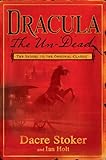
Dracula: the Un-Dead
by Dacre Stoker and Ian Holt
Get it at Amazon >>

It’s October, and even though the temperature is bouncing between hot and cool in much the same fashion as the ball on a ping pong table, there is still a bite to the air, and something indefinable that always comes as Halloween draws nearer. It’s an appropriate time, then, to revisit a classic horror tale. It’s an even better time to experience such a tale in a new way, which is what I did over the weekend, as I immersed myself in Dracula: the Un-Dead, the official unofficial sequel to Bram Stoker’s original novel.

Co-authors Dacre Stoker and Ian Holt do an excellent job of weaving their tale with Bram’s original, and with blending familiar characters with new ones. In this novel, however, Dracula isn’t the villain the original Stoker (Dacre’s great-granduncle) portrayed him to be – though, in all truth – neither is he sweetness and light. Mina Harker (nee Murray) is also painted with a slightly different brush. In this version of the story, which picks up 25 years after the Transylvanian Count’s apparent demise, she and old Vlad consummated their relationship in more ways than just the drinking of blood, and young Quincey Harker is not Jonathon’s son, but his.

Mother and son aren’t exactly the best of friends, however, especially since the younger Harker wants to pursue a career on the stage, and not in Jonathon’s failing law firm, while Mom doesn’t seem to be aging the way a respectable woman should. This latter is also a bone of contention between Mina and her husband.

It’s not just the Harkers who figure into this sequel, however. We see Seward, Holmwood and Van Helsing all dealing in completely different ways with the aftermath of their earlier adventure.

New characters enrich the tale in this novel. Notable among them is Inspector Cotford, a Lestrade-like police detective who is working the Dracula case while also trying to solve the mostly-cold case of Jack the Ripper. His associates are given names that vampire fans of the modern era will find either amusing or jarring, perhaps both. One is Price, but I’ll not reveal the others. Suffice to say that in-jokes abound.

All in all, Dracula: the Un-Dead was both satisfying and entertaining.

Even better, Stoker and Holt have left open the possibility of another sequel.
Book Review: Indigo Awakening

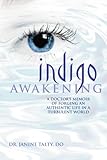
Indigo Awakening: A Doctor’s Memoir of Forging an Authentic Life in a Turbulent World
by Dr. Janine Talty, DO
Get it from Amazon >>

Before Janine Talty became a doctor, her life wasn’t exactly a downtown Disney hotel. A social misfit, dyslexic to the point of being almost aphasic, and the recipient of several metaphysical gifts, like being able to communicate telepathically with her father, and certain others, and a preternatural way with animals and humans in need of care, hers was not a story I thought I would enjoy.

I am more pleased than you could possibly imagine to be able to say I was wrong. From the moment I finished the first two pages of Indigo Awakening, I was hooked.

It helped that Talty grew up in places I’m familiar with – she went to high school in the town where I learned to be a barista, for example, and frequented the same beaches I used to, in Santa Cruz and Capitola. What grabbed me, however, was the simplicity of her narrative style, and the complexity of her journey.

Talty begins each chapter with advice to other indigos – children and adults who have similar gifts, and who tend to display a lot of indigo in their auras – children and adults who feel they’ve been put on earth to serve a purpose, to help and guide – even if – like her – they aren’t entirely certain what that purpose is.

After the advice, each section tells of one part of her life, and she doesn’t hold her punches. She’s candid about the pain she endured (unbeknownst to her parents) in elementary school, but she also shares her delight when she solves a problem with a rescued animal, figuring out, for example, how to feed a bird with a severe neck wound.

Describing this book is impossible. It’s memoir, yes, and spiritual journal, but it’s also a lesson from someone who has the power of knowing, and an affirmation of the human spirit. It’s the kind of thing you might think is too “woo-woo” to be believed, and yet, you’ll find yourself nodding as you read about past lives, ley lines, and energy exchanges. Or at least – I found myself nodding.

I don’t think I’m an indigo, but I’ve always been a bit of a misfit, and that common ground, and my love of mystery and folklore, allowed me to find common ground with Dr. Talty.

I suspect most readers, especially women, will do the same.

Booking through Thursday: Hot

btt2

On Thursday, June 25th, Booking through Thursday asked:

Now that summer is here (in the northern hemisphere, anyway), what is the most “Summery” book you can think of? The one that captures the essence of summer for you?

(I’m not asking for you to list your ideal “beach reading,” you understand, but the book that you can read at any time of year but that evokes “summer.”)

For me, it’s not just one book, but the works of one author, Anne Rivers Siddons, that give me that summery feeling. I consider her a “guilty pleasure” author at times, but I love her books because she’s an excellent storyteller who writes great women characters, and blends enough detail about things like clothing, jewelry, and room decor, with plot, setting, and subtext.

While I’ve enjoyed all of Siddon’s work, my favorites are the novels that take place at the coast – either in the Carolinas (Low Country, Up Island), or New England (Colony, Off Season) that draw me most, at least in part because I miss the shore so much.

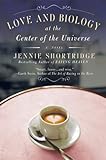
Review: Love and Biology at the Center of the Universe, by Jennie Shortridge


Love and Biology at the Center of the Universe
Jennie Shortridge
Get it at Amazon >>

When I first picked up Love and Biology… at Half Price Books, I thought it would be exactly the kind of read I was looking for. After all, it’s about a woman who flees her troubled marriage and goes to work in a popular bakery/cafe in Seattle. “Oh,” I thought, “there will be rain and coffee and romance and she’ll find herself and be independent.”

Well there is rain, and coffee, and romance, but somehow this novel isn’t quite what I hoped. I mean – I don’t hate it, I just think the characters need depth. Mira Serafino, for example, is very much a stereotype of Italian-American women of a certain age (one older than my own), with a young daughter (young but grown – we’re beyond the age of acne treatments), a teaching position she doesn’t seem to particularly like, and a marriage in which she’s grown complacent, and her identity seems completely centered on home and hearth.

There’s nothing wrong with that, but I was hoping for something in the vein of Bread Alone and got something more like Francesca’s Kitchen.

So I did what I always do when a book doesn’t fit: I set it aside to re-read later. I picked it up again recently because I needed bathtub reading, and was able to get more into Mira’s story – and the coffee shop scenes are well written, but I can’t shake the feeling that this book could have been something more, or that I’m missing the point.

Coming Soon: Julie & Julia – the Movie!

I never formally reviewed Julie & Julia, by Julie Powell, but I’ve read it twice and recommended to friends who like to read and friends who like to cook. In fact, it inspired me to read Julia Child’s My Life in France, as well.

I’ve been hearing murmurs about the upcoming movie for a while, but kept forgetting to look for trailers. I just did, and found out that the trailer was released on April 29th, and the movie is coming on August 7th, just ten days before my birthday. I shall consider it an early birthday present, especially as it stars Meryl Streep and Amy Adams.

But don’t take my word for it, watch the trailer:

Review: Off Season, by Anne Rivers Siddons


Off Season
by Anne Rivers Siddons
Get it from Amazon >>

I’m not sure if I introduced Anne Rivers Siddons’ work to my mother, or if she introduced it to me, but when you want something a little bit beachy and a little bit romantic, with vibrant women characters, no one beats her. This is especially true of her most recent book, Off Season.

In this novel, we are once again on the coast of New England, this time in Maine, in Carters Cove, following the life of a feisty girl named Lilly as she meets her first love (at the tender age of eleven), keeps tabs on the local osprey population, and does gymnastics in the basement gym built by her father.

As she grows up, we see her relationship with her artist-mother, her marriage to the devoted Cam, an architect, and the birth of her children, but her dog, Wilma, and the summer home in Maine are Lilly’s two touchstones, and at time function as additional characters.

Siddons excels at these gentle, dreamy stories of individual women, most of whom are somehow artistic, and the strong, complicated men they marry, and even when her tales veer into implausibility, they still leave you with the sense that you’ve read a really satisfying story.

Goes well with: Ice cold lemonade, a porch swing, and a cotton throw rug.

Book Review: Nights in Rodanthe, by Nicholas Sparks

Nights in RodantheNights in Rodanthe
Nicholas Sparks
Get it from Amazon.

When it comes to Nicholas Sparks novels, I generally prefer the movies. It’s not that he’s a bad writer, particularly – people seem to love his work – but I can’t quite grasp all the fuss. His stories tend to be on the sad side, he explores broken relationships an awful lot…I must be missing something.

Nevertheless, I enjoyed reading Nights in Rodanthe over a period of a couple of nights, as it was the perfect book to read in the bath. Two divorced adults, both needing a new love interest, a rambling old bed and breakfast, a violent storm – bubblebath fodder on every page.

I even appreciate that the ending wasn’t perfect, that this was a much more plausible story than, say, a Silhouette novel.

But I still can’t see WHY Sparks’ work is so popular, because, to be honest, I’m underwhelmed.

(And no, I have NOT seen the movie.)

Goes well with: Candlelight, a bubblebath, and driving rain.

Reviewed Elsewhere:The Flavor Bible by Karen Page and Andrew Dornenburg

The Flavor BibleThe Flavor Bible
by Karen Page and Andrew Dornenburg
Get it from Amazon

* * * * *

From time to time, I review books for other blogs, ezines and podcasts, but I still want to track what I’ve read. I recently reviewed The Flavor Bible for ALL THINGS GIRL. Here’s the first paragraph:

Although it does contain several recipes, The Flavor Bible, by Karen Page and Andrew Dornenburg, is not a cookbook. It isn’t really a bible either, for that matter. If I had to classify this book it would be half dictionary, half encyclopedia, and all wonderful.

The rest of the review can be found here.

Schuyler’s Monster by Robert Rummel-Hudson

Schuyler's Monster Schuyler’s Monster
by Robert Rummel-Hudson
Get it at Amazon.

Sometime in late 2006 or early 2007, I stumbled across the blog of one Robert Rummel-Hudson, and quickly became engaged. His writing style is upbeat and candid. He’s funny, but isn’t shy about using the word “fuck” when it’s appropriate, and he’s clearly completely devoted to his young daughter, Schuyler. At the time I first “met” his words, he’d just sold his book, and was beginning the long path to publication. When I re-encountered his work about a week ago, sparked by watching Autism: the Musical on HBO, I found that not only had the book been released, but I’d missed the signing in my local bookstore. (We both live in the same metro area, but my end of it is a good hour or so from his end.)

I was disappointed, but vowed to buy the book anyway. That weekend at Borders, among all the new non-fiction about romance, modern philosophy, and diet pills, I saw the book, Schuyler’s Monster, and it was even an autographed copy. I grabbed it, stopped at Jamba Juice, and headed home to read the entire book in one sitting.

I’m not a parent, nor am I particularly interested in children, and I’m generally one to avoid disabled-kid stories like the plague because they tend to be over emotional and / or horribly fluffy. Schuyler’s Monster is neither. Rather, it’s a love story from a less-than-perfect (and therfore more than perfect) father to his (in his word) “broken” daughter.

Why broken? Because Schuyler, for all she’s a bright and mischievous child, has a neurological disorder that not only compromises her fine motor skills, but also makes her unable to form intelligible speech.

The book is as much about Rob’s reaction to his daughter’s disability, and their journey toward helping her work around it as it is an ode to playful and loving father-daughter relationships. Who wouldn’t want a dad who let you watch monster movies, even if you were really too young? I know I would.

This book was moving, yes, but it’s also funny, sweet, nostalgic, and triumphant. Like Rob’s blog, it’s upbeat and blunt. Unlike Rob’s blog, the word “fuck” isn’t used terribly often, if at all. (I should note, I don’t judge blogs by whether or not people curse. I just believe that if “fuck” is the most appropriate expression of frustration, joy, whatever, cheating on it’s use is, well, cheating. I don’t believe people should ever be afraid of language.)

(And actually he doesn’t use it that often in his blog, either).

Seriously, though, it’s a great book. You should read it for the writing alone, even if you don’t like disbled-kid stories, either.