Teaser Tuesdays: Holiday Grind by Cleo Coyle

On Teaser Tuesdays readers are asked to:

  • Grab your current read.
  • Let the book fall open to a random page.
  • Share with us two (2) “teaser” sentences from that page, somewhere between 7 and 12 lines.
  • You also need to share the title of the book that you’re getting your “teaser” from … that way people can have some great book recommendations if they like the teaser you’ve given.

My teaser this week is from Holiday Grind, by Cleo Coyle. I’ve been reading it from my cozy house, where it finally feels like November (49 degrees at 6:41 PM) and taking breaks to mock the people across the street who don’t seem to know how their moving truck works.

If you don’t know the Coffeehouse Mysteries, you should seriously check them out. Anyway, here’s the teaser:

There was nothing like walking through the Village on a snowy winter night. The few vehicles on the slippery street crept along no faster than horse-drawn carriages. Every surface appeared flocked with white; the pungent smell of active old fireplaces floated through the air; and bundled couples hurried past dark storefronts, eager to get back to their warm apartments or inside a cozy pub for a glass of mulled wine or mug of Irish coffee.

As I passed by St. Luke’s churchyard, the whole world seemed to go silent, save the icy flurries that still pecked at my parka and the crunch, crunch, crunching of my winter boots. At one intersection I stood alone, watching a traffic light provide a signal for crossroads that had no traffic. Hands in pockets, I waited half amused as the bright red light flipped to green in an unintentional
Christmas display just for me.

from Holiday Grind, chapter 3, by Cleo Coyle.

Sunday Salon: Children’s Stories

The Sunday Salon.com

Despite the fact that I’ve been reading enough mysteries lately to re-paper the rooms in several haunted mansions, it’s children’s stories that are on my mind this week.

Last week, I had the wonderful experience of attending Peter Yarrow’s (of Peter, Paul and Mary) performance/book signing at the Jewish Community Center in Dallas. Unlike a formal concert, this was a more intimate affair. He spoke and sang for about an hour, inviting various kids up on stage to help out, and showing off several of his books.

The newest, Day is Done is the latest in his collection of stories based on his songs. The first was, of course, Puff, the Magic Dragon. I now have signed copies of each, got to converse with Peter for the second time in my life (the first was in August, 2002, in California), and have a lovely photo with Peter to help me remember the event.

And did I mention the books?

But kiddie lit is also on my brain because of an old Leo Buscaglia book, The Fall of Freddie the Leaf. I was first introduced to it about 27 years ago when I was part of a team from the Modesto UU Fellowship that performed the book in a reader’s theatre format. I was twelve at the time.

Today, I was again part of such a performance, on the stage at my church (Oak Cliff UU). You see, our church has recently lost two of its elders, and everyone is still grieving, still raw. I mentioned the book when I was at lunch with our minister and our associate minister, and they said, “So you’ll stage it as a dramatic moment, yes?”

And so I did.

And today we read.

And there was not a single dry eye.

But we needed the release.

Badly.

So, I may be reading mainly mysteries, but I’ve been reminded lately that even adults can take a moment to see things from a child’s perspective, and be the better for it.

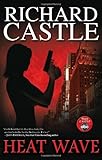
Review: Heat Wave by Richard Castle

Heat Wave
Heat Wave
by Richard Castle
Get it at Amazon >>

Richard Castle might be as fictional as belly fat on a Barbie ™ Doll, but his book, Heat Wave is a fast-paced mystery with just enough romance to keep it interesting.

As anyone who’s ever seen Castle on television knows, Heat Wave is the novel about fictional NYPD detective Nikki Heat and her shadow, journalist Jamie Rook, and both characters are clearly stand-ins for series characters Det. Kate Beckett, and Castle himself.

One might think the fact that this is obviously a well-placed marketing tool makes the book unreadable.

One would be wrong.

Heat Wave is a bit short, coming in at around 200 pages, but it’s funny, interesting, and satisfying, much as the average episode of Castle generally turns out to be.

As it’s a mystery, I won’t spoil the plot, except to mention blackouts, dual murders, and art thievery. If you want to know how those three things combine, and where the aforementioned romance comes in, you’ll have to read the book!

Teaser Tuesdays: Heat Wave

On Teaser Tuesdays readers are asked to:

  • Grab your current read.
  • Let the book fall open to a random page.
  • Share with us two (2) “teaser” sentences from that page, somewhere between 7 and 12 lines.
  • You also need to share the title of the book that you’re getting your “teaser” from … that way people can have some great book recommendations if they like the teaser you’ve given.

My teaser this week is from Heat Wave, by Richard Castle (well, by someone ghost-writing as Richard Castle), and I’d almost forgotten I’d ordered it until a visiting friend literally tripped over the box from Amazon, as she was leaving my home yesterday.

I have two books ahead of it, but couldn’t resist cracking it open.

So here’s the teaser:

Two hours later, after Rook, and then the news anchor, and then her husband folded, Nikki won yet another hand against the judge. Simpson said he didn’t care, but judging from his expression, she was glad she got the court order out of him before the poker game. “Guess the cards aren’t falling my way tonight for some reason.” She really wanted him to just say “D’oh!”

Booking Through Thursday: Blurb-iotica

btt2

On Thursday, October 29th, Booking through Thursday asked:

What words/phrases in a blurb make a book irresistible? What words/phrases will make you put the book back down immediately?

I’ve always felt that book blurbs are sort of like eye cream – a little bit goes a very long way. Beyond that, I had to do some research, and after reading the backs of several books I’ve come to the conclusion that:

  • If I’m familiar with an author’s work, I don’t much care what the blurb says, I’ll buy it if they have a history of pleasing me, skip it, if not.
  • I’m more concerned that the blurb be well-written than with specific word choices. I mean, presumably I already KNOW if a book is general fiction or fits into a specific genre, so I don’t need to look for words like “vampire” or “coffee” or “beach” although seeing those words makes me more interested.
  • I don’t like hard-sells. The blurb on the back should function as a teaser – give me a hint of what’s inside, don’t hit me over the head with it.

If those sound like vague responses, all I can say is that gauging a book by it’s blurb isn’t far off from judging it by it’s cover art. And of course I’d never do that.

Review: Sarah’s Key by Tatiana de Rosnay

Sarah's Key
Sarah’s Key
by Tatiana de Rosnay
Get it from Amazon >>

While there is no such thing as a term life insurance policy that repays you if you don’t like a book, it’s a pretty safe bet that if you see enough random strangers reading a novel you’re also considering, it probably doesn’t suck. That’s what happened to me with Tatiana de Rosnay’s recently reprinted novel Sarah’s Key: I’d looked at it in various bookstores on more than one occasion, but hadn’t bought it, and then, finally, after seeing too many other people reading it, I took home a copy of my very own a couple weeks ago.

I read it almost instantly, but haven’t had time to post the review until now.

In Sarah’s Key we are treated to not one, but two stories, one taking place in 1942, and the other in modern France. In the past, we are introduced to a young girl named Sarah. She is awakened one morning by loud knocking at the door of her family’s Parisian apartment, and when her mother answers the knock, they find the police waiting. Sarah’s family is Jewish, and they’re about to be part of one of the largest roundups of French Jews. Her father’s been living in the basement for weeks, anticipating such an event, and her little brother isn’t awake yet.

Given time to gather a few things, Sarah wakes her brother, and sends him to hide in the secret cabinet – literally a hollow space in the wall between two rooms – where they often play, and have created a secret lair, as children do, with food and water and books. She locks him in, and promises to come back. Sadly, she and her parents are then hustled off to the Vélodrome d’Hiver, an indoor bicycle racing arena in Paris, then to a camp outside the city, and then off to Auschwitz. While Sarah does manage to escape before the last transport, and is taken in by a French farmer and his wife, she doesn’t make it back to Paris in time to save her brother.

As Sarah’s story is unfolding in the past, however, Sarah’s Key also introduces us to Julia Jarmond, an American journalist who has lived in Paris for 25 years, and is married to a French architect. She shares a special bond with her grandmother-in-law, who is a feisty old woman, and when she is assigned to cover the memorial of the Vélodrome d’Hiver roundups, it is this woman who reveals that the family moved into their vintage Paris apartment only because it was available after being vacated by Sarah’s family.

As Julia begins to research her story, she finds herself compelled to learn about the family who previously lived in the apartment, and eventually, she does track down Sarah’s surviving family members, but only after her marriage disintegrates.

If this sounds like a depressing story – trust me, it’s NOT. It’s imbued with love and hope, and is written so delicately, so gently, that what should be horrifying instead serves as a backdrop for a wonderful exploration of history and the human heart.

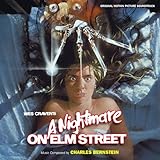
Retro-Viewing: A Nightmare on Elm Street

A Nightmare on Elm Street
Written & Directed by Wes Craven
Get it at Amazon >>

While I would never claim that I learned everything I know about life from horror movies, I will admit that sometimes they do teach a valuable lesson. Nothing is a better fat burner, for example, than running for your life from a serial killer. Especially if you do it barefoot. On rain-slick pavement.

Of course, in the original A Nightmare on Elm Street most of the running takes place while the main characters are asleep, for this movie was the first in a long series about Fred Krueger, the pizza-faced slasher who stalks teenagers in their dreams.

As horror movie premises go, this first installment, which was released when I was a freshman in high school, was fairly original, and very scary. After all, everybody sleeps, and everybody dreams (if you don’t dream, you literally go crazy), and almost everyone has wondered what really happens if you die in your dream.

While I initially watched the film because I thought the concept was cool, and because as a twelve- and thirteen-year-old, I’d had a crush on Robert Englund (the actor who brought Freddie to life) after seeing him in the miniseries V and V: the Final Battle, the teenagers in the cast were actually pretty impressive. Amanda Wyss (who would later appear in several episodes of another favorite show, Highlander: the Series) brought the perfect blend of edginess and vulnerability to the role of Tina Grey. Heather Langencamp (who would return to the franchise in A Nightmare on Elm Street 3: Dream Warriors and Wes Craven’s New Nightmare, was smart and snarky as Nancy Thompson (more recent television viewers would see her play another Nancy – Nancy Kerrigan – in a movie of the week about Kerrigan and Tonya Harding), and a very young, dare I say – babyfaced – Johnny Depp ate up the screen as Nancy’s boyfriend Glenn.

The adult castmembers, aside from Englund, included John Saxon and Ronee Blakley as Nancy’s parents, both of whom turned in quirky and interesting performances.

But it’s the villain in a horror film that makes or breaks it, and old Freddy has become an iconic horror villain, as much because of the razor-glove he uses to slaughter his teenaged victims as because of the one-liners he slings with equal sharpness.

As an eight-year-old, I once had to sleep with the closet light on because the original black-and-white movie of Frankenstein creeped me out so much.

As an teen, lingering fear from my first experience with Fred Krueger had me compelled to make sure all closet/laundry room/basement (when we had a basement) lights were OFF before I went to sleep, so that I wouldn’t wake up and panic over a fictional murder’s boiler room being linked to my house.

Today? Today, I can watch this film for the performances, laugh at the effects, and listen to the commentary thinking, “Man, Robert Englund and my friend Clay are totally voice doubles.”

I still love sharing the film with new viewers – and I still know exactly when to start it so that Nancy’s midnight countdown is in synch with real time.

Guest Post: Author Rolf Hitzer (Hoodoo Sea) on Writing Rituals

Hoodoo Sea
Hoodoo Sea
by Rolf Hitzer
Get it from Amazon.com >>

Every author has their own ritual for when they write. Some have to wear a specific pair of Naot shoes. Others have to light a candle, brew coffee, and stir the milk in three times, clockwise. Last week, we reviewed Rolf Hitzer’s debut novel, Hoodoo Sea, which you can buy by clicking on the link above. This week, Mr. Hitzer shares one of his writing rituals with us.

My Writing Ritual
by Rolf Hitzer

Prior to my decision of writing a novel, I had without a doubt, believed myself to be a normal person. Then I began to realize how annoyed I would become if I didn’t follow a certain procedure every time I sat down to scribble a few words.

Before writing, Hoodoo Sea, I didn’t drink tea. In fact, having a cup of tea was for the elderly or the British people. However, I found myself making a cup of tea each time I prepared myself for a writing session. Why? To this day, I still don’t know. And, I couldn’t have any tea, oh no, it had to be Chamomile Tea with a teaspoon of honey.

At first, I had thought nothing of it, that is, until I had run out of tea bags. Panic surged through me. Where did that feeling come from? I shrugged it off and sauntered down into the basement where my office was. I plunked myself into my chair, and again, became agitated. My focus and concentration became lost like the characters in my novel.

Well, after experiencing that incident I was never without Chamomile Tea again. What I find really bizarre about this is when I had finished, Hoodoo Sea, I stopped drinking tea altogether just like I had before. That is…until I started my second novel.

Review: The Longest Trip Home by John Grogan

The Longest Trip Home
The Longest Trip home
John Grogan
Get it from Amazon.com >>

It’s weird the way some books fall into your life exactly at the right moment. For example, the day after I got home from my recent trip to New York and New Jersey, on a flight where I resorted to actually reading the different ads all professing to be about the best weight loss pills, or coolest diving watch, or whatever, because I just wasn’t in the mood for the book I had with me, I found Dracula: the Un-Dead, a new “Magic Kingdom” novel from Terry Brooks, Sarah’s Key (which the woman across the aisle of the plane swore was a great novel despite being a Holocaust story), and John “Marley and Me” Grogan’s latest memoir, The Longest Trip Home.

I reviewed the Dracula book earlier this week, and finished Sarah’s Key the next day, though I haven’t posted the review yet (look for it on Tuesday), and I finished the Grogan book yesterday. It is that book that seemed perfectly time.

First, I have to share, in case I hadn’t, that I love Grogan’s writing style. I never read his columns, but I loved Marley and Me as much for his storytelling capabilities as because I’m a sucker for a good dog story.

Second, like Mr. Grogan, though to a lesser degree, I’m “culturally Catholic.” My Italian-American relatives still watch the news in Italian (from their plastic-wrapped New Jersey living room), and have palm crosses stuffed between the pages of the Bible and the Dictionary, and pictures of the Pope above the TV. My grandmother kept her rosary beads at her bedside, even after she was mostly senile, and while I have serious issues with the politics of the Catholic Church, I will always have a special place in my heart for the ritual, the music, and the “smells and bells.”

But this isn’t my general blog, so let me talk about the book.

The Longest Trip Home is about Grogan’s life, growing up as a good Catholic boy in the Michigan suburbs, and growing away from his family and his religion as he became an adult, a journalist, and a husband and father.

It’s a linear book, tracing the author’s life in mostly-chronological order, and if there’s a focus on the funnier side of things, I can’t blame him – humor connects us in ways straight facts cannot.

From his stint as altar boy to his founding of an underground paper in high school, to his first meeting with the woman who ultimately became his wife, Grogan shares his life in fairly candid language, with some concessions made for the protection of real people.

Most poignant, is the last quarter of the book, where Grogan must deal with the aging of his parents, and eventual death of his father, but while some of it is sad, none of it is ever maudlin.

It’s a wonderful memoir, and an entertaining read, but for me, personally, it was also validation of this habit of clinging emotionally to Catholic roots even if we don’t cling to the modern form of the religion.

I hope John Grogan continues to write books.
I’ll be first in line for his next offering.

Review: Hoodoo Sea by Rolf Hitzer

Hoodoo Sea
Hoodoo Sea
by Rolf Hitzer
Get it from Amazon.com >>

There’s something really exciting about reading an author’s first work, so when I was offered the opportunity to review Rolf Hitzer’s debut novel, Hoodoo Sea, I jumped at the chance. After all, I like a good action-adventure novel, and coming home from a vacation that involved climbing lighthouses and hanging out at murky cold beaches put me in just the right frame of mind for such a work.

In Hoodoo Sea, Hitzer introduces us to Scott Reed, a NASA wing commander chosen to command the test mission of the first speed-of-light craft. Oh, and Reed, like the author, is Canadian.

Reed and his three teammates take off with no issue, and immediately head for that part of the ocean known as “Hoodoo Sea” by navy types, and “the Bermuda triangle” by the rest of us. Their craft is surrounded by a dense fog, instruments go wonky, and there are flashes of bright light. Finally, they land, but on an Island populated by hunter-gatherer types and giant wolves with flashlight-bright eyes. This is where their adventure really begins.

Part action-adventure, part survival tale, and part paranormal thriller, Hoodoo Sea is a compelling read, with strong characters and just enough detail to allow the reader to visualize the scene without feeling like it’s overkill.

I liked that the mission team included a woman, and that the American vs. Canadian bickering was realistic without overpowering the plot. I enjoyed the descriptions of the native population, including Tribefeeder Henpo, and the hints that the wolves might not be wolves.

I confess, that when my stepfather, who peeked at the book before I could, pointed out that author Hitzer is from Winnipeg, just like his main character, I was a bit concerned there would be elements of “Marty Stu-ism” – self insertion – but the story didn’t read that way.

While the ending seemed a bit abrupt, and had a sort of “but it was all a dream” cheat that most writers are warned against in high school, in this novel, that device worked well, and did not in any way diminish the story.

Congratulations, Rolf Hitzer, on a great first novel. More, please?

Check back on Monday , October 26th for a guest post from Rolf Hitzer.