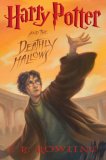
Harry Potter and the Deathly Hallows


by J. K. Rowling

And so it ends – the series that has gripped children and adults alike for ten years now has come to a close. I read it overnight, after having to put it aside for several hours and leave the house (actually, I took it with me, but there was no opportunity to read). I was expecting to either love it or hate it. Instead, while there are a few elements I would change, if I could, I left the book feeling satisfied.

As I discussed with a friend, the Harry Potter books are not high art, but that’s okay, because we need mind candy. We need to sometimes read things just for the pleasure of falling into the story. These books are great for that, because whether it’s Hermione, the ultimate geek girl, Harry, the orphan who overcomes his upbringing, Ron the perfectly normal kid, or even Tonks, who hates her “normal” image, or silky, snarky Severus Snape, we find someone to identify with. For me, it was a blend, for others it’s one character, but the identification is there.

With this book, there is no more tossing it off as kiddie lit, though. This book is bloody, and violent. Our heros are fighting a war, and while they may use wands and magic instead of guns and bombs, people are still getting hurt and killed.

Spoilers Abound:
Continue reading

His Dark Materials: The Golden Compass (aka Northern Lights)

by Philip Pullman

I chose to read this book without quite knowing what it was. I’d heard of the series His Dark Materials but somehow thought they were about another boy wizard, and not a curious young girl. I was attracted to the UK title Northern Lights but didn’t really connect that it was one and the same with The Golden Compass. I like the UK title better, by the way, as it’s more accurate and more mysterious.

In any case, it was the movie that made me want to read the books. Oh, I know, the movie’s not out yet, but I’ve seen the trailer, and it looks fantastic.

And so I sat down with the first book and got to know Philip Pullman’s characters, especially spunky Lyra, and his alternative history with great air ships (dirigibles, essentially), and daemon spirit guides, and talking bears, and such. It’s such a richly created world, and the writing is amazing – all the scenes in the arctic felt cold to me, and I kept wishing it wasn’t 90 degrees outside so I could justify sipping hot cocoa while I read.

And now I’m hooked, but I promised myself I wouldn’t read books two and three until I’d finished the rest of my stack.

True Believer

by Nicholas Sparks

Jeremy Marsh is a skeptic whose had some success with the media, and when he goes to a small town in North Carolina to debunk some graveyard ghost-lights, it’s pretty clear he intends to solve the mystery and beat a hasty retreat to his home in New York. Instead he finds himself falling in love with town librarian Lexie Darnell.

As with many of Sparks’s novels, True Believer is a gentle tale with earthy three-dimensional characters that seem like people any of us might know. Character is as vital as plot with him, and that’s good, because to be honest, I found the plot of this offering to be a bit predictable. I won’t outline it here, because I don’t like to offer spoilers, I’ll just say that it’s best to read this novel because you want to visit a cozy small town and meet interesting people, and not because you’re looking for a great surprise ending or plot twist.

As a cozy novel, True Believer goes well with a rainy day and hot tea, and in that light, it’s an enjoyable read.

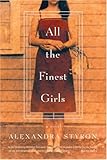
All the Finest Girls

by Alexandra Styron

I found this novel, the story of Adelaide “Addy” Abraham, to be an extremely difficult read, and as I’ve analyzed it, I’ve realized it was because I found the main character annoying. Addy is the daughter of an actress and an artist who are both too self-absorbed to have any clue of how to be parents, so they hire Lou, recently arrived from the Caribbean island of St. Clair, to be her nanny. As the novel opens, however, we are introduced to an adult Addy, a broken, sour person, who has come for Lou’s funeral.

The novel flips between Addy’s present – the funeral and her interactions with Lou’s family, who are polite, but don’t hail her as the visiting dignitary she imagined herself to be – and two different parts of Addy’s past, her adulthood including a sort of influenza-induced breakdown, and her childhood, which often found her pitting Lou and her parents against each other.

By the time a fragile, broken Addy makes peace with her even more broken parents, the novel has ended, and while the language used within it was vivid, the places realistic, and the characters plausible, I found the whole book to be…somehow missing something.

Or maybe I was missing something.

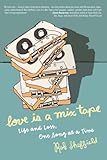
Love is a Mix Tape

Love Is a Mix Tape: Life and Loss, One Song at a Time by Rob Sheffield

This book was hanging out on the “new fiction” shelves at my local Barnes and Noble, and when I picked it up, I was hoping it was similar to a recent read I’d picked up at Half Price Books – <i>Liner Notes</i>. It wasn’t. First, it’s not fiction, but the autobiographical tale of the author’s life prior to, and during, his brief marriage to the first love of his life, a woman named Renee. Second, in this book the music isn’t incidental – it’s an integral part of the author’s personality, Renee’s personality, and the fabric of their relationship, cut short by her sudden death.

It is a beautiful book, never once becoming maudlin or depressing. Instead, it is as lyrical and uplifting as many of the tunes mentioned, albeit with a gritty backbeat only reality can provide.

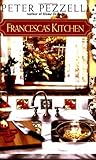
Francesca’s Kitchen

Francesca’s Kitchen by Peter Pezzelli

Francesca Campanile is a classic Italian-American widow. Her youngest child has reached adulthood and doesn’t live at home any more, and her older children have moved to opposite ends of the country and have families of their own. Needing to feel needed, she answers an ad for a single mother looking for a nanny. What she finds is a new family.

The mother, Loretta, works too many hours, and the kids, Penny and Will (one wonders if the other was a fan of <i>Lost in Space</i>, have no structure. Francesca changes that, becoming a mother figure to Loretta and a grandmother-figure to the kids. When Loretta hits it off with Francesca’s unmarried son, the family unit is cemented into one.

What could be a cheesy tale is made real by the validity of the various character’s emotions: Francesca feels old and useless, Loretta feels like a failure as a mother, etc.  That Italian food and home cooking are prevalent themes only makes the book stronger, for the kitchen is the heart of any home. And that’s what this book has plenty of: heart.

Warning: may make you crave baked ziti.

My Keyboard for a Cutting Board

My Kingdom for a Cutting Board: Adventures in a French Kitchen v1.0, by Laura Pauli

Part luscious food-porn and part letter home from abroad, Laura Pauli’s first book is both engaging and compelling, telling the story of her initial experiences cooking in France after leaving a corporate cubicle job in Silicon Valley. Culled from her blog, and letters she actually wrote to friends and family, it shares her story – including descriptions of food that make the mouth water, and far less appetizing descriptions of things like the shoebox apartment she rents, that could fit inside one room of her former residence in the Bay Area.

Originally Reviewed 13 September 2006

My Keyboard for a Cutting Board

My Keyboard for a Cutting Board

Laura Pauli: My Keyboard for a Cutting Board

* * * * *

Part luscious food-porn and part letter home from abroad, Laura Pauli’s first book is both engaging and compelling, telling the story of her initial experiences cooking in France after leaving a corporate cubicle job in Silicon Valley. Culled from her blog, and letters she actually wrote to friends and family, it shares her story – including descriptions of food that make the mouth water, and far less appetizing descriptions of things like the shoebox apartment she rents, that could fit inside one room of her former residence in the Bay Area.

Dragon Moon

Dragon Moon

Alan F. Troop: Dragon Moon

* * * * *

In the second Dragon Delasangre novel, Troop continues his novel approach to dragons, introducing us to new powers, new breeds, and also weaving in a family drama – his new romance with his deceased wife’s sister. Still in dire need of a better editor, but good bathroom reading.

The Dragon Delasangre

The Dragon Delasangre

Alan F. Troop: The Dragon Delasangre

* * * * *

When Fuzzy brought me this book I looked at the cover and said, “What is it, a new vampire novel?” Oh, how wrong I was. Author Alan F. Troop’s first novel about a shapeshifting race whose natural form is that of the dragon was compelling and entertaining, though poorly edited. The title character, Peter Delasangre, is, when we meet him, a human being living on an island off the coast of Miami – only when he devours (literally) the young waitress who was hitting on him hours before in a restaurant do we see the reality of his natural form.

The first in a series of (currently) four novels, this book introduces us to Peter, his human employees, and his eventual wife Elizabeth, and her family.

Mind candy, but fun mind candy.