Second Attempt: Touchstone, by Laurie R. King

Touchstone
Touchstone
Laurie R. King
Get it from Amazon >>

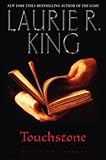
I’m struggling with the reading of Touchstone, by Laurie R. King, and I’m not certain why, because I love her writing. I mean, the woman can make asset based lenders seem like interesting fodders for novels, and her contemporary detective series set in San Francisco is as much a favorite of mine as her wonderful Sherlock Holmes/Mary Russell series.

But this is my second attempt at reading Touchstone and while the premise is right up my alley, I just can’t get into the book. If this were an author whose work was unfamiliar to me, I’d discard the novel, but since it’s someone whose writing I always enjoy, I feel like the fault is mine, like I’m missing something important that is preventing me from getting lost in the story.

In any case, here’s the Publishers Weekly description of the novel (via Amazon.com):

Set shortly before Britain’s disastrous General Strike of 1926, this stand-alone thriller from bestseller King (Keeping Watch) offers impeccable scholarship and the author’s usual intelligent prose, but a surfeit of period detail and some weighty themes—the gulf between rich and poor, the insidious nature of both terrorism and the efforts to curb it—overpower the thin plot and stock characters. When Harris Stuyvesant, an investigator for the U.S. Justice Department, arrives in London to look for the mastermind behind a series of terrorist bombings on American soil, he tells Aldous Carstairs, a sinister government official, that his prime suspect is Labour Party leader Richard Bunsen. Carstairs suggests Stuyvesant should talk to Bennett Grey, whose brush with death during WWI has heightened his sense of perception to the point that he’s a kind of human lie detector (he’s the touchstone of the title), and to Lady Laura Hurleigh, Bunsen’s lover and a passionate advocate of his brand of socialism. The threat of violence at a secret summit meeting held at the Hurleigh family’s country house about preventing the strike provides some mild suspense.

Review: Fixing Freddie, by Paula Munier

Fixing Freddie
Fixing Freddie
by Paula Munier
Visit Amazon.com for a copy of your own.

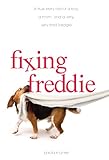
When I was offered the opportunity to review Paula Munier’s wonderful book, Fixing Freddie: a true story about a boy, a mom, and a very, very bad beagle, I was excited. I’ve been in a non-fiction mood lately, and I love dog stories, so this seemed like the perfect match for my tastes.

Like someone already skinny who is taking clinicallix to lose weight, I was not disappointed. Munier’s first person account of her marriage, divorce, cross-country move, and first foray into home ownership and puppy parenthood is told with a blend of candor and humor that felt as if she was sitting in my living room telling me about her life. I could see her son playing video games, smell the roasted chicken that the dogs (Freddie had an older friend named Shakespeare), and see Freddie’s cute face. In fact, I was so caught up in the book that I brought it into the bath with me, despite my personal policy against reading hardcovers in the tub. It was that gripping.

Maybe it’s because I have three dogs of my own, at ages 10, 3 and 1.75, two of which I’ve had since they were eight weeks old (the oldest and the youngest) that I could sympathize when Freddie escaped from the yard, got caught on a frozen lake (my dogs have all done the former; my oldest dog has fallen into the swimming pool several times), or eaten something he shouldn’t (Miss Cleo and my chihuahua, Zorro, now at the Rainbow Bridge have eaten things as diverse as an entire t-shirt, the backs of my suede shoes while I was wearing them, the string from a roast, half a London broil, a stick of butter, and, once, all the topping from a pizza, though they left the crust and closed the box when they’d finished), or maybe it’s just that in Freddie we see the lost puppy in all of us – the part of our human selves that wants someone to direct us where to go, feed and bathe us regularly, and let us curl up in a warm bed, in exchange for mere affection and coming when called.

Or maybe it’s just that any woman who’s ever dated (or married) a man can understand Munier’s frustration with that species.

Or maybe it’s because Munier’s story is universal, and boils down to the search for a safe haven and a cozy home.

Fixing Freddie may be essentially a “dog story,” but it’s also a memoir about life and love and growing up, and letting go.

Even if you’re a cat person – even if you don’t even have a pet rock – you will enjoy this book, and come away from it with a new perspective.

Goes well with: roasted chicken, and a begging dog.

Review: My Fair Lazy, by Jen Lancaster

My Fair Lazy
My Fair Lazy
by Jen Lancaster

I’ve been a great fan of Jen Lancaster’s memoirs since before she published them, and was just another snarky blogger. I mean, even though our politics would never mesh, we’re pretty close in age, and have similar cultural landmarks because of it. It is with some regret, then, that I say I found her latest offering My Fair Lazy: One Reality Television Addict’s Attempt to Discover If Not Being A Dumb Ass Is the New Black, or, a Culture-Up Manifesto less sparkly than her previous offerings.

Maybe it’s because we’re both getting older, or maybe it’s just because Jen is funnier when she’s playing her shallow consumer act (it is an act, right? Right??) but some of this book just seemed sad to me. I mean, her voice is still as sharp as ever, but I think I’m losing interest in her version of the world.

On the other hand, I did turn into a prune while reading this book in the bath, using my toes to add alternate doses of hot and cold water. I’d have preferred to be reading it while seated on my new-this-year outdoor chair cushions, but even the best Jen Lancaster book isn’t worth sacrificing oneself to the mosquitoes for.

But yes, I will buy her next book.
Whatever that is.

But it will probably be the Kindle edition.

Retro-reading: Warped Factors by Walter Koenig

Warped Factors

Warped Factors
by Walter Koenig

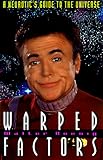
There are some celebrity autobiographies that make you kind of want to bitch-slap the authors. There are some celebrity autobiographies that make you think you should be curled up in a library with a crackling fire, smoking endless tatuaje cigars. Then there are the celebrity autobiographies that perfectly balance the behind-the-scenes, name-dropping dish we all claim to hate, but secretly crave, with the relatively candid story of a person’s life that makes them seem like a real person.

Walter Koenig’s autobiography is one of the latter kind.

I first read it several years ago when it came out, but when I was up in the Word Lounge a few weeks ago, looking for something entirely different, it caught my attention, possibly because I’d just re-read a Star Trek novel featuring the character he played. I sat down on my old blue couch to read just a few pages, and found myself, hours later, reading the last of it via booklight in bed, while my husband snored blissfully beside me.

As autobiographies go, this one, Warped Factors is free of major scandal. Instead, it’s a wry, sometimes self-deprecating glimpse into the life of a man who has a far larger body of work than most of us probably realize, and while there are some moments of bitterness in regard to his career, they’re not without provocation.

Reviewing an autobiography feels sort of like judging an actual person, which is silly, because it’s still just a glimpse. A peek.

But as glimpses and peeks go, especially if you’re any kind of classic Star Trek fan, Warped Factors is pretty good reading.

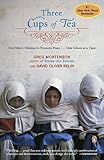
Review: Three Cups of Tea

Three Cups of Tea
Three Cups of Tea
by Greg Mortenson and David Oliver Relin

I initially picked up Three Cups of Tea some time last year, in the same shopping trip that included picking up a couple of different anti aging creams for my mother, having my hair done, and spending some time alone with a grilled cheese and tomato sandwich at Barnes and Noble. I didn’t actually read it until recently, however, because it got lost in my house – so lost, that I actually picked up a second copy thinking I’d never purchased the first!

I’m glad I finally read this book though, because the story is beautiful. I mean, I disconnected a bit in the first third of the book when author Greg Mortenson, whose story this is, was living in his car to save money so he could get back to Pakistan, but by the time I got to the end of his book – which is really just the beginning of his legacy – I was completely invested in the man and his mission.

For the five people who haven’t read it, Three Cups of Tea is the story of an American mountain climber who fails to reach the summit of K2, becomes severely ill during his descent, and gets lost in a remote corner of Pakistan, where local villagers take him in, help him recover, and essentially adopt him. As thanks, he promises to return and build a school where the young women of the village can be educated. He eventually makes good on his promise, first building a bridge, then the first school, then heading a foundation with a mission of building more schools in Pakistan, all for educating women and girls, while still being respectful of local religion and customs.

And to top it all off, this is all taking place at the very beginning of the Taliban’s rise to power.

While, at times, my not-so-inner snob found her skin crawling at the less-than-pristine conditions of Mortenson’s living arrangements, I finished the book with tears in my eyes. I feel this book should be required reading for everyone, everywhere.

Goes well with: Tea and flat bread.

Review: The God of the Hive

The God of the Hive
The God of the Hive
Laurie R. King
Bantam, 368 pages
Get it from Amazon >>

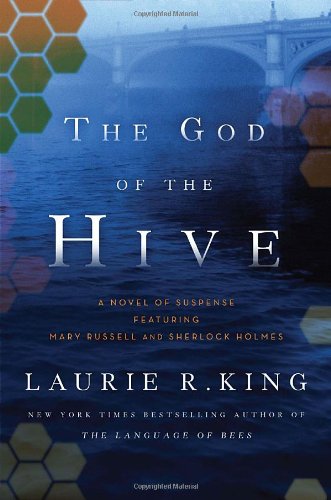
I’ve been a fan of Laurie R. King’s series about Mary Russell and her older husband, the legendary Sherlock Holmes, since the first book hit the stores, so of course, I had to have the latest adventure the very second it came out. When The God of the Hive arrived, however, I put it aside, planning to savor it while on vacation. Instead, I read all the paperbacks I’d brought with me, so that I could leave them for my mother, and didn’t read this novel until I got home.

One of the things I love about this series is the level of detail King includes. While she doesn’t have to know what passed for the best acne treatment in Holmesian London, she does have to know where one can find certain kinds of stationery, or where a bolthole might be located.

In this book, which is a direct sequel to the previous installment, The Language of Bees, Russell and Holmes are still separated by the requirements of their current case – Holmes fleeing with his injured long-lost son, and meets up with a Scottish doctor, who ends up being a fabulous addition to the existing cast of characters. Mary, on the other hand, has the aeroplane pilot, and Holmes’ half-Chinese granddaughter to contend with, though she, too, hooks up with a helper who turns out to be quite beneficial to all concerned.

There isn’t much detection in this novel – there is character and there’s plot, but it’s basically a chase scene interrupted by action.

The good news, however, is that it’s still, undeniably King’s work, which is always incredibly compelling reading.

Teaser Tuesday: The God of the Hive

On Teaser Tuesdays readers are asked to:

  • Grab your current read.
  • Let the book fall open to a random page.
  • Share with us two (2) “teaser” sentences from that page, somewhere between 7 and 12 lines.
  • You also need to share the title of the book that you’re getting your “teaser” from … that way people can have some great book recommendations if they like the teaser you’ve given.

Laurie R. King’s Sherlock Holmes/Mary Russell novels are some of my favorite mysteries ever, and not just because I like taking a break from a world where we discuss hair growth shampoo and spending time in a world where high tea is a normal event. I’ve been a Holmes fan since as long as I can remember, but I love the relationship that King has created with his protege’ cum wife Mary. It just works.

Like many of her readers, the “to be continued” ending of the last novel really disappointed me, which is why I’ve been counting the days until The God of the Hive was ready. My copy arrived today. I can’t wait to read it!

Evening, and I might have curled up to sleep fully clothed except it had occurred to me that children required putting to bed. Estelle and Goodman were in front of the fire, he on the floor with Damian’s sketch-book on his knee, she stretched with her belly across the tree-round he used as a foot-stool, narrating the drawings for him. I had found the book in my rucksack, astonished that it had survived this far, and leafed through its pages before I gave it to her, making sure it contained none of his detailed nudes or violent battle scenes. Some of the drawings I had found mildly troubling, but doubted a small child would notice.

— from The God of the Hive, by Laurie R. King (page 80)

Retro-Reading: Where Did I Come From?

When I was five years old, and cognizant enough of the world to start asking where babies came from, either my mother or a friend of hers presented me with the wonderfully candid, but not explicit, children’s book Where Did I Come From? written by Peter Mayle. Yes, that Peter Mayle. The very same one who spent A Year in Provence.

Recently, after a burst water-heater flooded our garage, and forced some long overdue cleanup, my husband found my 1973 edition of the book. It’s battered, stained, and a little warped, and the dustjacket has been missing for decades, but it’s still in excellent reading condition, and when he presented it to me, I blew the dust from its cover, and sat down to do just that.

The cartoon sperm, dressed to the nines in top hats and tails, though sans tuxedo shirts, are just as cleverly depicted as ever, but the thing I truly appreciate through almost-forty-year-old eyes, is that the mother and father cartoons are not pretty people. These are not illustrations based on actors (unless they’re extremely loosely based on the cast of the Brit-Com French Fields, but instead they are lumpy and frumpy, and kind of bald. Well, the father is bald. And frankly, I find this refreshing, because most of our parents don’t look like actors now, and didn’t when we were young children, either.

The book itself is a frank discussion of how babies are made, and while it does use correct names for genitalia, it’s fairly vague about the mechanics of it all.

It also has the subtle humor that I now know is one of Mayle’s trademarks.

I don’t think every adult should run out and read this book.
I do think it’s a wise investment for parents of young children who are beginning to catch on to the fact that the stork story doesn’t hold water.

Bookmarks: The Cloister Walk, by Kathleen Norris

Earlier this evening, I was pulled away from listening to the manager of the hotel, Ross, telling us about a recent Orlando vacation, when I heard the bells at Our Lady of Lourdes, just across the river in St. Anthony Main, chiming the hour. I was struck by the calm that comes after such a sound, and I immediately thought back to my very first encounter with Kathleen Norris: The Cloister Walk.

The Cloister Walk was very popular when it first came out, but I had no use for such things until several years later. Now, reading about this woman from Dakota (via Hawaii) spending time experiencing the liturgy of the hours while living with Benedictine monks seems so beautiful and helpful. I’m not sure I have the discipline for such an endeavor, but there’s something in me that wants to try.

In a few minutes the chimes will sound again, and I will find calm after the last echo of the bell, just as I always find calm in the middle of a good book.

Bookmarks: Dakota: a Spiritual Geography, by Kathleen Norris

I originally read DAKOTA years ago, just after I’d left South Dakota – I think. I remember thinking that it helped me to understand these prairie women, who can talk about jello salads and cattle with equal ease, who can pluck their own geese, and mix up homemade acne remedies without a thought. It helped me to understand my father-in-law, and to see that church communities are so tight night, in South Dakota, at least, in part because when your nearest neighbor is miles away, it’s comforting to know you have a bond with someone, even if that bond isn’t having lunch once a week, but singing hymns together each Sunday.

Norris’s work is non-fiction, and the language isn’t difficult, but the concepts are almost profound.

I think anyone moving to the prairie from a major city should be handed this book when they get their new driver’s license.