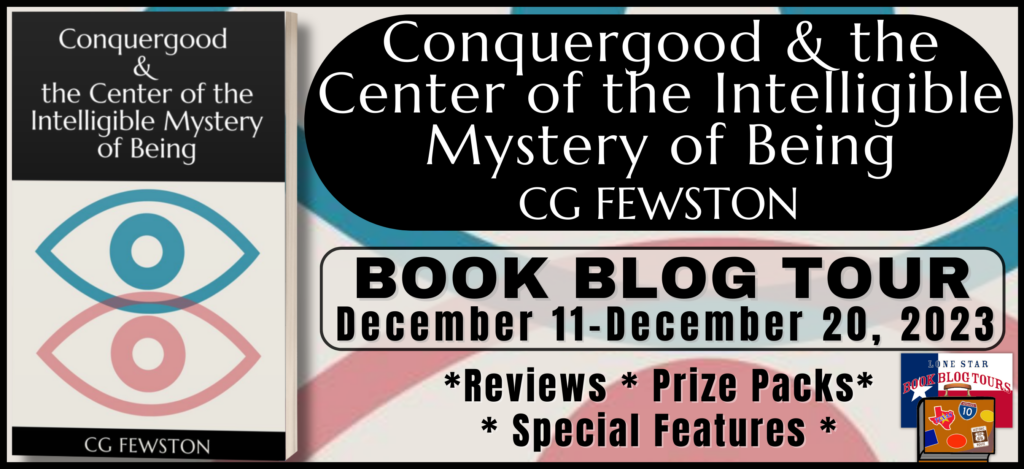
I’m so excited to be sharing an interview (scroll down to read it) with the author of this book. It seems like a fantastic read, and his writing process really made me want to dig out MY old moleskines and get back to writing more in longhand.
About the book: Conquergood & the Center of the Intelligible Mystery of Being 
- Genre: Science Fiction / Dystopian / Steampunk
- Publication Date: October 17, 2023
- Pages: 381
- Scroll down for Giveaway!
One of resilience and transformation, Conquergood’s life-changing discovery explores the depths of family, memory, love, and the mysteries that lie at the heart of the universe.
In 2183, Jerome Conquergood is an outcast roaming the abandoned and crumbling skyscrapers of Old York City outside the Korporation’s seductive and dizzying headquarters, a post-apocalyptic security-city for the mega-rich. Despite his hatred for the techno-optimism and the Korporation, Conquergood is compelled to save his mysterious twin brother Vincent by joining the Korporation, a mega-corporate and governmental entity in a world oppressed to peace.
Buy, read, and discuss this book:
Purchase Link | Goodreads
About the author, CG Fewston 
The American novelist CG FEWSTON has been a Visiting Scholar at the American Academy in Rome (Italy), a Visiting Fellow at Hong Kong’s CityU, & he’s been a member of the Hemingway Society, Americans for the Arts, PEN America, Club Med, & the Royal Society of Literature. He’s also been a Fellow of the Royal Society of Arts, Manufactures and Commerce (RSA) based in London. He has a B.A. in English, an M.Ed. in Higher Education Leadership (honors), an M.A. in Literature (honors), and an M.F.A. in Creative Writing & Fiction. He was born in Texas in 1979.
Fewston is the author of several short stories and novels. His works include A Father’s Son, The New America: Collection, The Mystic’s Smile ~ A Play in 3 Acts, Vanity of Vanities, A Time to Love in Tehran, Little Hometown, America, A Time to Forget in East Berlin, and Conquergood & the Center of the Intelligible Mystery of Being.
Connect with CG:
Website | Instagram | Facebook | BookBub | Goodreads | Amazon | LinkedIn

Author Interview: CG Fewston on the Writing Life
How do you write? Any backstory to your choice?
I prefer to write longhand using a black uni-ball pen with a Moleskine notebook the size of my palm. In the front of the small notebook, I write the story. In the back, I write down notes and tidbits of research that I want to include later on in the story.
Writing longhand allows me more room to create and rework (fixing, editing, and smoothing out) the language and the flow of the dialogue and events of the narrative dream. I always read aloud what I write by longhand and if there’s something flawed or the wrong word choice, I’ll correct or change it and read again and again and again until the flow is sufficient for my level of perfection — until I am satisfied that the fictive dream flows without stumbling or breaking.
After many of these small notebooks have been filled, I will go to typing them and then printing the typed pages out (having the pages bound like a book) so I can then read and edit many times over, reading aloud as I go through the entire manuscript. I will have read the book aloud hundreds of times over before I am ready to let the book go out into the world.
Are you a full-time or part-time writer? 
I’m a full-time writer who spends his days working on novels. First and foremost, however, I am a proud stay-at-home father who focuses on his son. I wake at 4:30 in the morning to do some writing before my son wakes up. Then as he showers, I make his breakfast and spend time with him. Then I take him to school and return home by about 8:30 am to focus on my writing; this includes writing new fiction for my novels. Usually this is either one or two novels because if I get stuck or slowed on one, then I switch to another and continue writing — in this way I can keep writing and remain productive.
I also work on author interviews or writing up blog posts about the books I’ve read and publish these on my author website. I enjoy sharing with the world the books I’ve read and it also helps me to reflect and have a deeper understanding of the books I’ve read. In the afternoon, I get my son from school and spend the rest of the evening and night focusing on him and family. I strive for balance between writing and family, and enjoy a more family-centered routine.
What did you find most useful in learning to write for publication? What was least useful or most destructive? 
The most useful piece of knowledge I learned in writing for publication came from my mentor (if I’m allowed to call him that) the American novelist John Gardner. Through his amazing books discussing the craft and art of writing — On Moral Fiction (1978), The Art of Fiction (1983), On Becoming a Novelist (1983), and On Writers and Writing (1994) — John Gardner taught me the importance of the “fictive dream” and how writers should do everything to maintain that fictive dream throughout the story.
The most destructive aspect to writing would be for a writer to care too much about what’s going on in the world (at the time they are creating the story and writing it down) and what critics actually say or think about your work. Fiction should stand alone from critics and the events of the world. If the fiction does parallel, then let the fiction do that on its own. Writers should give little time and attention and energy to good or bad comments or reviews of their fiction. Strive to do your absolute best, don’t compare, and then let the fiction speak for itself.
Do you have any strange writing habits or writing rituals you’d like to share with your readers?
I have the ability to lose myself inside my work. Five hours can quickly become five minutes. When I’m writing, I’m connected to something greater than myself and Time becomes somewhat different. That’s when I know I’m doing what I was meant to do.
What does your perfect writing spot look like? Is that what your ACTUAL writing spot looks like? 
The perfect writing spot, for me, is the spot that is most conducive to my writing, creating a productive writing session with the most ease. Now, it’s the kitchen table at 4:30 in the morning or my leather writing chair when no one is home.
So, yes, my perfect writing spot is my actual writing spot — it cannot be any other way. I’m not trying to make a million dollars. I’m trying to write a beautiful work of art. So, I take my writing seriously and with a fierce intensity that goes completely unnoticed because I write in solitude and in silence. And I love it that way.
Giveaway
GIVEAWAY! GIVEAWAY! GIVEAWAY!
SIX WINNERS:
1st: $100 Amazon card + eBook or paperback of Conquergood
2nd: $50 Amazon card + eBook or paperback
3rd: $25 Amazon card + eBook or paperback
4th: Book Lover’s gift bundle + eBook or paperback
5th: Book Lover’s blanket + eBook or paperback
6th: Book Lover’s tote bag + eBook or paperback
(US Only; ends 12/21/23)

Enter the Rafflecopter giveaway
Visit the Other Great Blogs on This Tour
Click to visit THE LONE STAR LITERARY LIFE TOUR PAGE for direct links to each post on this tour, updated daily, or visit each blog directly:
Note: The links in the above schedule are general links and go to each blog’s home page only.
blog tour services provided by



 About the Book: A Treatise on Martian Chiropractic Manipulation and Other Satirical Tales




















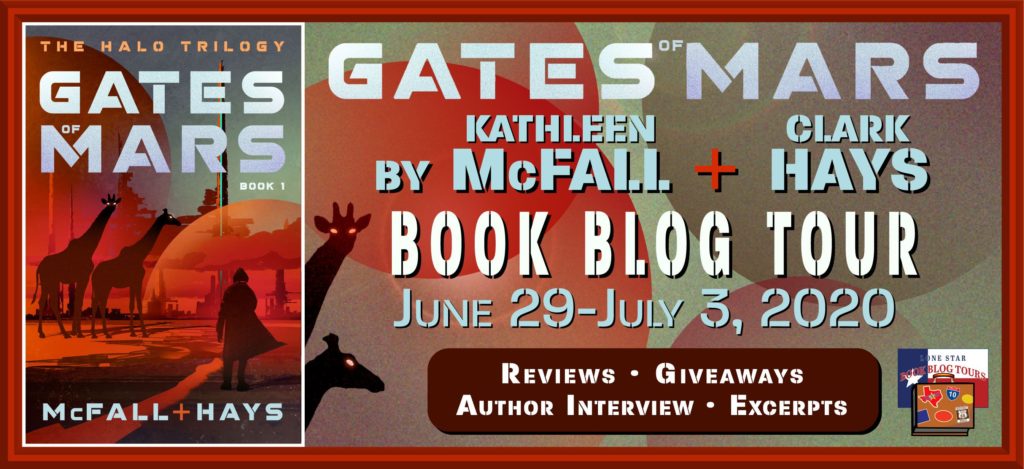
 An interplanetary mystery and a searing critique of the contemporary billionaire quest for Mars. The year is (still) 2188 and Crucial Larsen is officially done with Mars. But just as he’s set to head back to his beloved Earth, meteors crash into the orbital platforms, ravage the luxury domes and knock Halo—the powerful AI running Mars and Earth—offline. And this is no random cosmic event. An invading force has the technology to redirect space rocks at will and intends to level the Five Families.
 Clark and Kathleen wrote their first book together in 1999 as a test for marriage. They passed. Mars Adrift is their tenth co-authored book.
 The last time I reviewed a McFall & Hays novel it was Gates of Mars, the first book of this trilogy. (I somehow missed book two, but doing so didn’t seem to adversely effect my understanding or enjoyment of book three.) Back then (July, 2020) I wrote, “It takes a lot of talent to combine a detective plot with a sci-fi setting, and make us care about the characters even when their flaws are all too visible, but McFall and Hays have that talent. They also infuse their work with just enough wry humor to keep things from being overwhelming.”


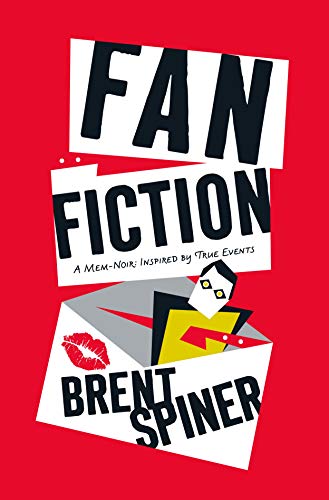 Brent Spiner’s explosive and hilarious novel is a personal look at the slightly askew relationship between a celebrity and his fans. If the Coen Brothers were to make a Star Trek movie, involving the complexity of fan obsession and sci-fi, this noir comedy might just be the one.
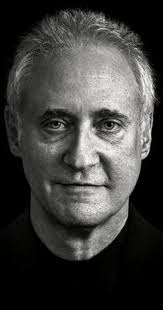 BRENT SPINER is an actor, comedian, and singer best known for playing the android Lieutenant Commander Data on Star Trek: The Next Generation from 1987-1994. He has appeared in numerous television roles, in films, and in theatre on Broadway, Off-Broadway and in Los Angeles. He currently has a role in the T.V. series Star Trek: Picard.

 IN THE AGE OF SURVEILLANCE, HOW CAN A PERSON GO MISSING?
 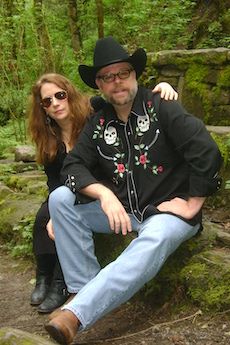 Clark and Kathleen wrote their first book together in 1999 as a test for marriage. They passed.
 I’ve been a science fiction fan for as long as I can remember, and I have a special fascination with Mars, so this novel, the first in a new trilogy, was a perfect fit for me.