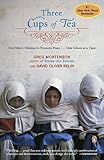
Review: Three Cups of Tea

Three Cups of Tea
Three Cups of Tea
by Greg Mortenson and David Oliver Relin

I initially picked up Three Cups of Tea some time last year, in the same shopping trip that included picking up a couple of different anti aging creams for my mother, having my hair done, and spending some time alone with a grilled cheese and tomato sandwich at Barnes and Noble. I didn’t actually read it until recently, however, because it got lost in my house – so lost, that I actually picked up a second copy thinking I’d never purchased the first!

I’m glad I finally read this book though, because the story is beautiful. I mean, I disconnected a bit in the first third of the book when author Greg Mortenson, whose story this is, was living in his car to save money so he could get back to Pakistan, but by the time I got to the end of his book – which is really just the beginning of his legacy – I was completely invested in the man and his mission.

For the five people who haven’t read it, Three Cups of Tea is the story of an American mountain climber who fails to reach the summit of K2, becomes severely ill during his descent, and gets lost in a remote corner of Pakistan, where local villagers take him in, help him recover, and essentially adopt him. As thanks, he promises to return and build a school where the young women of the village can be educated. He eventually makes good on his promise, first building a bridge, then the first school, then heading a foundation with a mission of building more schools in Pakistan, all for educating women and girls, while still being respectful of local religion and customs.

And to top it all off, this is all taking place at the very beginning of the Taliban’s rise to power.

While, at times, my not-so-inner snob found her skin crawling at the less-than-pristine conditions of Mortenson’s living arrangements, I finished the book with tears in my eyes. I feel this book should be required reading for everyone, everywhere.

Goes well with: Tea and flat bread.
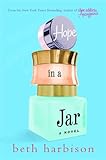
Review: Hope in a Jar, by Beth Harbison

Hope in a Jar
Hope in a Jar
by Beth Harbison
St. Martin’s Griffin, 368 pages
Buy it from Amazon >>

When I saw Beth Harbison’s novel Hope in a Jar staring at me from the summer reading table at the bookstore, I didn’t connect the title with the Philosophy product at all, mainly because I haven’t used Philosophy in over a decade. I’m an Aveda girl, for the most part, although I’ve been branching out a little lately.

Just a few chapters into the sometimes fluffy, sometimes deadly serious story about Allie and Olivia – childhood best friends who part ways over a dark rumor only to reconnect at their 20-year high school reunion – I realized that this writer was my contemporary in more ways than one, and not just because of the dialogue that covered everything from fat burners that really work to which flavor of Lip Smackers is the coolest (I liked root beer, personally), but because I actually recognized every single pop-culture reference in her story.

There’s comfort in the familiar, which is why even though the plot was fairly predictable, I enjoyed this novel immensely. Books don’t always have to have a lofty purpose, or educate a starving mind. Sometimes, it’s okay to read for the sheer pleasure of being entertained, and Harbison excels at entertaining. Sure, I figured out the ending way before the end of the book, but I still enjoyed watching the characters get there, because the dialogue was spot on, the relationships made sense, and the descriptions were so vivid (as vivid as many of the outfits we all wore as children in the 1970s and 1980s) that it was almost like attending my own 20-year high school reunion, without any of the attendant angst.

Hope in a Jar made me laugh out loud, a lot, and sometimes, that’s what a book SHOULD do. I haven’t read any of Harbison’s other work, but I know that when I do, I’ll enjoy it immensely.

Goes well with: Steak-ums sandwiches and cold Tab

Booking Through Thursday: Discussion

btt2

On Thursday, July 8th, Booking through Thursday asked:

Do you have friends and family to share books with? Discuss them with? Does it matter to you?

When I was little, my mother and I had an unofficial race to see who be the first to read each month’s issue of Ms. Magazine. I usually won, simply because I got home to check the mail before she got home from work, and I usually got in trouble for taking her magazine without permission. By the time I left for college, however, we’d learned to share our books, and to this day, I’ll read things she recommends and vice versa. In fact, most of what she reads lately comes from the boxes I send to her every few weeks – her magazines, and my paperbacks (once they’ve been read).

While my mother and I can talk about anything from the latest pronexin reviews to my novel ideas and her newest purse design, we rarely discuss the books we read, though a recent exception was Melissa Gilbert’s memoir, which we both liked because in it Gilbert comes across as a real person, with real flaws.

But I have other friends with whom I can discuss literature. For example, my good friend Deb, shares my love of Charlaine Harris, so we share Sookie Stackhouse and Aurora Teagarden novels, as well as other books, and often talk about them.

What I have never done, however, is join a book club, not because I wouldn’t love more people to discuss books with, but because I read so quickly, that I can’t imagine finishing a book, and then having to wait days or weeks to talk about it.

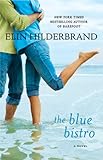
Review: The Blue Bistro, by Elin Hilderbrand

The Blue Bistro
The Blue Bistro
by Elin Hilderbrand
St. Martin’s Griffin, 336 pages
Buy from Amazon >>

The Blue Bistro may be the fourth of author Elin Hilderbrand’s novels set on the island of Nantucket, but it’s only the second I’ve read. Thankfully, her novels are not a series, as much as they are a collection. Most don’t even mention the same restaurants.

In any case, this novel, which is set in and around a beach front restaurant, (restaurant books are not the best appetite suppressants, by the way), tells the story of 28-year-old Adrienne Dealey, freshly off the Colorado ski slopes, where she worked as the concierge in a tone-y hotel, and looking for a new life, without her old lover, who wasn’t good for her. Telling is the fact that she misses the dog, more than the man.

Having been advised to try Nantucket for the summer, Adrienne begins looking for work, and in the process, meets Thatcher Smith, who co-owns the famous Blue Bistro with his childhood friend, the reclusive, but amazingly talented, Fiona Kemp. What follows is part hard work, part romance, and part mystery – what hold does Fiona have on Thatcher, that he can’t (or won’t) even spend the entire night with Adrienne after they become lovers?

As is expected of Hilderbrand novels, there is sophisticated, realistic romance set against the charming backdrop of Nantucket in the summertime.

You can almost feel the salt in your hair.

Goes well with: Champagne and lobster tails.

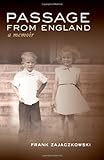
Review: Passage from England, by Frank Zajaczkowski

Passage from England
by Frank Zajaczkowski
CreateSpace, 378 Pages
Get it at Amazon >>

When author Frank Zajaczkowski contacted me about reading and reviewing his memoir I was flattered – as I always am. Then I went to his website and read the excerpts posted there, and immediately I was hooked, not just by his story – his journey from a small boy in post-war England to southern California, and his other journey, less prominent in the book, but still relevant, from California to the Virgin Islands, as an adult – but also because his descriptive paragraphs have some of the best imagery I’ve read in years, though, granted, a lot of what I’ve been reading this summer is beachy novels about women with designer houses, SUVs, strings of kids, and the ability to either summer or just live on the island of Nantucket.

So Mr. Zajaczkowski’s book served as a palate cleanser, of sorts, but also as a glimpse into the recent past. That the author is the same age as my mother, who is also the child of a war veteran, also an American living abroad (in her case, Mexico, which, I suspect, shares more similarities than differences with St. Thomas, despite the long distance between them), made the story resonate with me. I felt his trepidation at being put on a train, then on a boat to America, at a young age, and cowered with him when his alcoholic father grew violent. I felt his sense of loss, and even betrayal as his brother left the family to become an actor (I won’t share what he’s done, but I confess I looked him up on IMDB after I finished the book), and even more so, at the end of the book, when the high school aged Frank and his sister are abandoned again, by their mother this time.

In between those two events – the ocean crossing and the final betrayal, there are a series of coming of age stories – seeing the Tarzan house, kissing a girl for the first time, first jobs, first cars – all seen through the slightly filmy lens of memory, but with no less impact than if they were happening now.

Interspersed among the memories are a fresher set of memories, that of the adult Frank’s move from L.A. to St. Thomas with his wife, and the frustrations tied to that process – delayed shipments of belongings, hurricanes and other storms, where to spend holidays when you no longer have a home “back home…” the list goes on.

If there are any flaws in Passage from England they are limited to a few typos that got missed in editing (it happens at all levels of publishing) and my own desire to find out what happened after the last scene – but that, I hope, will be in Zajaczkowski’s next memoir.

As to this one, I’d recommend it to anyone who is part of the “baby boomer” generation, and to those of us who are their children, to ex-pats, immigrants, and the spouses and friends thereof, and to anyone who wants to know what life was like just a few decades ago. It’s a compelling story, and a great read.

Goes well with: fish tacos and cold beer.

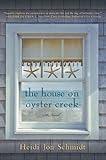
Review: The House on Oyster Creek, by Heidi Jon Schmidt

House on Oyster Creek
The House on Oyster Creek
Heidi John Schmidt
NAL Trade, 368 pages
Get it from Amazon >>

I picked up The House on Oyster Creek because the title and cover blurb intrigued me. It ended up being nothing like what I expected, but that’s not a bad thing.

In this lyrically written novel, you can hear the coming and going of the tide off Cape Cod in the author’s words. Schmidt certainly knows how to set a mood – and she does so, here, with delicacy. When we meet protagonist Charlotte Tradescome, and her husband Henry, we are given the impression that the younger, more vibrant Charlotte loves her thorny, somewhat aloof husband, but is no longer entirely “in love” with him, especially since the birth of their now-three-year-old daughter. …

When Henry’s father dies, and the couple inherit a house on the cape, Charlotte seizes it as an opportunity to take her child away from the hustle and bustle of life in New York City, and give her something “real.” She immediately embraces the new location, the crusty locals who deem her a “washashore,” and the rhythm of life on the shore. She also falls for a local oyster farmer Darryl Stead, while Henry spends his time reading, writing, and hitting the local pub late at night.

In any other author’s hands, Charlotte would divorce Henry, marry Darryl, and proceed to have an epic romance. In Schmidt’s hands, that doesn’t happen, and while Henry is portrayed as the ultimate curmudgeon, we also see that there’s real affection between himself and his wife.

It is, however, the land war that Charlotte accidentally causes that is the center of this story – and a metaphor for the Henry/Charlotte/Darryl triangle. When selling off part of their land, Charlotte left the door open for greedy rich folk to build a house totally out of tune with the coast, and block access to the oyster farms.

Of course Darryl is one of those most affected by that act, and of course they work together to rectify the situation.

Meanwhile, the year turns, the characters grow, and every few scenes, fresh oysters are being cooked and served.

This may not be the best novel in the world, but for summer beach reading, it holds some lovely surprises – pearls in the oysters, if you will.

Goes well with: Fried oysters and cold beer.

Coming Soon

Sometimes I feel like I’m more likely to buy gold coins from a famous pirate than to ever catch up on book reviews.

Upcoming reviews you should look for:

  • The House on Oyster Creek, by Heidi Jon Schmidt
  • The Way I See It, by Melissa Anderson
  • Passage From England, by Frank Zajaczkowski
  • The Blue Bistro, by Elin Hilderbrand
  • Hope in a Jar, by Elizabeth M. Harbison
  • Three Cups of Tea, by Greg Mortenson and David Oliver Relin

And that doesn’t include the two books I’m reading now – a Laurie R. King one-off, and Lunch in Paris by Elizabeth Bard.

The former isn’t gripping me the way King’s writing usually is, but that doesn’t really surprise me because I think I’m in a memoir mood right now.

In any case, I’m reading, and will be reviewing, so keep checking back.

Review: Barefoot, by Elin Hilderbrand

Barefoot"
Barefoot
by Elin Hilderbrand
Little, Brown and Company, 528 pages
Get it at Amazon >>

Last month when I got home from Mexico, and had the opportunity to splurge on books, I looked for beach reading – books that took place in cute coastal villages. I’d been eying the paperback version of Elin Hilderbrands’s sixth Nantucket novel Barefoot for months, and finally brought it home on that trip. I didn’t actually read it it until the beginning of June, however, and when I did, it took a while before I was hooked. This is a novel that starts slowly, cresting like the gentlest of waves.

I don’t mind that sort of novel – sometimes they can be really satisfying reading – and I also didn’t mind that this was really an extended character piece. It begins, of course, with three women, Vicki, Brenda and Melanie, arriving on Nantucket for a summer in the cottage that Vicki and Brenda (sisters) inherited from their aunt. Melanie’s along for the ride because she’s a friend of Vicki’s. Each woman comes with baggage of the figurative kind as well as actual luggage. For Vicki, it’s cancer – she’ll be having chemo while summering by the shore. Brenda was a hotshot professor at a small, private university, fired for having an affair with her student (it should be noted that this isn’t a creepy kind of affair – her student was older than she was – but it was a professional faux pas). And Melanie…Melanie is newly pregnant, but because her husband is having an affair he refuses to end, the only birth announcements she’s made – or pregnancy announcements, for that matter, are to the other women with her on the trip, and, within a couple of chapters, the young islander Josh, who first greets them at the airport, then ends up becoming whatever the male version of an au pair is, since Vicki came with her two young children.

During the summer, Brenda works on the book/screenplay that she hasn’t been able to focus on elsewhere, Vicki becomes empowered with regard to her disease, and Melanie has a summer fling with young Josh.

None of these things are at all surprising, nor is the ending of the novel remotely unpredictable, but sometimes you don’t need a great twist for a novel to be satisfying; sometimes, all you need are vivid descriptions, three-dimensional characters (even when you find some of their behavior a bit annoying), and a cute coastal village. Hilderbrand provides all of those.

Goes well with: lemonade and a tuna sandwich from inside a picnic cooler at the beach.

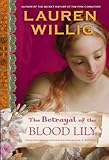
Review: The Betrayal of the Blood Lily

The Betrayal of the Blood Lily
by Lauren Willig
Dutton Adult, 416 pages
Get it at Amazon >>

In the newest adventure in Lauren Willig’s “Pink Carnation” series, all about nineteenth-century British flower spies (the first of which, The Secret History of the Pink Carnation, was an affectionate sequel to Baroness Orcy’s The Scarlet Pimpernel), we move from England to colonial India, and the change of locale breathes new life into this series.

As is usual for Willig’s work, we’ve met our heroine Penelope Deveraux (now Lady Frederick Staines) before, when she made a brief appearance in the previous novel, The Tempation of the Night Jasmine. In that book, she was involved in a minor sex scandal…now we find her married off to the other party, but it’s a marriage that was forced upon two people who are really completely unsuited for each other simply to give the appearance of propriety to their relationship.

To further avert scandal, the couple’s been sent to India, where Lord Staines (Freddy) will take the position of Governor Generall Wellesley’s Special Envoy to the Court of Hyderabad. He, of course, begins an affair with a local “bibi,” – a mistress – and Penelope, who is quite the tomboy, with shooting and riding skills rivaling those of the men around her – makes her own niche, befriending Captain Alex Reid, who is escorting the couple and their entourage.

What follows is a rollicking adventure that includes murder, mayhem, passion, and politics, all rolled into a steamy climate. It’s a great read – so much so that for the first time, I wasn’t looking forward to contemporary character Eloise Kelly’s interludes (Eloise serves as narrator, as these adventures are all part of her graduate research project) with the dashing young relative of the original Pink Carnation, although, I will admit that reading about her grilled cheese dates are much more fun than reading lipozene reviews.

While these books are better when read in order, this novel can stand alone without the reader missing too many details.

Goes well with: grilled cheese sandwiches and good beer. Or a really tasty curry.

Booking Through Thursday: Now or Then

btt2

On Thursday, June 17th, Booking through Thursday asked:

Do you prefer reading current books? Or older ones? Or outright old ones? (As in, yes, there’s a difference between a book from 10 years ago and, say, Charles Dickens or Plato.)

I read a bit of everything, and go through cycles where I only want period pieces, only want contemporary novels, only want classic literature, etc.

I grew up reading the classics, in more ways than one. My grandfather’s eclectic collection of books, some in the shelves behind his recliner, and others on the shelves above the bed in the room where I slept most summers (the end room, with the psychedelic flower wallpaper) included two thick red hardcovers that either never had dust jackets, or for which the dust jackets had long since been replaced. I don’t remember the actual titles of those books, but I know at least one of them was published by the folks at the Readers’ Digest. They were both collections of fairy tales – and I don’t mean the Disney fare we’re accustomed to today. These stories included “Snow White,” but they also had “Snow White and Rose Red,” and stories about little goose girls, and a girl who had her hands hanging over her shoulder. Gruesome stuff. I don’t know what happened to those books, but really wish I had taken them when I had the chance.

From those, I moved on to real classics – I remember reading Jane Eyre during a violent summer storm, between bites of cold, creamy, coffee ice cream, while my grandparents watched the news. I read a lot of Alcott and Twain, Melville, Hawthorne, and Cervantes when I was young…but I had no problem switching between, say, Tom Sawyer and Harriet the Spy.

Today, my tastes remain just as diverse. Last summer, I started re-reading Jane Austen’s work, because I’d never really appreciated it before, but this summer I’m reading contemporary novels about people summering in (on?) Nantucket.

I don’t have a preference for any particular era, as long as the characters are well drawn, the story compelling, and my mind free enough from distraction to enjoy whatever I’m reading.