Review: Wizards at War

Wizards at War
by Diane Duane

Product Description (from Booklist):
The youthful wizards Kit and Nita preceded the trainees of Hogwarts by more than a decade, and they are still clobbering the forces of Death in the name of the Powers That Be. In this eighth volume of Duane’s Young Wizards adventures, the Lone One has corrupted the basic structure of reality, causing the universe to expand and all wizards past “latency”–in other words, grown-ups–to lose their abilities, leaving it to the kids to prevent cataclysm. The novel is overlong and densely crammed with bewildering jargon, but the basic plot strands are compelling, particularly one set among a hive society reminiscent of Orson Scott Card’s buggers. Even early series fans who have since outgrown Duane’s particular brand of pseudoscientific mysticism may be attracted by the cameo appearances of previous books’ characters and references to past story lines. The full-cast-reunion aspect prevents this from standing alone, but keep the overall series in mind for Harry Potter buffs whose interests are broad enough to allow them to easily move between Rowling’s genteel, mock-Eton fantasy and traditional sf.

My Thoughts:
I hadn’t read any of Diane Duane’s Young Wizards novels in years, and then, while cleaning up for Christmas, I found book seven, which a friend had given me months before. I read it, then had to re-read books 1-6, and then re-read book seven. Then, while my husband was away, I ordered books eight and nine.

The thing I love about Duane’s series is that while it’s technically a young adult series, or even meant for kids younger than middle school, it’s deep enough to appeal to adults as well. (I find, actually, that much of what is considered YA today is more interesting and provocative than the literature marketed as contemporary fiction or literary fiction for adults).

Kit and Nita, along with Nita’s sister Dairene, and some wizardly foreign (very foreign – not-of-this-earth) exchange students have grown up somewhat, and the stories now take place in a “now” that’s post-9/11, even though the timeline remains consistent within itself. (That’s confusing, I know, but basically it means that even if time outside the books has jumped years, the book that was written in 1988 is still a month before the book written in 1990, or whatever, but both are in whatever was “now” at the time of writing), so it’s nice to see them using current technology at home.

This book, however, with the expanding blackness, the adult wizards losing sight of their magic, etc., seems very much a post-modern fairy-tale, and the darkness in the book-world, while exaggerated, seems to fit perfectly with the tensions going on in reality. I wouldn’t have been surprised if Duane had worked in an “Occupy the Crossroads” plotline, except this was written a few years ago.

Even so, the stories continue to be gripping. Dairene’s maturation as a person is interesting to watch, and there are hints of changes to the dynamic between Kit and Nita.

Dog-lovers will appreciate both the sensitivity with which a certain character’s story is ended, and the humor that comes in an old joke.

Goes well with: macaroni and cheese. Trust me on this – it’s a book that requires comfort food.
Star Trek Fiction Roundup

During October, when I wasn’t reading mysteries, I was reading Star Trek novels, because they’re quick and fun, and after writing all day I don’t always have enough brain power to read in unfamiliar worlds. Besides, just because something is a tv-tie-in doesn’t make it bad writing. The Pocket Books Star Trek fiction has let beloved characters expand beyond the limits of episodic television in wonderful and surprising ways.

So which ones did I read in October, 2011?

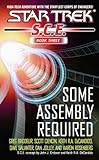
Some Assembly Required

I finished Some Assembly Required, the 3rd Starfleet Corps of Engineers Omnibus, which was, as always, really interesting. The SCE books were all ebooks originally, and reading them in clumps of a few seems to work incredibly well. I was a little concerned, when I first began to explore the series, that I wouldn’t like a tie-in that only had one (really) canon character, but these new additions to the Trekiverse are as three-dimensional as any that have ever graced our screens.

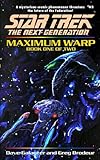
Maximum Warp: Book One

I also read Maximum Warp books one and two, which take place between First Contact and Nemesis, and involve dead zones in space, an uneasy trade agreement with the Romulans, and the return of Ambassador Spock. The dead zones are a great invention, as they create jeopardy without having to leave the ship, and have no real target. What was eerie was watching them affect Data, and seeing him described as “weak” and “tired” – words not usually associated with an android character.

Maximum Warp: Book Two

Book one, by necessity had a lot of the exposition, and setup, while book two had more of the political intrigue and action, but the pair of them kept me interested for two or three days (I read them during the work week, so it took me longer), and I was happy with my latest escape to the future.

These all go well with tomato soup and grilled cheese, or a toasted bagel and clam chowder.

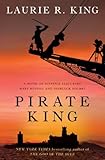
Review: Pirate King

Pirate King

Pirate King
Laurie R. King

Description (from Amazon.com):
In this latest adventure featuring the intrepid Mary Russell and her husband, Sherlock Holmes, New York Times bestselling author Laurie R. King takes readers into the frenetic world of silent films—where the pirates are real and the shooting isn’t all done with cameras.

In England’s young silent-film industry, the megalomaniacal Randolph Fflytte is king. Nevertheless, at the request of Scotland Yard, Mary Russell is dispatched to investigate rumors of criminal activities that swirl around Fflytte’s popular movie studio. So Russell is traveling undercover to Portugal, along with the film crew that is gearing up to shoot a cinematic extravaganza, Pirate King. Based on Gilbert and Sullivan’s The Pirates of Penzance, the project will either set the standard for moviemaking for a generation . . . or sink a boatload of careers.

Nothing seems amiss until the enormous company starts rehearsals in Lisbon, where the thirteen blond-haired, blue-eyed actresses whom Mary is bemusedly chaperoning meet the swarm of real buccaneers Fflytte has recruited to provide authenticity. But when the crew embarks for Morocco and the actual filming, Russell feels a building storm of trouble: a derelict boat, a film crew with secrets, ominous currents between the pirates, decks awash with budding romance—and now the pirates are ignoring Fflytte and answering only to their dangerous outlaw leader. Plus, there’s a spy on board. Where can Sherlock Holmes be? As movie make-believe becomes true terror, Russell and Holmes themselves may experience a final fadeout.

Pirate King is a Laurie King treasure chest—thrilling, intelligent, romantic, a swiftly unreeling masterpiece of suspense.

Review:
I’ve been a fan of Laurie R. King’s Holmes and Russell series since it began, so you know I was eagerly awaiting Pirate King. I bought when it came out, but saved it to savor in October, because mysteries are better when the weather begins to turn cool.

I’m also a fan of Gilbert and Sullivan’s The Pirates of Penzance, and it’s cheesy musical social satire, so the fact that Ms. King combined the two in this latest novel (which, admittedly, has much more Russell than Holmes in the first half of the story) made me deliriously happy.

I loved seeing Pirates through Mary Russell’s turn-of-the-century feminist eyes. I loved the way King had a movie about a movie about a play as the center of the novel – a preposterous situation – without it seeming preposterous. I even loved that much of the action took place in Morocco, a place that keeps haunting me in the books I read, and a place I’ve always wanted to visit.

Is there anything I didn’t love? I (still) wish we got to see more of Holmes and Russell having down time, to see the reality of their relationship. I felt there wasn’t quite enough Holmes in this entry into the series, and that when he does show up it’s a little anti-climactic.

Overall, however, I’m still a fan, although I was reading this during the same period of time that I was doing my annual re-watching of The West Wing, and I think Aaron Sorkin’s love of Gilbert and Sullivan might have colored my response to this novel, just a bit.

Pirate King
Laurie R. King
Bantam, September, 2011
320 pages
Buy the book from Amazon.com >>

Readers Imbibing Peril (art by Melissa Nucera)

Review: Murder by Mocha

Readers Imbibing Peril (art by Melissa Nucera)

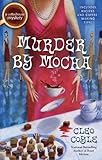
Murder by Mocha
Cleo Coyle

Description (from Amazon.com):
The national bestselling author of Roast Mortem serves readers a fresh new Coffeehouse Mystery.

Includes chocolate recipes!

A divorced, single mom in her forties, Clare Cosi is a coffee shop manager by day, an irrepressible snoop by night. When something is wrong, she considers it her mission in life to right it, and murder is as wrong as it gets.

Can coffee enhance your love life? Clare’s Village Blend coffee beans are being used to create a new java love potion: a Mocha Magic Coffee that’s laced with an herbal aphrodisiac. The product, expected to rake in millions, will be sold exclusively on Aphrodite’s Village, one of the most popular online communities for women. But at the product’s launch party, one of the website’s editors is murdered. Clare is convinced someone wants control of the coffee’s secret formula and is willing to kill to get it. Can she stir up evidence against this bitter killer? Or will she be next on the hit list?

Murder by Mocha

Review
I’m not entirely sure what prompted me to start reading Cleo Coyle’s Coffeehouse Mysteries, but I fell in love with her work pretty much instantly. Why wouldn’t I? I’ve been a barista, and I am a coffee snob.

In the most recent addition to this series, Clare Cosi is getting more and more serious with her police detective boyfriend Mike Quinn, and there are two separate murder cases. One’s Clare’s baby, and involves the company funding Mocha Magic, the chocolatey coffee aphrodisiac for which her beans are being used. The other’s a cold case that involves Mike’s colleague (and Clare’s daughter’s lover) Franco.

As always the dialogue is snappy, the descriptions of place feel three dimensional, and the plot is gripping without being too bloody or too silly. It was nice to see Clare’s ex in a helpful role this time, and I get a big kick out of her (former) mother-in-law, as well as the staff of the Village Blend Coffeehouse.

Cosi’s books are always a great way to fall into a season of Autumn mystery reading, and this one marks my first official entry in the 2011 R.I.P. celebration of dark literature.

Goes well with: a salted caramel mocha.

Murder by Mocha
Cleo Coyle
Berkeley, August 2011
384 pages
Buy this book from Amazon.com >>

30-Day Book Meme #3: Holmes & Russell

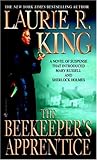
The Beekeeper's Apprentice

When you fall in love with a character or world, it’s natural to want more of what you love. I think that’s why so many of us read series of novels. I’m told that whenever you’re trying to sell a novel, if they ask you “Do you have an idea for a sequel?” the answer should always be “yes,” because series make money. Multiple books in general make money, actually, but people buy what they know.

The 30-Day Book Meme wants me to tell you my favorite series. There are so many. The Little House and Anne of Green Gables books, as well as Nancy Drew and The Hardy Boys kept me entertained all during my childhood. As I grew older, I fell for such different series as The Cat Who… mysteries, and the Mrs. Pollifax novels, but I also loved Charlaine Harris’s Southern Vampire Mysteries, Anne Rice’s vampire and witch series (before she was popular and trendy, and later, overdone), and Anne Bishop’s Black Jewels books.

I love the Star Trek tie-in novels, and I also love the Pink Carnation series. I’ve spent hours on Darkover, Pern, and Valdemar, I’m a sucker for Harry Potter’s adventures, and I’m getting into Game of Thrones after watching the HBO series (my husband loves those books). I sip coffee with Cleo Coyle’s baristas and want to visit her alter-ego’s Haunted Bookshop.

But if I had to pick a favorite? It would have to be Laurie R. King’s Sherlock Holmes/Mary Russell novels, first because I’m a Holmes junkie from way back, and second because she writes Mary with a feminist sensibility that I really enjoy. The books are well written, well plotted, and entertaining without being stupid.

They are best read in order, so begin with The Beekeeper’s Apprentice, and if you’re diligent, and read as fast as I do, by the time the new book comes out on September 6th, you’ll be ready!

Review: STTNG: A Sea of Troubles

A Sea of Troubles
STTNG: A Sea of Troubles
J. Steven York & Christina F. York
Simon & Schuster Digital, 200 KB
October, 2007
Buy it from Amazon >>

Description (from Amazon.com):
A new six-part epic covering the first year of service of the U.S.S. Enterprise-E, leading up to the events of the hit movie Star Trek: First Contact.

The U.S.S. Enterprise-E has launched, with Captain Jean-Luc Picard in command. In addition to many familiar faces, the new ship also has some new crew members — among them, conn officer Sean Hawk and security chief Linda Addison.

But soon Picard is devastated to learn that there’s a saboteur on board — in the form of a changeling infiltrator from the Dominion! Picard and his crew must learn who the changeling replaced and stop it before it destroys the fleet’s finest ship…

Late last year, I read book three in this six-part Star Trek: The Next Generation series “Slings and Arrows” because sometimes I want the comfort of familiar characters having new adventures. I was not disappointed. So when I bought books one and two at the beginning of the year, I expected to be equally pleased. The thing is, sometimes you forget that buying books is not like buying custom laptops. Sometimes books are different than what you expect. This book was.

I was expecting plot. I was expecting political machinations. I was not expecting the level of darkness and intrigue that was evident in this novel, and frankly, I thought the Dominion storyline was overdone in TNG and DS9, as it was. Odd, I know, considering that I’ve really enjoyed it when OTHER TNG novels have departed from the sanitized fluffy view of the future that Star Trek tends to be.

What I am enjoying in this book, and in the second one, which I’ll talk about another day, is Data’s ongoing process of learning to deal with his new emotions. I never felt that this was ever handled well in the movies, and I like that he isn’t just perfectly assimilating all those feelings.

Bottom line: Not a bad e-read, but not all I hoped.

Goes well with: hot chocolate and butter cookies.

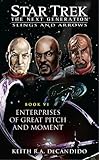
Review: STTNG: Enterprises of Great Pitch and Moment

ST:TNG Enterprises of Great Pitch and Moment
Star Trek: The Next Generation: Enterprises of Great Pitch and Moment
Keith R. A. DeCandido
Simon and Schuster, 320 pages
March, 2008
Buy this book from Amazon.com >>

Product Description (from Amazon):
A new Federation President has been elected, and his first order of business is to attempt to restore the alliance with the Klingon Empire. To that end, he sends Captain Picard to Deep Space 9, in the hopes that Picard’s relationship with Chancellor Gowron might lead to a normalization of relations.

At first, things go well, as Gowron agrees to meet with Picard and Captain Sisko of DS9 on a neutral planet — but when their runabout is shot down, it’s up to Commanders Worf and Data to find out the truth before their captains are killed!

I hadn’t read a new Star Trek book in a while but I always enjoy Keith DeCandido’s additions to the franchise, and I’d been wanting something that took place post-series but pre-Nemesis, that all my favorite characters. I wasn’t disappointed at all – even though some of those characters were off-screen, their presence was still felt, and while this was essentially a DS9 crossover, it was a legitimate one. Picard and Sisko must team up to fix the Federation-Klingon Empire alliance (I maintain that the best way to lose weight fast is to try and out-fox the Klingons) and of course Data and Worf, working from the Enterprise and the Defiant have to help.

The thing about Star Trek novels is that they’re best when they expand the Trekiverse, giving us glimpses of parts of future life that the shows don’t. This novel was a bit short on that, but still a satisfying read.

Goes well with tea, Earl Grey, hot.

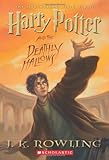
RetroReading: Harry Potter and the Deathly Hallows

Harry Potter and the Deathly Hallows

In preparation for seeing the movie tonight, I re-read Harry Potter and the Deathly Hallows earlier this week. Yes, I know the movie is only half the story. Yes, I know the movies never have everything the books do, but even so, I felt it important to refresh my memory of the story.

I noticed a few details in this reading that I don’t remember reading when I first read the book the day it was released, and it was nice to re-visit the original version of the characters, but I’m also left wondering if Harry stayed small-ish in the books because Dan Radcliffe is not particularly tall.

As the daughter of a fashion designer, one thing I’m intrigued by is what Hermione’s beaded bag will look like. I mean, I know there are custom drawstring bags that have beadwork, but I also know that most beaded bags are tiny little clutch purses. I think my mother has one, I know my grandmother had a couple that I used to play with.

Mostly though, I’m looking forward to the experience of seeing a fun movie in an opening night crowd.

Review: Dreams Made Flesh, by Anne Bishop


Dreams Made Flesh
Anne Bishop

Product Summary (from Amazon.com):
The national bestselling Black Jewels trilogy established award-winning Anne Bishop as an author whose “sublime skill…blends the darkly macabre with spine-tingling emotional intensity, mesmerizing magic, lush sensuality, and exciting action.”* Now the saga continues-with four all-new adventures of Jaenelle and her kindred.

While billed as a collection of short stories, Dreams Made Flesh is really four novellas, and even though they’re not full novels, they’re all meaty enough to satisfy even the most ardent lover of the Black Jewels trilogy, containing everything from fighting to sex to romance to baby clothes. Okay, well, maybe not baby clothes, but since one of the four stories is about the early days of Lucivar’s relationship with Marian, and involves setting up his home – their home – there is quite a lot of shopping. We learn, for example, that Lucian’s mother kept the money Saetan provided so that Marian could re-outfit herself, and that Marian herself had such low self-esteem that she had a hard time buying things for herself even when she could.

May I just say how much I love that author Anne Bishop injects so many things into her worlds? I mean, we know that Jaenelle can’t function before her morning coffee, and that even in the twilight and hell regions of this planet chocolate is considered an appropriate guilt gift from men to women. And the clothes…while I don’t know for sure what Earth-period the clothes match, I love the details…the fact that Jaenelle and her friends wear schmata clothes at home, and prefer trousers to skirts most of the time, or – as is the case in the above-referenced story – that the tailors are accustomed to adding wing-slits to the clothing Eyrians purchase, so were unphased about serving Marian.

Of course, the ultimate story in this collection is the post-trilogy story of Daemon and Jaenelle – the return of Witch, as well as the continuation of their romance. It also involves a lot of clothing – in this case dressing for court, and plotting at a party – but it’s more than just a fashion show.

In the seven Black Jewels books that exist, two are not part of the Jaenelle story, and the other is sort of a one-off in Jaenelle’s time, but about Surreal, though there’s another collection of Jaenelle stories coming out next year, I think.

In any case, these stories are a nice bridge, and made for a lovely, entertaining ramble through Kaeleer.

Goes well with: coffee and cheesecake.

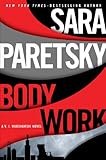
Review: Body Work, by Sara Paretsky

Body Work
Body Work
Sara Paretsky
Get it from Amazon >>

Summary (from Publishers Weekly):
Paretsky’s superb 14th novel featuring PI V.I. Warshawski (after Hardball) delves into Chicago’s avant-garde art scene. At the trendy Club Gouge, where Warshawski is keeping an eye on Petra, a young cousin who caused trouble in the previous book, performance artist Karen Buckley (aka the Body Artist) invites members of the audience to step on stage to paint her nude body. The intricate design that one woman paints on Karen’s back provokes a violent outburst from Chad Vishneski, a troubled Iraqi war veteran. When two nights later, someone shoots the woman who upset Chad outside the club, Chad is the logical murder suspect. Hired by Chad’s estranged parents to clear his name, Warshawski straddles a minefield that reaches from the Windy City’s neighborhoods to the Gulf War battlefields. Scenes with her aging neighbor and a new love interest give a much needed balance to the serious plot. This strong outing shows why the tough, fiercely independent, dog-loving private detective continues to survive.

I’ve been a fan of private investigator V. I. “Vic” Warshawski ever since my mother and I discovered her at the San Jose Public Library on one of the ritual Saturday trips we used to make. Books, coffee, a “little something” in honor of my grandmother, and then back home. Perfect mother-daughter weekends. In any case, I’ve now read more of Vic’s adventures than my mother has, simply because she lives in a place where English-language fiction is difficult to obtain.

Body Work, the most recent of author Sara Paretsky’s novels about the fictional female detectiv,e is one of the most satisfying novels I’ve read in a long while. It had everything from Vic using her picklocks to enter a crime scene (evidently they weren’t Kwikset locks) to Vic babysitting her pesty younger cousin Petra, to Vic sharing meals with her downstairs neighbor/adopted family member Mr. Contreras, to Vic getting brutally beaten while on the job.

Even better, Body Work also has an interesting plot that involves edgy performance art, the blogosphere, the Gulf war, corporate politics, unrequited love, illegal drug running, and international money laundering, and it shows that Ms. Warshawski is comfortable working with 21st century technology even though she has a special affection for old-world pleasures like a proper cappuccino, a soaring Italian aria, and a steaming hot bubble bath at the end of a hard day’s detecting.

And yet, Paretsky gave us even more: she gave us Jake, the classical bass player who is not only Vic’s neighbor, but also her current lover, and one who – we hope – will stick around for another book, even if he is squeamish about the sight of blood – something to be concerned about when you’re close to Victoria Warshawski.