Review: Roast Mortem, by Cleo Coyle

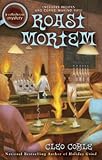
Roast Mortem
Roast Mortem
Cleo Coyle
Get it from Amazon.com >>

I cannot begin to tell you what the best colon cleansing pill might be because as a woman who was literally weaned on espresso, I’ve never needed one. Speaking of espresso, I’ve just finished reading Cleo Coyle’s latest coffee house mystery, Roast Mortem, which was also the first Kindle book I actually paid for.

As with all of Coyle’s coffee house novels, Roast Mortem is the perfect blend of coffeehouse coziness, romance, and mystery. This far into the series, we’ve met all the main characters – Claire Cosi, manager of the Village Blend, her ex-husband and business partner Matt Allegro, and his incredibly wealthy mother, the various baristas and their friends, and of course NYPD detective Mike Quinn, whose relationship with Claire has a new sense of stability, even (dare I hope?) permanence.

But it’s another Quinn, Michael Quinn, a NYFD chief, who is one of the stars of this novel. We first met him a couple of books ago, when he fished Ms. Cosi out of some frigid water, and his animosity-laden relationship with Detective Quinn, is first cousin, came to light, but in this book, which involves a serious of explosive-started fires at various coffee houses, we learn more about him, and we also – finally – find out why the cousins don’t get along.

Of course Claire is in jeopardy more than once, and ends up leading the NYPD to the murderer (and the NYFD to the arsonist), and of course there are all sorts of coffeehouse recipes scattered through the book (and listed at the end for those of us who love to cook at home), but even though these novels are fairly formulaic, they’re also so well written that the predictability doesn’t matter, and the stories remain compelling because Coyle is so good at setting scene and creating characters.

While the coffee house mysteries can be read as stand-alone novels, they’re much richer if you read the series in order, so you can watch relationships develop from book to book. Either way, however, I recommend Roast Mortem to anyone who loves a good mystery, and a great cup of coffee.

Goes well with a doppio espresso and any kind of chocolate baked good.
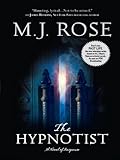
Review: The Hypnotist, by M.J. Rose

The Hypnotist

Reading the third book in a series without having read its prequels can sometimes be a little bit weird, even if each novel is a complete story. This may be one of the reasons that M.J. Rose’s latest novel, The Hypnotist has been a “slow” read for me – because I sense that there are relationships and backstories that I’m missing. In fact, my mentioning this here in this blog a couple of days ago caught the attention of the author herself, and she left a note expressing concern. Let me say right now that any author who takes the time to check in with a reader has to be pretty cool, but then, if you’ve read anything M.J. Rose has written, that should be pretty obvious.

While neither the plot nor the structure of The Hypnotist bear any resemblance to one of my all-time favorite contemporary novels, The Eight, by Katherine Neville, I found that this book reminded me of the other nevertheless. Perhaps it’s the way the author excels at conveying a strong sense of place. Much of The Hypnotist takes place in libraries and museums, and I found my breath changing with each change of scene, as if some imaginary curator or librarian might shush me for exhaling too loudly.

But I digress.

The Hypnotist opens with the brutal murder of a young painter, and the near-murder of her lover, one Lucian Glass. Twenty years later, Glass is an FBI agent assigned to the Art Crime Team. He’s involved in the investigation of an extremely unstable art collector who has been destroying masterpieces in order to make some kind of a statement, and it is this investigation that sends Glass undercover to the Phoenix Foundation, run by Dr. Malachai Samuels, an expert in hypnotism and past-life regression.

Reincarnation isn’t just a character hook for Samuels, however. Glass is haunted as much by partly-glimpsed past lives of his own as he is by the memory of his lover, and her death. It’s not surprising, then, that art, history, intrigue, and the study of reincarnation all twist together to form the threads of a gripping tale that I both didn’t want to, and could not put down.

Rose’s characters are well-drawn, with enough detail to make them seem real, but not so much that the reader can’t put his or her own imagination to work. Her plot twists are plausible without being too obvious. Her prose is simple, but effective.

Read this book because the story is fabulous, but don’t be surprised if you, as I did, found yourself wanting to visit Persia, spend a rainy afternoon at an art museum, and curl up in a comfortably worn library chair with a treasured read.

To learn more about the author or her work, check out her website: M.J.Rose.com

Goes well with: mint tea and chicken shawarma, or a hot pretzel with mustard.

Booking Through Thursday: Giving Up

btt2

On Thursday, August 26th, Booking through Thursday asked:

If you’re not enjoying a book, will you stop mid-way? Or do you push through to the end? What makes you decide to stop?

I try very hard always to finish books. There are some that have slow beginnings, but then surprise me pleasantly once I’m partway in, for example, and some that end up having one scene that is just so good, even if the rest of the book is bad, that scene will redeem the entire work.

Once in a while, however, there’s a book that doesn’t work for me. In fact, I’ve just decided tonight to stop reading Fay Weldon’s The Spa. Known as The Spa Decameron outside the United States (because apparently publishers think we Americans don’t get literary references), this is a modern dress pastiche of Boccaccio’s The Decameron set at a froufrou health spa over Christmas. The outside world is dealing with the Sumatran Flu (think Swine Flu), and this group of women have gathered at the Castle Spa to refresh, relax, and reinvigorate themselves.

The description sounds like something I’d love, which is why I picked it up (though of course the dust cover doesn’t mention Boccaccio), but the reality of this book is that, in spite of the lovely notion of a bunch of women telling their stories while sipping champagne and soaking in a jacuzzi, each trying to one-up the other, it’s overwhelmingly boring. I mean, these chicks put the idle in “idle rich,” and they are selfish and self-obsessed to the point that it becomes unendurable to read about them.

And so, as much as I hate to, I am closing the book on The Spa roughly 70% of the way through, else I decide to gouge my eyes out with rusty spoons.

Look, I don’t need a happy ending, but it would be nice if I could identify with – or at least like at least one of the characters I’m reading with.

Review: A Summer Affair, by Elin Hilderbrand

A Summer Affair

A Summer Affair
by Elin Hilderbrand

This novel is both the seventh novel the author wrote, and the seventh of her novels that I read, but that happened purely by coincidence. I hadn’t read any of the others in order of publication date.

Unlike many of the other protagonists in Hilderbrand’s work, Claire Danner Crispin, art-glass blower, wife, and mother, is a full-time resident of Nantucket, where she and her husband have a relatively happy life, though she harbors a secret – she feels responsible for a car accident that her friend Daphne was in several months before.

When Claire is invited to co-chair a charity gala and create a new art piece for the auction attached thereto, she’s surprised, because the the person in charge of the charity, Lockhart, is Daphne’s husband, and Claire had assumed he held her responsible as well.

As the title implies, Claire and Lockhart begin an affair, which heats up as problems plague the gala planning, and Claire’s rockstar ex-boyfriend arrives to stay at her house (he’s the big draw for the gala, as well as the entertainment).

There’s also a B-plot between Claire’s best friend, a caterer, and her gambling husband.

In the end, A Summer Affair, is a typical Hilderbrand novel with great beach-town settings, well-written women, and men who lack depth, though they’ve improved somewhat in this novel. Both Claire’s husband and the rockstar boyfriend seem like decent men.

Goes well with lemonade and quiche

Retro-reading: Star Trek: Traitor Winds, by L. A. Graf

Star Trek: Traitor Winds

Star Trek: Traitor Winds
by L. A. Graf

A few weeks ago, I was desperate for some escapist comfort reading. You might think that reading half of everything Elin Hilderbrand had ever written would count as comfort reading, but it doesn’t. Hilderbrand’s Nantucket novels are beach reading. I wanted something light, familiar, and completely unrelated to my real life. I wanted comfort reading. As I often do – and have no problem admitting – I immersed myself in a Star Trek novel. Since I was also feeling nostalgic, I re-read a classic Star Trek novel, from when they were still being numbered: Traitor Winds by L. A. Graf

This is TOS Trek, not Trek 2009, and it takes place between the TV series and the first movie. Newly promoted Admiral Kirk is stuck behind a desk in San Francisco, Sulu is testing stealth shuttles in New Mexico, McCoy is practicing country medicine (when he has to) in Georgia, and Uhura is leading a communications seminar, teaching at Starfleet Academy, and Scotty is overseeing the refit of the Enterprise. And Chekov? Well, he was turned down for command school because he was too young, and chose to enter security school in Annapolis, instead.

During one of their regular get-togethers for dinner, McCoy suggests that Chekov contact a friend of his who is doing a study of disruptor damage in order to develop treatment. Despite taking flak for it from a more senior student at the Security School, Chekov gets the gig, and winds up involved in a murder investigation, and running for his life, hiding, at one point, among the wild ponies on Assateague Island (apparently Graf grew up reading the Misty books, too).

It’s a novel that takes place in winter, mostly in really cold places, and more than once I wished I was reading it while curled in front of the fire in a cozy chalet filled with log furniture, instead of while curled up in a deck chair by the pool (I know, I should complain, right?), but it was nice revisiting characters I grew up with, in a familiar setting with a twist, and I enjoyed re-reading it immensely.

Review: Love in Mid Air, by Kim Wright

Love in Mid Air
Love in Mid Air
by Kim Wright

When author Kim Wright offered me a copy of her novel, Love in Mid Air to review, I had to say yes, because even though there’s an abundance of contemporary women’s fiction available on the market, there aren’t many really good stories where the protagonist is around my age (for the record, I’ll be 40 in about three weeks) – generally what I find are stories about women in their twenties and thirties, or women in their fifties and beyond. Forty, apparently, is not a sexy age to write about. (This needs to change. Modern forty-year-olds might technically be middle aged, but most of us look, act, and feel much younger, and lead rich, vibrant lives full of potential.)

I was in the middle of yet another Elin Hilderbrand novel when Ms. Wright’s book arrived, and then I got distracted by something else, but I finished it a couple of days ago, and I have to say it was thoroughly enjoyable, and even plausible.

Elyse, a nearly forty-year-old Southern woman with a young daughter and a pottery studio in her garage, is on her way back from a trip to the Southwest, when she meets a fellow traveler, Gerry. As can often happen when you’re stuck rubbing elbows in the back of the coach class on an airplane, the two struck up a conversation, one that was almost instantly loaded with chemistry. Despite the fact that their flight lands late, making both have to literally sprint for their connecting flights (she to her Southern suburban home, he to New England), they recognize a spark between them, and even though both are married to other people, they take a moment to share the perfect airport kiss.

Reading this at the same time that I’m watching (and trying to be supportive of) two of our close friends struggling with their marriage, I completely got it. Elyse and her husband Phil, from the outside, had a great relationship, but people outgrow each other, and her needs, those of a grown woman with an education and an artistic soul, were not being met.

The plot point of Elyse and Gerry having an affair (one where they only see each other once a month or so, for long weekends, in cities where neither lives), may be a bit predictable, but the affair isn’t really the point of this novel. It’s merely a catalyst, a device used to illustrate Elyse’s growing dissatisfaction with her current way of life.

Fortunately, Elyse is supported by other strong women, who serve as confidantes (especially in the case of her long-time friend Kelly, who once had an affair of her own), and a sort of Greek chorus. While none of them knows what’s really going on, each has her own issues, and even “throwaway” lines give us glimpses into the secret lives of suburban church women.

While this book is never going to be topping the list of gifts for men at redenvelope, it isn’t at all chick lit. It’s a satisfying, well written, incredibly candid novel about adult women and adult relationships, and how all of us find ourselves in mid air – figuratively, at least – at some point in our lives.

Would I recommend this book as a gift, though? Yes. I’d recommend it to women who want to write, to women who are roughly my age, and even a bit older or younger. I’d gift it to my women friends (and, in fact, will be passing my own copy on to my mother when she comes to visit in August), and to select members of my family. I think giving a book as a gift is much better than giving anything that is a mere object, because with a book, you are giving a few hours of reading pleasure, and the gift of imagination.

Goes well with: Unsweetened iced tea and a chicken Caesar salad.

Mini-reviews: Three by Elin Hilderbrand

I’ve been reading a lot of Elin Hilderbrand’s work this summer. In fact, I think I now own all of her Nantucket novels, though I still have at least three left to read. These novels, which are not a series, but are all set on the island of Nantucket, are easing my yen for the beach the way the best weight loss pills help you shed pounds safely.

Here’s a brief wrap-up of the last three Hilderbrand novels I’ve read:

The Castaways

The Castaways is the story of four successful couples, all friends for years, who refer to themselves collectively as The Castaways. When one of the couples dies in a tragic boating accident, secrets about the intertwining relationships among the surviving six people then come out. This was a deliciously dishy novel about affairs of the heart and the flesh, and it’s much more satisfying a read than I thought it would be.

Nantucket Nights

Nantucket Nights starts out being a story about female bonding, when three long-time friends meet for their annual ritual of Midnight Swimming, off a remote stretch of beach, after the summer season is officially over, but one of them doesn’t come back from the swim. All three women, Val, Kayla and Antoinette, are distinctly different but still strong personalities, but I thought the mystery element of the plot was a bit predictable.

Summer people

Summer People is the most recent novel I’ve finished reading, and while I enjoyed it, it felt a little unfinished. While the adult storyline is a little weak – that of Beth grieving over her dead husband while being confronted almost daily with her former lover, a year round Nantucket resident, as opposed to she and her family who are summer people – the teen storyline is a little meatier: Beth’s twin teen children, Winnie and Garrett each deal with grief and first love during their summer, Winnie with Marcus, the son of her dad’s last client, and Garrett with his mother’s ex-lover’s daughter. Like Nantucket Nights, this novel includes an unwanted pregnancy story, and the pair leave me suspecting that author Hildebrand is anti-choice, but despite that, her stuff is wonderful summer reading.

Goes well with: Fresh caught saltwater fish, grilled, with summer veggies, and either lemonade, iced tea, or beer.

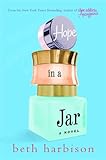
Review: Hope in a Jar, by Beth Harbison

Hope in a Jar
Hope in a Jar
by Beth Harbison
St. Martin’s Griffin, 368 pages
Buy it from Amazon >>

When I saw Beth Harbison’s novel Hope in a Jar staring at me from the summer reading table at the bookstore, I didn’t connect the title with the Philosophy product at all, mainly because I haven’t used Philosophy in over a decade. I’m an Aveda girl, for the most part, although I’ve been branching out a little lately.

Just a few chapters into the sometimes fluffy, sometimes deadly serious story about Allie and Olivia – childhood best friends who part ways over a dark rumor only to reconnect at their 20-year high school reunion – I realized that this writer was my contemporary in more ways than one, and not just because of the dialogue that covered everything from fat burners that really work to which flavor of Lip Smackers is the coolest (I liked root beer, personally), but because I actually recognized every single pop-culture reference in her story.

There’s comfort in the familiar, which is why even though the plot was fairly predictable, I enjoyed this novel immensely. Books don’t always have to have a lofty purpose, or educate a starving mind. Sometimes, it’s okay to read for the sheer pleasure of being entertained, and Harbison excels at entertaining. Sure, I figured out the ending way before the end of the book, but I still enjoyed watching the characters get there, because the dialogue was spot on, the relationships made sense, and the descriptions were so vivid (as vivid as many of the outfits we all wore as children in the 1970s and 1980s) that it was almost like attending my own 20-year high school reunion, without any of the attendant angst.

Hope in a Jar made me laugh out loud, a lot, and sometimes, that’s what a book SHOULD do. I haven’t read any of Harbison’s other work, but I know that when I do, I’ll enjoy it immensely.

Goes well with: Steak-ums sandwiches and cold Tab

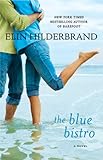
Review: The Blue Bistro, by Elin Hilderbrand

The Blue Bistro
The Blue Bistro
by Elin Hilderbrand
St. Martin’s Griffin, 336 pages
Buy from Amazon >>

The Blue Bistro may be the fourth of author Elin Hilderbrand’s novels set on the island of Nantucket, but it’s only the second I’ve read. Thankfully, her novels are not a series, as much as they are a collection. Most don’t even mention the same restaurants.

In any case, this novel, which is set in and around a beach front restaurant, (restaurant books are not the best appetite suppressants, by the way), tells the story of 28-year-old Adrienne Dealey, freshly off the Colorado ski slopes, where she worked as the concierge in a tone-y hotel, and looking for a new life, without her old lover, who wasn’t good for her. Telling is the fact that she misses the dog, more than the man.

Having been advised to try Nantucket for the summer, Adrienne begins looking for work, and in the process, meets Thatcher Smith, who co-owns the famous Blue Bistro with his childhood friend, the reclusive, but amazingly talented, Fiona Kemp. What follows is part hard work, part romance, and part mystery – what hold does Fiona have on Thatcher, that he can’t (or won’t) even spend the entire night with Adrienne after they become lovers?

As is expected of Hilderbrand novels, there is sophisticated, realistic romance set against the charming backdrop of Nantucket in the summertime.

You can almost feel the salt in your hair.

Goes well with: Champagne and lobster tails.

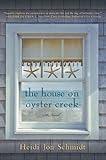
Review: The House on Oyster Creek, by Heidi Jon Schmidt

House on Oyster Creek
The House on Oyster Creek
Heidi John Schmidt
NAL Trade, 368 pages
Get it from Amazon >>

I picked up The House on Oyster Creek because the title and cover blurb intrigued me. It ended up being nothing like what I expected, but that’s not a bad thing.

In this lyrically written novel, you can hear the coming and going of the tide off Cape Cod in the author’s words. Schmidt certainly knows how to set a mood – and she does so, here, with delicacy. When we meet protagonist Charlotte Tradescome, and her husband Henry, we are given the impression that the younger, more vibrant Charlotte loves her thorny, somewhat aloof husband, but is no longer entirely “in love” with him, especially since the birth of their now-three-year-old daughter. …

When Henry’s father dies, and the couple inherit a house on the cape, Charlotte seizes it as an opportunity to take her child away from the hustle and bustle of life in New York City, and give her something “real.” She immediately embraces the new location, the crusty locals who deem her a “washashore,” and the rhythm of life on the shore. She also falls for a local oyster farmer Darryl Stead, while Henry spends his time reading, writing, and hitting the local pub late at night.

In any other author’s hands, Charlotte would divorce Henry, marry Darryl, and proceed to have an epic romance. In Schmidt’s hands, that doesn’t happen, and while Henry is portrayed as the ultimate curmudgeon, we also see that there’s real affection between himself and his wife.

It is, however, the land war that Charlotte accidentally causes that is the center of this story – and a metaphor for the Henry/Charlotte/Darryl triangle. When selling off part of their land, Charlotte left the door open for greedy rich folk to build a house totally out of tune with the coast, and block access to the oyster farms.

Of course Darryl is one of those most affected by that act, and of course they work together to rectify the situation.

Meanwhile, the year turns, the characters grow, and every few scenes, fresh oysters are being cooked and served.

This may not be the best novel in the world, but for summer beach reading, it holds some lovely surprises – pearls in the oysters, if you will.

Goes well with: Fried oysters and cold beer.