Food, Memories, and Love in Cauchemar, by Alexandra Grigorescu (@a_grigorescu) – #GuestPost @ecwpress #Bibliotica

I didn’t set out to write a book in which food figures so heavily. But I love talking about food. Food, to me, can be magic, and good cooks elevate the merely necessary into the extraordinary.

I can tell you in five seconds flat where I love to eat in my city. As a diner who gets legitimately upset when my local bakery is sold out of the particular pastry I’ve been craving, and as a cook who routinely doubles the recommended quantity of the “good stuff” (shrimp, pesto, spices, and oils, oh my!), food was bound to worm its way in.

So, when I, to my great surprise, discovered that I was writing a book set in the South (as a longtime resident of chilly Canada), food was an easy way to evoke that atmosphere.

My husband and I went down to Louisiana, and (over)ate ourselves silly. It’s my opinion that you can’t return from the South without talking about the food. Personally, I do so in tones that are reverential and cowed. I loved it, but it also weighed me down. It made me groggy and sluggish—and so, so happy. There were po’boys, and etouffee. There was cornbread and grits. There were fried oysters, and fried alligator, and donuts. There was chicory coffee and absinthe sipped in the company of a black cat. There were dive bar nachos, and white napkins in a romantic courtyard on New Year’s Eve. Much of what made me fall in love with the South is deeply connected to the food I ate there.

But almost without my noticing, food also became a narrative tool in Cauchemar: a way of contrasting between the familiar and the unnatural. Mae, Hannah’s adoptive mother, rules in the kitchen, and she’s immediately established as a healer. By contrast, Christobelle (Hannah’s birth mother) is extremely thin, and doesn’t seem to eat—at least, not in the human sense. She’s almost a succubus or vampire, feeding on the grief of the living and the spirits of the dead.

Finally, Hannah falls somewhere in the middle. Over the course of the book, she oscillates between the two extremes, which is an echo of her internal struggle, as well as the struggle between the worlds of the living and the dead.

The book opens with food—Hannah arriving too late to save Mae because she was eating a piece of pastry. In her grief after Mae’s death, she fails to eat properly, and turns to other people’s casseroles. In the blush of first love, she begins to experiment. She over-spices to echo her own overstimulation, and as a result her dishes are out of balance.

Then, as things start to get frightening and the stakes are raised, Hannah tries to find Mae’s recipes, hoping for some semblance of familiarity. Hannah searches her memory, too, and finds comfort in recalling Mae’s advice, so often spoken in the kitchen. There’s a long stretch in the book where both Callum and Hannah lose their appetite (and Hannah ends up eating something decidedly unappetizing), and this mirrors the blurring of the lines between this world and the next.

One very real way for Hannah to choose life, to embrace memory, and to honour Mae is through cooking. Some of the dishes mentioned in the book are ones I’ve made in my own kitchen, but more importantly, ones I’ve improvised on—in essence, letting Mae guide my own hands. I blackened some catfish for my husband one night, channeling Hannah and Mae in the book, and yes, I did fill the kitchen with billows of spiced smoke. I listened to the fish crackle and exhale, and I, too, squeezed lemon juice over it, and thought of it as a balm for that poor, overworked fish filet. I imagined someone older and wiser instructing me as I did so, but I was also aware of trying to impress someone I loved. I put myself in Hannah’s skin through cooking what Hannah might cook.

Eating engages multiple senses, and is a powerful grounding tool. Hannah uses food and cooking as a way to center herself. For me, food summons memories. It harkens back to my own Maes—my grandmothers. Food and cooking recalls my grandmother’s cabbage rolls, her flaky mushroom pastries, and her chocolate cake. When I think of sour vegetable preserves, I think of red peppers in jars on her balcony. I think of her smile, her voice, and I remember taking the photo that now sits by my bedside. In this way, food resurrects her. Food, as the privilege of the living, brings life.

I remember watching my grandmothers in their respective kitchens and being, on some level, aware that I was being initiated into a tradition. Now, that memory is coloured by the knowledge that one day, if I’m lucky, I too might be watched by a curious munchkin as I measure out ingredients.

Finally, cooking is love. It is familial love: me sitting in the sunlit attic of my childhood home as one of my grandmothers prepared a pot of soup. It is romantic love: my husband and I working in tandem over a new recipe, or the memory of baking my first-ever batch of cookies with him. It is the joy of cooking something for someone, and what a pleasure and honor that is.

Cauchemar is, to me, a book about many things. Family, love, danger, death—and hopefully they all coexist on the page. It took me a while to get to a place where I’m comfortable cooking by smell and taste alone. It is a coming into oneself, and also, a homecoming.


About the author, Alexandra Grigorescu Alexandra Grigorescu

Alexandra Grigorescu has a Master’s degree in creative writing from the University of Toronto, where she attended writing workshops led by George Elliott Clark and Jeff Parker and wrote her thesis under the guidance of Camilla Gibb. She works as a freelance writer and lives in Toronto, Ontario.

Connect with Alexandra

Website | Facebook | Twitter


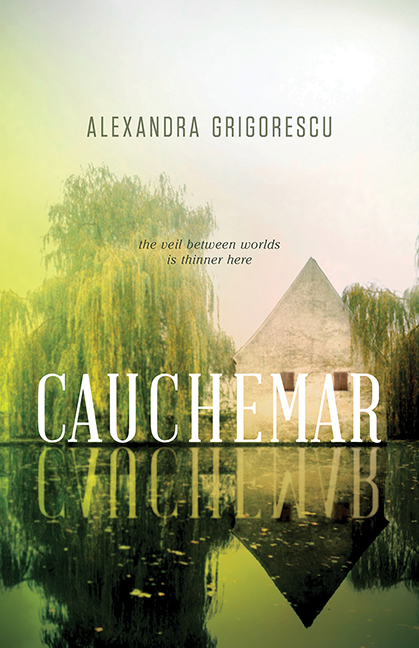
About the book Cauchemar Cauchemar

Paperback: 316 pages
Publisher: ECW Press (March 17, 2015)

Gripping, fast-paced, gorgeously written, and with unforgettable characters, Cauchemar tells the story of 20-year-old Hannah, who finds herself living alone on the edge of a Louisianan swamp after her adopted mother and protector dies. Hannah falls in love with Callum, an easy-going boat captain and part-time musician, but after her mysterious birth mother, outcast as a witch and rumoured to commune with the dead, comes back into Hannah’s life, she must confront what she’s been hiding from — the deadly spirits that haunt the swamp, the dark secrets of her past, and the nascent gift she possesses. Like the nightmares that plague Hannah,

Cauchemar lingers and haunts.

Buy, read, and discuss Cauchemar

ECW Press | Amazon (US) | Amazon (CA) | Barnes & Noble | Goodreads


Alexandra Grigorescu’s Blog Tour Stops Cauchemar

This review is part of a blog tour sponsored by the publisher, ECW Press. For the complete list of tour stops, see below. For more information, click HERE. For my review of the book, click HERE.

MARCH 1: Review and giveaway at The Book Binder’s Daughter
MARCH 2: Review and guest post at Bibliotica (That’s ME!)
MARCH 3: Review and excerpt at Bella’s Bookshelves
MARCH 4: Guest post at Write All the Words! for their International Women’s Week feature
MARCH 5: Interview and excerpt at Editorial Eyes
MARCH 7: Review at Lavender Lines
MARCH 9: Review at Svetlana’s Reads
MARCH 10: Review and interview at The Book Stylist
MARCH 11: Review, guest post, and giveaway at Booking it with Hayley G
MARCH 12: Guest Post at Dear Teen Me
MARCH 13: Review and giveaway at The Book Bratz
MARCH 14: Interview and excerpt at Feisty Little Woman


In Flames, by Richard Hilary Weber – #review #giveaway #Bibliotica

About the book, In Flames In Flames

  • On Sale: February 03, 2015
  • Pages: 188
  • Published by: Alibi

In Richard H. Weber’s passionate new thriller, a smoldering mystery ignites on a tropical island as lust, murder, and politics collide.

San Iñigo is a jewel of the Caribbean, a playground paradise for the foreign elite, a hell for unfortunate locals. For recent Princeton grad Dan Shedrick, San Iñigo promises the fulfillment of too many desires.

Dan hires on at a powerful American firm as a junior architect, but still finds time for tennis, booze, a reckless affair with the sexy wife of a resort owner—even a bit of reconnaissance for the U.S. cultural attaché. But soon he discovers that nothing on San Iñigo is without consequence. When a much-loved local radio personality is found on a beach with his head blown off, Dan’s lover becomes a suspect. And not long after his foray into espionage, he’s dragged away on a brutal journey into the heart of darkness.

Buffeted by aggression, depraved ritual, and personal betrayal, Dan discovers fierce truths about San Iñigo . . . and himself. In the island’s forbidding mountain jungle, his life goes up in flames—a deadly inferno that will forever change him, if he survives at all.

Buy, read, and discuss In Flames

Amazon | Barnes & Noble | Books-A-Million


 About Richard Hilary Weber

Richard Hilary Weber, a native of Brooklyn and a Columbia University graduate, has taught at the universities of Stockholm and Copenhagen, and has been a scriptwriter for French and Swedish filmmakers. He lives in Provence, France.


My Thoughts

In Flames is labeled as a thriller, but while it was definitely a crime story, albeit on specific to certain parts of Latin America, I wouldn’t classify it as a thriller myself. Mostly this is because the story was fairly predictable. As soon as Dan arrives in San Iñigo and begins talking about the levels of crime, you know he’s going to end up getting involved.

As well, I had a hard time connecting to any of the characters. Dan immediately falls into a pattern of boozing after work, and we never really see redeemable qualities in him. Erica, the wife of the Saint Ignatius Club owner, is treated more like an object than a person, and Ferg, the actual owner is only seen in small bits – we never really get to know him.

The locals aren’t treated any better. Vinny, who apparently has connections with everyone, seems more annoying than connected. The fortune teller could be interesting, but she isn’t really given the opportunity to be.

If it seems like I’m shredding this book, please understand: it’s not a bad read if you suspend disbelief at the door. There are, in fact, some things the author does really well. For example, the life of alcoholic semi-somnolence that many expats fall into is one I’ve witnessed in my visits to expat communities on the Pacific coast of Mexico, and he captures this brilliantly.

Similarly, the Club felt very real to me, with its perceived separation from the ‘locals’ and the ability to allow its patrons to act as though they’re in a remote part of Florida rather than a foreign country.

Erica’s clipboard and apparent focus on running her business seemed drawn from real life as well, in the best way possible.

Author Weber has a knack for description, but, to me, In Flames felt more like a choking campfire than a conflagration of suspense and intrigue, and I’m sorry about that, because Alibi’s offerings are usually incredibly well written, entertaining works of fiction.

I don’t want to say this book was BAD, more that…it’s a somewhat disappointing first effort from an author who has a voice but needs polish it a bit more.

Goes well with Carnitas and any rum-based tropical drink.


Enter to Win a $25 Gift Card and a Copy of the Book

a Rafflecopter giveaway


Richard Hilary Weber’s TLC Book Tours TOUR STOPS: TLC Book Tours

This review is part of a blog tour organized by TLC Book Tours. For the complete list of tour stops, see below. For more information, click HERE.

Monday, February 2nd: Life is Story

Wednesday, February 4th: Sara’s Organized Chaos

Thursday, February 5th: Dwell in Possibility

Monday, February 9th: Booked on a Feeling

Tuesday, February 10th: Mom in Love with Fiction

Thursday, February 12th: Joyfully Retired

Tuesday, February 17th: Read and Shelved

Thursday, February 19th: Reading Reality

Monday, February 23rd: Book Nerd

Tuesday, February 24th: Rhodes Review

Thursday, February 26th: Bibliotica

Monday, March 2nd: It’s a Mad Mad World

Thursday, March 5th: Patricia’s Wisdom

TBD: Queen of All She Reads 

The Art of Short Stories, by Rebecca Adams Wright (@rvleeadams) – #GuestPost #Bibliotica

The Art of Short Stories

a guest post from Rebecca Adams Wright

I love little things. Shiny things. Broken bits of larger things. I am a human magpie, tucking crumbling robin’s eggshells or eye-catching pebbles into my pockets when I find them on the street. I cannot walk past a dropped coin even if it turns out to old be an old button. I like old buttons.


My husband laughs when he sees me pick up these treasures, because, of course, I almost never find a use for them. But they are food for the imagination, my beautiful scraps. I hoard them in little boxes and cluster them in drawers. I stumble upon them later, having completely forgotten their context, not at all sure where they came from, but still admiring. I turn them over in my hand as if for the first time and marvel at the sheen on the feather, the perfect divot in the stone.

I am a collector of odds and ends. I appreciate when the edges are ragged or the provenance unknown.


This love of small and cryptic things is one of the qualities that make me a natural short story writer.


Necessarily more compact than novels and more prosaic than poetry, short stories both speak our language and plunge us into mystery. They will present some kind of familiar anchor (though that anchor can be as small as the recognizable tweed on a button), but they may well make no other explanations. Novels unfold before you—they offer you an entry hall, a place to hang your jacket, they take you on the grand tour of all the rooms in the hotel. Novels want to offer you a whiskey and soda. Novels, even aggressive and fast-paced ones, want to be with you for a while. They want to take time.


Short stories cannot and will not offer you this. Short stories do not expect you to stay the night and order room service in the morning. They are likely to introduce you to the world by handing you a bag of untraceable gemstones and they may never get around to explaining the origins of the one-eyed ravens. Short stories can be many things: elegant, expansive, brutal, humane, lyrical, piercing, inventive. But they are never long. That means they always leave at least one thread dangling on the loom, a little spot of mystery trailing behind them.


Producing a delightful sense of mystery is not the same thing, of course, as leaving important aspects of narrative untold. The best stories are as tight and complete as nautilus shells. They create a sense of fullness precisely because they contain all that they need, and nothing more. These stories are not mysterious because they are vague. Rather, the specificity of the text’s images, characters, and situations compels the reader to keep asking questions, to imagine more than is on the page. Short stories are often compared to snapshots, and we all know that some of the best photographs manage to imply whole worlds in a space no larger than four inches by six.


The other great appeal of short stories, at least to me, is the fact that they allow for such a diversity of themes and topics, investigations and explorations. From the writer’s perspective, working in short form means that (usually) a story can be finished and shared in a fraction of the time of a novel, and without as much editorial input. Individual stories, because they do not have to represent the trajectory of a career, can take more risks, push more boundaries, wander out of comfort zones. Serious authors can be silly, mainstream authors can go genre, authors of timeless novels can engage with current events.


From a reader’s perspective, short stories can offer new angles from which to view well-known authors. Even more importantly, they create opportunities to explore new voices, unfamiliar genres, or nontraditional narrative structures without the commitment of three-hundred-plus pages. Short stories allow both writers and readers to take risks that sometimes pay enormous dividends.


All this is not to imply that I myself won’t release a novel someday. Novels offer their own set of rewards, among them the great pleasure of long immersion. I am, in fact, at work on a novel right now. But I cannot imagine ever turning my back on the short story, just as I cannot imagine walking down the street without stopping when a glint in the road catches my eye.


Look, I just found something breathtaking. Hold out your hand—I’m offering it to you.


About the author, Rebecca Adams Wright Rebecca Adams Wright

Rebecca Adams Wright is a 2011 graduate of the Clarion Science Fiction and Fantasy Writers’ Workshop and a former University of Michigan Zell Writing Fellow. She has an MFA in fiction from the University of Michigan and has won the Leonard and Eileen Newman Writing Prize. Rebecca lives in Ypsilanti, Michigan, with her husband and daughter.

Connect with Rebecca

Website | Facebook | Twitter


About the book, The Thing About Great White SharksThe Thing About Great White Sharks

  • Paperback: 182 pages
  • Publisher: Little A (February 10, 2015)

In this collection’s richly imagined title story, our brutal and resourceful protagonist is determined to protect her family from a murderous, shark-ridden world—at any cost. Elsewhere, an old woman uncovers a sinister plot while looking after a friend’s plants (“Orchids”), and a girl in the war-torn countryside befriends an unlikely creature (“Keeper of the Glass”). In “Barnstormers,” a futuristic flying circus tries to forestall bankruptcy with one last memorable show. At the heart of “Sheila” is the terrible choice a retired judge must make when faced with the destruction of his beloved robotic dog, and “Yuri, in a Blue Dress” follows one of the last survivors of an alien invasion as she seeks help.

Extending from World War II to the far future, these fifteen stories offer a gorgeously observed perspective on our desire for connection and what it means to have compassion—for ourselves, for one another, for our past…and for whatever lies beyond.

Buy, read, and discuss The Thing About Great White Sharks

Amazon | Barnes & Noble | Books-A-Million | Goodreads


Rebecca Adams Wright’s TLC Book Tours Tour Stops: TLC Book Tours

This guest post is part of a tour organized by TLC Book Tours. For my review of this book, click HERE. For the complete list of tour stops, see below. For more information, click HERE.

Friday, February 13th: Book Snob – author guest post

Monday, February 16th: No More Grumpy Bookseller

Monday, February 16th: Bibliophilia, Please

Wednesday, February 18th: From the TBR Pile

Thursday, February 19th: 5 Minutes for Books

Thursday, February 19th: Diary of a Stay at Home Mom

Monday, February 23rd: Conceptual Reception

Tuesday, February 24th: Bibliotica review and author guest post

Tuesday, February 24th: Savvy Verse and Wit – author guest post

Wednesday, February 25th: Bibliophiliac

Thursday, February 26th: The Relentless Reader

Monday, March 2nd: A Lovely Bookshelf on the Wall

Tuesday, March 3rd: Patricia’s Wisdom

Thursday, March 5th: Guiltless Reading

Monday, March 9th: Kahakai Kitchen

Thursday, March 12th: The Book Binder’s Daughter – author guest post

TBD: Bound by Words

TBD: Life is Story

The Thing About Great White Sharks, by Rebecca Adams Wright (@rvleeadams) – #Review #Bibliotica

About the book, The Thing About Great White SharksThe Thing About Great White Sharks

  • Paperback: 182 pages
  • Publisher: Little A (February 10, 2015)

In this collection’s richly imagined title story, our brutal and resourceful protagonist is determined to protect her family from a murderous, shark-ridden world—at any cost. Elsewhere, an old woman uncovers a sinister plot while looking after a friend’s plants (“Orchids”), and a girl in the war-torn countryside befriends an unlikely creature (“Keeper of the Glass”). In “Barnstormers,” a futuristic flying circus tries to forestall bankruptcy with one last memorable show. At the heart of “Sheila” is the terrible choice a retired judge must make when faced with the destruction of his beloved robotic dog, and “Yuri, in a Blue Dress” follows one of the last survivors of an alien invasion as she seeks help.

Extending from World War II to the far future, these fifteen stories offer a gorgeously observed perspective on our desire for connection and what it means to have compassion—for ourselves, for one another, for our past…and for whatever lies beyond.

Buy, read, and discuss The Thing About Great White Sharks

Amazon | Barnes & Noble | Books-A-Million | Goodreads


About the author, Rebecca Adams Wright Rebecca Adams Wright

Rebecca Adams Wright is a 2011 graduate of the Clarion Science Fiction and Fantasy Writers’ Workshop and a former University of Michigan Zell Writing Fellow. She has an MFA in fiction from the University of Michigan and has won the Leonard and Eileen Newman Writing Prize. Rebecca lives in Ypsilanti, Michigan, with her husband and daughter.

Connect with Rebecca

Website | FacebookTwitter


My Thoughts

Short stories are a great way to get to know an author if you’re unfamiliar with her work, or if you don’t have the time to really sink into a novel. (Personally, I like to keep collections of short stories in the bathroom. Oh, come on, you all know you read there, too.)
I’ve come to think of them as a textual sampler platter. You get all sorts of characters and voices, and you don’t have to choose one to stay with.

Rebecca Adams Wright’s collection of short stories, The Thing About Great White Sharks (and Other Stories), is a prize among short story collections, because it’s fresh and unique, and just a little twisted in places…all things I appreciate.

While the title of the book (and the eponymous short story within) are what drew me to this collection (because I do have a ‘thing’ about great white sharks), and while that story – a whole new way to look at post-Apocalyptic society that (thank you, Ms. Wright) does not involve any humans shambling around or moaning for brains – was compelling, and dark, and even a little dangerous, it wasn’t my favorite of the fifteen.

That honor went to “Orchids,” which starts out as a simple little tale of a woman watering her neighbors plants and turns into something that would make Hitchcock sit up in his grave and demand to film, were that possible.

I also want to give a shout-out to “Sheila” which was sweet and sentimental without being sappy, and reminded me of both the questions that will start to come up as AIs become more widespread and more advanced (Siri has some growing up to do) and of the contemporary, and very real, issue of Breed-Selective Legislation (the laws which ban people from owning “bully” breed dogs like American Staffordshire Terriers, and other ‘pit bull types’).

But those are just three of the collection, and there are twelve others that take us back in time to World War II, and forward to when aliens are a real presence, and span many years and moods in between.

I would say that I’d love to see Ms. Wright give us a whole novel, but I’ve enjoyed her short stories so much, that my greediest self wants to demand another volume.

Goes well with Tapas and sangria or sushi and plum wine – anything that involves small bites of diverse flavors.


Rebecca Adams Wright’s TLC Book Tours Tour Stops: TLC Book Tours

This review is part of a tour organized by TLC Book Tours. For a guest post from the author, click HERE. For the complete list of tour stops, see below. For more information, click HERE.

Friday, February 13th: Book Snob – author guest post

Monday, February 16th: No More Grumpy Bookseller

Monday, February 16th: Bibliophilia, Please

Wednesday, February 18th: From the TBR Pile

Thursday, February 19th: 5 Minutes for Books

Thursday, February 19th: Diary of a Stay at Home Mom

Monday, February 23rd: Conceptual Reception

Tuesday, February 24th: Bibliotica review and author guest post

Tuesday, February 24th: Savvy Verse and Wit – author guest post

Wednesday, February 25th: Bibliophiliac

Thursday, February 26th: The Relentless Reader

Monday, March 2nd: A Lovely Bookshelf on the Wall

Tuesday, March 3rd: Patricia’s Wisdom

Thursday, March 5th: Guiltless Reading

Monday, March 9th: Kahakai Kitchen

Thursday, March 12th: The Book Binder’s Daughter – author guest post

TBD: Bound by Words

TBD: Life is Story


House Broken by Sonja Yoerg (@sonjayoerg) – #Review #Bibliotica

About the book House Broken House Broken

Pages: 332
Publisher: NAL (January 6, 2015)

Veterinarian Geneva Novak understands the behavior of umpteen species—just not her mother, Helen.

Geneva fled her childhood home—and her mother’s vodka-fueled disasters—without a backward glance. Twenty-five years later, Helen totals her car and her leg, and none of her children will play nurse. Geneva’s husband, whose family lives in each other’s pockets, convinces her that letting Helen move in might repair the mother-daughter relationship.

Geneva’s not holding her breath.

But she recognizes an opportunity. With her mother dependent and hobbled, Geneva may finally get answers to questions that have plagued her for years: why her eldest sister exiled herself to Africa, why her mother won’t discuss Geneva’s long-dead father, and why—there has to be a reason—Helen treats alcohol like a general anesthetic.

Buy, read, and discuss House Broken

Amazon | Barnes & Noble | Books-a-Million | IndieBound | Goodreads


About the author, Sonja Yoerg Sonja Yoerg

Sonja Yoerg grew up in Stowe, Vermont, where she financed her college education by waitressing at the Trapp Family Lodge. She earned her Ph.D. in Biological Psychology from the University of California at Berkeley, and studied learning in blue jays, kangaroo rats and spotted hyenas, among other species. Her non-fiction book about animal intelligence, Clever as a Fox (Bloomsbury USA) was published in 2001.

While her two daughters were young, Sonja taught in their schools in California. Now that they are in college, she writes full-time.

She currently lives in the Shenandoah Valley of Virginia with her husband. HOUSE BROKEN is her first novel.

Connect with Sonja

Website | Twitter


When Sonja Yoerg contacted me through this blog, asking if I’d read and review her book, I leaped at the chance. After all, I work in rescue, so I’m always up for reading about any character who works with animals. I’m really glad I accepted her offer, because House Broken is a wonderful book.

The main character, Geneva, is a veterinarian who clearly cares about her patients and their human companions, but, like many women who work in ‘caring’ professions, she has a hard time prioritizing her own self-care, and the needs of her family. While much of this novel is centered around Geneva’s relationship with her injured mother, I really liked that we got to see the whole picture of her life with its flaws and imperfections as well as its joys.

The mother-daughter dynamic was captured particularly well. Even those of us who, like me, have really strong relationships with our mothers, have still had to navigate tricky passages of our lives. I’m very fortunate that my own mother is hale and hearty, but having watched my mother deal with my grandmother’s recuperation from a hip replacement, decades ago, I know about the family secrets, bitter truths, and too-candid opinions that tend to surface during challenging times.

Helen, Geneva’s mother in the story, is a character made much more complicated by her love of vodka, because you never know if what she says is meant, or is enhanced by alcohol (or the lack of same). What is especially poignant is the realization that these women love each other, but they don’t really like each other very much.

One thing I really appreciated was that we saw Geneva not just as a daughter, but also as a mother. Her own relationship with her children is both counterpoint and learning opportunity, and seeing the ‘whole picture’ of her life made the whole novel that much more compelling.

With House Broken, Sonja Yoerg has given readers a meaty, interesting family drama, with the perfect balance of conventional relationships, and unconventional twists to them.

Buy this book for the cute dog on the cover, but read it for the amazing story inside.

Goes well with Strong coffee and an ‘everything’ bagel, toasted, with sun-dried tomato cream cheese.

Scent of Butterflies by Dora Levy Mossanen – Review

About the book Scent of ButterfliesScent of Butterflies

Paperback: 288 pages
Publisher: Sourcebooks Landmark (January 7, 2014)

Betrayal, forgiveness, identity and obsession churn against the tumultuous landscape of the Islamic revolution and seemingly perfect gardens of southern California in this compelling novel from bestselling author Dora Levy Mossanen.

Amidst a shattering betrayal and a country in turmoil, Soraya flees Iran to make a new life for herself in Los Angeles. The cruel and intimate blow her husband has dealt her awakens an obsessive streak that explodes in the heated world of Southern California, as Soraya plots her revenge against the other woman, her best friend, Butterfly. What she discovers proves far more devastating than anything she had ever imagined, unleashing a whirlwind of events that leave the reader breathless.

A novel singed by the flavors of Tehran, imbued with the Iranian roots of Persepolis and the culture clash of Rooftops of Tehran, this is a striking, nuanced story of a woman caught between two worlds, from the bestselling author of HaremCourtesan, and The Last Romanov.

Buy, read, and discuss Scent of Butterflies

Amazon | Barnes & Noble | Books-A-Million | Goodreads


About the author, Dora Levy Mossanen Dora Levy Mossanen

Dora Levy Mossanen was born in Israel and moved to Iran when she was nine. At the onset of the Islamic revolution, she and her family moved to the United States. She has a bachelor’s degree in English Literature from the University of California-Los Angeles and a master’s in Professional Writing from the University of Southern California.

Dora is the bestselling author of the acclaimed novels Harem, Courtesan, and The Last Romanov. Her fourth and most provocative book, Scent of Butterflies, was released January 7, 2014. She is a frequent contributor to numerous media outlets including the Huffington Post and the Jewish Journal. She has been featured on KCRW, The Politics of Culture, Voice of Russia, Radio Iran and numerous other radio and television programs. She is the recipient of the prestigious San Diego Editors’ choice award and was accepted as contributor to the Bread Loaf Writers’ Conference. Dora Levy Mossanen’s novels have been translated into numerous languages world-wide.


My Thoughts:

While Soraya’s story was both interesting and compelling, I found myself distracted by two things: one: how on earth did she have the funds with which to make her escape from Tehran and set up a whole new lifestyle in California, and why wasn’t she more likeable?

The first question may have been answered in the text, and I simply missed it. The second, I think, is by design. Soraya was betrayed, yes, but she is the perfect embodiment of blind revenge, setting up everything she can in order to get even with the people who have wronged her. Of course, betrayals within marriages cause some of the deepest wounds, and betrayals among long-time friends are just as hurtful, so maybe it’s not surprising that the main character is a little too ‘hard,’ a little too inscrutable, a little too difficult to empathize with.

Aside from my utter inability to like the main character, I thought Mossanen’s novel was truly well-written, the language almost lyrical in places. Even somewhat creepy passages (when Soraya literally squeezes the life from a butterfly for her collection) had a sort of dark beauty about them. Similarly, the descriptions of place, the spare use of language, the recurring themes of butterflies, both in the body of Soraya’s friend Butterfly, and in her vast collection of dead insects, really blended well to give this book a sort of otherworldly feeling. The repeated references to the human Butterfly’s preference for Chanel No. 5 were familiar to me – I have a great aunt who has worn Taboo for so many years that when I smell it, it smells like rice pudding to me, because I associate it with her work in our family’s diner. How sad to have Soraya’s more negative sense memory of her childhood friend’s preferred scent.

Early in Soraya’s time in California she references advice the once received, about only moving somewhere with the same color sky. With her writing, Mossanen makes us see the beauty of the Tehran that was, even in the Los Angeles that is, and I enjoyed that aspect of the novel.

I’ll confess that I had a personal interest in this book: when I was very young (one or two) my mother was dating a young Iranian officer visiting the U.S. on an exchange. He was a member of the Shah’s army, and actually tried to convince my mother to marry him and move to Iran (fortunately for both of us, she refused). While I have no distinct memories of him, I find familiarity in the rhythms of spoken Farsi.

At times, reading Scent of Butterflies, I felt like I was hearing those rhythms, the particular cadences that only those language families have.

I do want to mention that the twist near the end of the novel DID surprise me, and I thought the whole book was well-crafted. I think I’m just not quite cynical enough to resonate with Soraya, even though her story was well told.

Goes well with Falafel and tahini sauce and mint tea.


Dora Levy Mossanen’s TLC Book Tours TOUR STOPS: TLC Book Tours

This review is part of a tour sponsored by TLC Book Tours. For the complete list of stops, see below. For more information, click HERE.
Monday, February 2nd: My Book Self

Wednesday, February 4th: Bibliotica

Friday, February 6th: Back Porchervations

Wednesday, February 11th: Books a la Mode – guest post

Friday, February 13th: Reading and Eating

Monday, February 16th: Chick Lit Central

Monday, February 16th: A Bookish Affair – guest post

Tuesday, February 17th: Savvy Verse and Wit

Wednesday, February 18th: Kahakai Kitchen

Monday, February 23rd: Bibliophiliac

Friday, February 27th: Shelf Pleasure – guest post

Monday, March 2nd: Snowdrop Dreams of Books

Tuesday, March 3rd: Too Fond

Thursday, March 5th: Patricia’s Wisdom

One Step Too Far, by Tina Seskis @tinaseskis) – Review

About the book One Step Too Far One Step Too Far

Hardcover: 320 pages
Publisher: William Morrow (January 27, 2015)

The #1 international bestseller reminiscent of After I’m Gone, Sister, Before I Go to Sleep, and The Silent Wife—an intricately plotted, thoroughly addictive thriller that introduces a major new voice in suspense fiction—a mesmerizing and powerful novel that will keep you guessing to the very end.

No one has ever guessed Emily’s secret.

Will you?

A happy marriage. A beautiful family. A lovely home. So what makes Emily Coleman get up one morning and walk right out of her life—to start again as someone new?

Now, Emily has become Cat, working at a hip advertising agency in London and living on the edge with her inseparable new friend, Angel. Cat’s buried any trace of her old self so well, no one knows how to find her. But she can’t bury the past—or her own memories.

And soon, she’ll have to face the truth of what she’s done—a shocking revelation that may push her one step too far. . . .

Buy, read, and discuss One Step Too Far

Amazon | Barnes & Noble | IndieBound | Goodreads


About the author, Tina Seskis Tina Seskis

Tina Seskis grew up in Hampshire, England, and after graduating from the University of Bath spent more than twenty years working in marketing and advertising. One Step Too Far is her debut novel, and was first published independently in the UK, where it shot to the #1 spot on the bestseller list. Her second novel is forthcoming. She lives in North London with her husband and son.

Connect with Tina

Website | Facebook | Twitter


My Thoughts

I read this novel in the course of a single weekend afternoon, and literally could not put it down because it was so gripping.

It begins with protagonist Emily (now calling herself Cat) leaving her husband and family, and beginning a new life. We follow Cat as she establishes her new identity, finds a place to live, friends, and a job, experiments with drugs, and basically reclaims her lost single-girl life, but it’s clear that there’s something she’s not sharing with her new friends, or possibly with herself, and that something isn’t revealed until the book is 50% gone.

I don’t do synopses as a rule, so no, I’m not going to tell you what Emily/Cat’s secret is. Instead, I’m going to say that Tina Seskis wrote the hell out of this story, and turned what could have been a fairly standard trope (woman gets fed up with married life, starts new life as own alter-ego) and twists it into a compelling collection of people, places, and events that will have you laughing, crying, and – sometimes – wanting to reach into the pages and shake some sense into the characters.

Supporting characters include new housemate/best friend Angel, a lost waif who has more common sense than one might imagine, Emily’s twin sister Caroline, and Emily’s husband Ben. We don’t really meet Ben until the second half of the book, but once we do, many things from the first half click into place.

Based on my thorough enjoyment of this novel, I think it’s safe to say that Tina Seskis is a force to be reckoned with. Her dialogue is witty, her characters feel very real, and nothing about the story in One Step Too Far was remotely cliche. I can’t wait to read her next book, and I’m excited to see – read? – such a great new voice in contemporary fiction.

Goes well with Tapas and frou-frou cocktails.


TLC Book Tours

This review is sponsored by TLC Book Tours. For the complete list of tour stops, as well as the book trailer, click HERE.

Island Fog by John Vanderslice – Review

About Island FogIsland Fog

• Paperback: 288 pages
• Publisher: Lavender Ink (April 28, 2014)

Island Fog is a thematic, novel-length collection of stories, all set on Nantucket Island, Massachusetts. Nantucket as we know it began as an English settlement relatively early in the colonial period of the United States. In the heyday of its nineteenth century success as a whaling center, the island, for being as small as it is, was quite the cosmopolitan center. Sailors from across the globe mingled with a mixed local population of descendents of the original English settlers, black Americans, and Native Americans. Today too Nantucket is known as being especially open to visitors from around the world. When one travels there, one feels that one is no longer in the United States but in a culturally indistinct, in-between land, somehow equidistant from North America, the Caribbean, and Northern Europe.

Island Fog captures the physical, social, and political atmosphere of the island from both historical and contemporary perspectives. It is divided into two halves, with the first half containing five historical fictions and the latter half containing six contemporary ones. The first historical fiction is set in 1795, only a decade removed from the young America’s formalized independence from Britain, and the last historical fiction is set in 1920, one year after America’s passage of the infamous Volstead Act (prohibition). The middle three historical stories are set, respectively, in 1823, 1837, and 1846, the period when the whaling industry enjoyed its greatest profitability and the island its greatest wealth. The set of contemporary fictions begin in the late twentieth century and continue into the middle of the first decade of this century. Thus the stories of Island Fog bridge four centuries of Nantucket history.

The first story, “Guilty Look,” fictionalizes the real life Nantucket bank robbery of 1795, an event that famously divided the heretofore peaceful “paradise” into warring factions of Quakers and Congregationalists, Jeffersonians and Federalists. The other historical fictions—through first, second, and third person narration—depict a fraught and potentially violent friendship between a self-assured white adolescent and the half-breed son of the last full-blooded Wampanoag on the island (“King Philip’s War”); the trapped existence of a whaling widow, who while she waits for her disappeared and likely deceased husband has begun to waken to her latent lesbian nature (“On Cherry Street”); the tortured inner life of an ex-captain who has never gotten over having to become a cannibal to survive during one particularly harrowing whaling expedition twenty-eight years earlier (“Taste”); and the exasperation of a lonely African-American school teacher who despite being born and raised on the island still does not feel, and is not allowed to feel, like a native (“How Long Will You Tarry?”).

The six contemporary stories examine a variety of island lives, some of them Nantucket natives but others visitors for whom the island is either a last refuge or an existential prison. Along the way, we meet a carpenter whose wife deliberately jumped off the Nantucket to Hyannis ferry, drowning herself and her infant child (“Morning Meal”); a couple in their thirties who has not recovered, and will not recover, from a series of tragic miscarriages (“Beaten”); a retired businessman who feels thoroughly caught by his marriage to a dominating, materialistic woman (“Newfoundland”); a fortyish leader of ghost walks who is haunted by both a literal ghost and a communication from his former lover (“Haunted”); a Jamaican family trying to establish quasi-American lives for themselves on the island, an effort that a new tragedy at the mother’s workplace threatens to unhinge (“Managing Business”); and, finally, an American student who has given up on college and goes to Nantucket for a prearranged summer job only to find a different job there, one that forces him to reconsider everything he thought he understood about himself, his life, and the island (“Island Fog”).

The focus of every one of the eleven stories in the collection is on the characters populating them: their latent desires and disappointing pasts, their future hopes and drastic, misguided decisions.  These are stories, not treatises on American cultural history. Yet by gathering together in one place all these pieces, a provocative and even cutting picture of Nantucket—its physical beauty, its social tensions, its preening hypocrisies—inevitably arise, making Island Fog far greater than the sum of its gorgeous, sorrowful parts.

Buy, read, and discuss Island Fog

AmazonBarnes & Noble | Goodreads


About John Vanderslice John Vanderslice

John Vanderslice teaches in the MFA program at the University of Central Arkansas, where he also serves as associate editor of Toad Suck Review magazine. His fiction, poetry, essays, and one-act plays have appeared in Seattle ReviewLaurel Review, Sou’wester, CrazyhorseSouthern Humanities Review1966, Exquisite Corpse, and dozens of other journals. He has also published short stories in several fiction anthologies, including Appalachian Voice, Redacted StoryChick for a DayThe Best of the First Line: Editors Picks 2002-2006, and Tartts: Incisive Fiction from Emerging Writers.  His new book of short stories, Island Fog, published by Lavender Ink, is a linked collection, with every story set on Nantucket Island, Massachusetts.


My Thoughts:

From the opening chapters of the first story in this collection (“Guilty Look”) to the last words of the last story, I was hooked on John Vanderslice’s writing voice, and on his description of Nantucket as it developed from a small village to a thriving community. Admittedly, my own bias made it difficult for me to see a Quaker as a ‘bad guy’ (although all of Vanderslice’s characters are more complex than such a label would imply), and that made the first story a bit difficult for me, but the storytelling won out in the end, and I remained engaged.

The rest of the stories in this collection, linked by their setting and their populations of imperfect, all-too-human characters, were also fascinating, compelling reads. “Beaten,” which involved a couple who had suffered multiple miscarriages, struck particularly close to home for me (I’ve had two.)

If you’re one of those readers whose only knowledge of Nantucket comes from Elin Hilderbrand’s admittedly-addictive beachy novels with their interchangeable pastel-clad husbands and fantastic restaurants, this book will be a wake-up call to a much grittier, more realistic, and more diverse version of the island.

There’s room for both types of story, of course, and one doesn’t compete with the other at all, but given the choice, I’d pick Vanderslice because every single character felt three-dimensional, flawed, interesting, and really real to me, and because the glimpse at the long history of this community – from settlement to whaling mecca to tourist destination – was also a fascinating glimpse into a distinctly American culture.

This was my first introduction to Vanderslice’s work. I hope it won’t be my last.

Goes well with a steaming bowl of New England clam chowder, and a local micro-brew beer.


John’s Tour Stops TLC Book Tours

This review is part of a blog tour organized by TLC Book Tours. For the complete list of tour stops, see below. For more information, click HERE.

Monday, January 5th: The Year in Books

Tuesday, January 6th: Svetlana’s Reads and Views

Wednesday, January 7th: Books on the Table

Thursday, January 8th: Savvy Verse & Wit

Friday, January 9th: The Book Binder’s Daughter

Monday, January 12th: The Discerning Reader

Tuesday, January 13th: No More Grumpy Bookseller

Wednesday, January 14th: Lit and Life

Friday, January 16th: Peeking Between the Pages

Tuesday, January 20th: Bibliotica

Thursday, January 22nd: A Book Geek

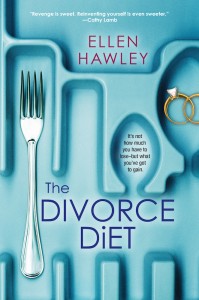
The Divorce Diet, by Ellen Hawley (@ellen_hawley) – Review

About the book The Divorce Diet The Divorce Diet

Paperback: 240 pages
Publisher: Kensington (December 30, 2014)

The Divorce Diet is dedicated to every woman who ever walked away from a relationship—or a diet.

Abigail, an inspired cook and stay-at-home mother, decides to repair the problems in her marriage with a diet book for herself and an elaborate birthday dinner for her husband. But over dinner her husband announces that the whole marriage thing just doesn’t work for him. Reeling, she packs up her baby, her cookbooks, and her single estate extra virgin olive oil and moves in with her parents while she looks for work and child care.

Floundering and broke in this life she didn’t choose, she turns for guidance and emotional support to the internalized voice of her diet book, and it becomes her invisible guru. While she struggles to reconcile the joy she takes in cooking with the book’s joyless and increasingly bizarre recipes and her native good sense with its advice, she works her way from one underpaid job to the next, eats everything but what her diet book recommends, and swears to get her life in order before her daughter’s old enough to create long-term memories.

Her diet book has promised to help her become the person she wants to be, but it’s only when she strikes out on her own that she figures out who that is.

Buy, read, and discuss The Divorce Diet

Amazon | Barnes & Noble | Books-a-Million | Goodreads


About the author, Ellen Hawley Ellen Hawley

Ellen Hawley has published two previous novels, Open Line (Coffee House Press, 2008) and Trip Sheets (Milkweed Editions, 1998).

She has worked as an editor and copy editor, a creative writing teacher, a talk show host, a cab driver, a waitress, an assembler, a janitor, a file clerk, and for four panic-filled hours a receptionist. She lived in Minnesota for forty years and now lives in Cornwall, where she feeds a blog—as well as two cats, one dog, one partner, and any friends who stop by.

Awards include a Writer’s Voice Capricorn Award, a Minnesota State Arts Board Grant, and a Loft-McKnight Award.

Connect with Ellen

Blog | Website | Twitter


My Thoughts:

As someone who is very fortunate to have a stable, long-term marriage, you might think The Divorce Diet wouldn’t appeal to me, but you’d be wrong. Even though I’m not a twenty-five-year-old mother of a small child who’s marriage is crumbling, I found that a lot of Abigail’s story – wanting to improve herself, finding the meal plans in diet books appalling, and feeling like a teenager when she’s living with her parents (something I haven’t done since I was in my twenties, and then only temporarily) – really resonated with me.

Abigail’s story is a poignant one, full of pain and anguish, but it’s also incredibly funny…and author Ellen Hawley perfectly balances the humor that comes from pain and the humor that comes from diet books, mixing them both together into a tasty treat that tickles the brain and satisfies the imagination. (I especially liked things like an ingredient list that included fat-free quotation marks.)

No marriage is perfect. No one doesn’t think about improving themselves. And no pop-tart has a discernible flavor. These are universal truths. Another one: The Divorce Diet should go on your to-be-read pile immediately.

Goes well with a perfectly-cooked organic chicken breast with olive oil, lemon, and fresh herbs, served with roasted squash and a fresh green salad.


Ellen Hawley’s TLC Book Tours Tour Stops TLC Book Tours

This review is part of a blog tour sponsored by TLC Book Tours. For more information and the complete list of stops, see the list below, or click HERE.

Monday, January 5th: Patricia’s Wisdom

Tuesday, January 6th: Bibliotica

Wednesday, January 7th: Books a la Mode – guest post and giveaway

Thursday, January 8th: Annabel and Alice

Monday, January 12th: The Well Read Redhead

Tuesday, January 13th: Kahakai Kitchen

Wednesday, January 14th: West Metro Mommy Reads

Thursday, January 15th: BookNAround

Monday, January 19th: The Discerning Reader

Tuesday, January 20th: Reading and Eating

Wednesday, January 21st: Bell, Book & Candle

Thursday, January 22nd: girlichef

Friday, January 23rd: A Chick Who Reads

Monday, January 26th: Snowdrop Dreams of Books

Tuesday, January 27th: Bibliophiliac

Wednesday, January 28th: I’d Rather Be at the Beach

Almost Perfect, by Diane Daniels Manning – Review

About the book Almost Perfect Almost Perfect

Paperback: 330 pages
Publisher: Beltor (January 28, 2014)

A YA novel about two unlikely friends, their dogs, and the competitions that bring them and their community together. (Kirkus Reviews)

An old woman who has given up hope and a boy who believes the impossible wonder if life would be perfect at the Westminster Dog Show.

Seventy-year old Bess Rutledge has dreamed of winning the Westminster Dog Show all her life. Despite her decades-long career as one of America’s top Standard Poodle breeders, she has decided she’s too old to hold on to her foolish dream. She sells off all the dogs in her once famous kennel except for the aging champion McCreery and his mischievous, handsome son Breaker. Part of her senses they might have been the ones to take her to Westminster, if only she’d dared to try.

Bess meets Benny, a teenager with mild autism who attends a therapeutic special school, and learns he has a dream of his own: to impress his self-absorbed mother. Benny is drawn into the world of dog shows and becomes convinced he has found the perfect way to win his mother’s attention. If he can win Westminster with either McCreery or Breaker, he just knows she will finally be proud of him. Getting Bess to go along with his plan, however, is not going to be so easy. . .

Buy, read, and discuss Almost Perfect

Amazon | Barnes & Noble | Goodreads


My Thoughts:

This book is a bit of a slow burner…but once you get into it and really get to know the characters, you find that it has it’s own special charm. Bess and Benny the two central characters, couldn’t be more different, and yet, through love of dogs and strange circumstances both of these slightly bent (if not actually broken) people become friends in the way that old souls and young souls tend to do.

I enjoyed the sense of otherness the author used when writing Benny’s scenes. He’s autistic, but high functioning, and there is never any question that his brain is wired a bit differently from those who are neurotypical. There is also no question that this is BAD. It isn’t. It’s just one part of who this boy – young man, really – is.

Likewise, Bess’s stubbornness is a key character trait without being her only character trait. It makes you want to goad her into being your friend, deliver hot tea and baked goods to her while she’s tending a bitch in labor, and then massage her feet afterward, just because she clearly NEEDS someone to give her as much TLC as she gives her dogs, especially McCreery.

I have five dogs living in my house right now. Four are mine, all rescues. One is my current foster-dog. I love them all as if they were the purebred poodles that Bess breeds, and I know how quickly each of them has become a vital piece of my heart, so the fact that this story was so tied up in the human-canine bond really resonated with me.

Bottom line: Almost Perfect was a fabulous read full of three-dimensional characters and great dialogue. Read. This. Book.

(Confession: I read this months ago, and only now had a moment to write the review. Apologies to the author for the delay.)

Goes well with Shepherd’s pie and a glass of apple cider (hard or not, doesn’t matter.)