Review: The Cure for Anything is Salt Water

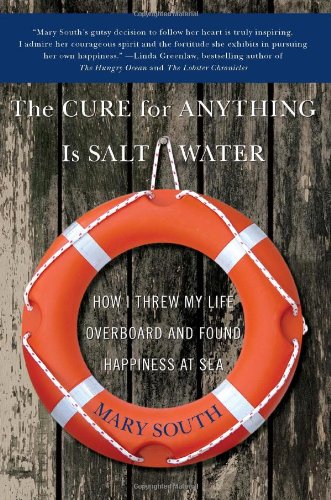
The Cure for Anything is Salt Water
Mary South
Harper, 224 pages
June, 2008
Buy from Amazon >> OR Read the first chapter for free >>

Description (from Publishers Weekly):
A mid-life crisis and a latent sense of adventure caused book editor South to give up her life in publishing and take up residence on the Bossanova, a steel-hull trawler she bought before knowing how to captain it. The subtitle is largely hyperbolic-South’s time “at sea” was really a short, if perilous, sail from Florida to Sag Harbor, where the boat is now docked-but South makes an interesting memoir from her skillful observation of the sailing life: “Good seamanship isn’t the thoughtless instinct that salty dogs make it seem to be. It’s the good habit of always asking yourself the right questions in the right order and answering them thoughtfully.” Sometimes, she seems to have forgotten landlubbers might pick up her book; a sentences like, “One danger is that your bow will slow and your stern will get kicked out to the side, causing you to be beam-to,” is just one head-scratcher of many for the uninitiated. She can be clumsy when transitioning between sailing stories and other aspects of her life (“This sailing was happiness. For a time, happiness, too, had been Leslie.”), but her clear-eyed perspective and involving stories keep the narrative moving. This small but well-observed memoir is a worthwhile read for anyone stuck in the workaday rut.

I was reading a bunch of ocean-themed books, some fiction, some not, on my Kindle during November and December, and Mary South’s memoir The Cure for Anything is Salt Water popped up on a list of suggestions. I downloaded the sample chapter to my kindle, read it, started reading other stuff, and then finally downloaded the whole book as a Christmas gift to myself. (I almost gave myself an iphone 4 after I cracked the glass on my 3GS, but we ultimately decided I should wait til summer, and the iPhone 5, and books are better, anyway.)

I really enjoyed South’s storytelling – though sometimes the transitions from the “present” story of sailing her steel barge from Florida to Sag Harbor to the “flashback” story of how she got to that point in time were a little awkward, and sometimes she used more sailing jargon than I think most people understand. I mean, I read a LOT of sailing books, and I knew most of the terms she used, but there were several I had to look up. Also, there was far less sailing in the book than I’d hoped for – just the one trip.

Those quibbles aside, however, I really enjoyed the book. Ms. South is witty and engaging, and some of her comments about lesbian dating made me laugh. I kept following my husband around reading passages and laughing delightedly.

Also, I totally related to the desire to chuck it all, pack up the dogs, and live on a boat. Well, maybe not a boat, but if there’s a small coastal village in Scotland or Ireland with a good pub, great cafe, a decent bookstore, and high-speed internet access, I’m SO there.

But I digress.

Mary South’s book isn’t just a mid-life crisis memoir. It’s a really engaging peek at two worlds: that of being a single woman over thirty-five, and that of being the captain of your own ship.

Both were enjoyable.

Goes well with: Freshly caught blue fish and a glass of wine.

Review: A Pointed Death, by Kath Russell

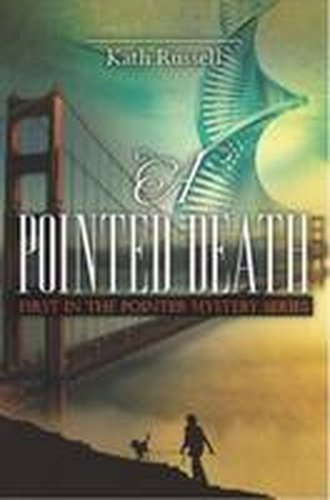
A Pointed Death
A Pointed Death
Kath Russell
CreateSpace, 352 pages
August, 2010
Buy from Amazon >> OR Read the first chapter for free..

Product Description (from Amazon.com):
In A Pointed Death, biotech consultant Nola Billingsley discovers that one of her clients is stealing proprietary information from other startups. When the scion of a prominent Chinese-American family is murdered, Nola is convinced his death stems from his employment at the company pilfering scientific secrets. Nola seeks the identity of the killer and the destination of the purloined genetic data. Lanky fraud investigator Robert Harrison wants her to leave sleuthing to the professionals and leap in bed with him, but hardheaded Nola is convinced she and her band of biotech pals can solve the mystery. When the going gets tough and danger looms, she has her shorthaired pointer Skootch to watch her back as the action accelerates from lab to ocean’s edge in San Francisco, the city where biotech was born. A Pointed Death is a funny, sexy who-done-it set in a smart industry, a ‘Malice Corporate’ unfolding in a town everyone loves but secretly believes is in need of its own twelve-step program.

When I was offered the opportunity to review Kath Russell’s lighthearted mystery novel, A Pointed Death, I jumped at the chance. I mean, this was a mystery with a female protagonist, that took place in San Francisco (my spiritual, if not actual, home town) and featured a short-haired pointer as a pet/sidekick. As I told the publicist, “I really, REALLY want to read this, and not JUST because I ALSO have a short-haired pointer.” I’m glad I did, because this book was a delightful read from start to finish, and the perfect novel for the post-holiday doldrums – not stupid, but not so intellectual that you find yourself exhausted after three pages.

I really loved Nola Billingsley as a character. She’s strong, spunky, and smart, but she’s also completely feminine, and reads as if she were a real person, rather than a mere character. The scenes between her and her aging-southern-belle mother are priceless (my own mother is not a southern belle, but aging radical feminists aren’t that different when they’re your parents, really), and the relationship Nola has with her bouncy, silly dog, Skootch (who is very much like my own bouncy, silly dog, Maximus) made me laugh not just because of the humor, but because it was dead-on accurate. How many of us have dogs who can smell when we’ve done the horizontal bop, and seem to judge us for it? How many of us with dogs ever get to go to the restroom without an audience?

I also liked Nola’s relationship with Harrison, the cop handling her case. Hardly the stuff of romance novels, it was very much an exploration of how grown-ups respond to chemistry and attraction – sometimes lovely, sometimes awkward, and often frustrating.

The mystery plot was also well-constructed. What seemed at first like yet another embezzlement story ended up touring three cultures: biotech, e-commerce, and Chinese-Americans. All three were fairly represented, and the combination was compelling and interesting all the way through.

This book has a tag implying that Ms. Russell might write more of Nola’s story.
I really hope that’s true.

Goes well with: Clam chowder in a sourdough bowl, and a chilled Anchor Steam beer.

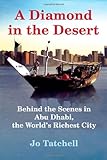
Review: A Diamond in the Desert, by Jo Tatchell

A Diamond in the Desert
A Diamond in the Desert: Behind the Scenes in Abu Dhabi, the World’s Richest City
Jo Tatchell
Grove Press, Black Cat, 304 pages
October, 2010
Read the first chapter for free >> or Buy the book from Amazon >>

Description (from Publishers Weekly):
A glittering emblem of global modernity carries a tinge of tribal clannishness and xenophobia in this revealing travelogue through the capital of the United Arab Emirates. Tatchell (The Poet of Baghdad), an English journalist who spent her youth in Abu Dhabi, compares the present city, with its skyscrapers, lavish malls, and Guggenheim branch, to the bedouin past it has all but obliterated. She finds that Abu Dhabi’s 420,000 official citizens, with an average net worth of million in oil wealth, have traded their camels and tents for SUVs, condos, and glitzy, indolent jet-setting; surrounding them is a sea of exploited foreign guest workers, 80% of the population, who build and run the city while living in a stateless limbo. (There are secrets lurking behind the shopping and partying, she finds during a Kafkaesque quest to locate the national newspaper archive.) The author’s teeming, sharply etched portrait introduces readers to tycoons, a wastrel playboy with a pet panther, a bored housewife trying to score bootleg liquor, avant-garde artists, nostalgic British expats, and a Lithuanian prostitute. Tatchell’s keen powers of observation and personal connections enable her to convey the hidden reality of this mirage-like city.

I don’t know what the best under eye cream might be, but I do know that the best way to get a free pedicure is to walk barefoot in sand, and speaking of sand, there’s a great moment in Jo Tatchell’s memoir A Diamond in the Desert: Behind the Scenes in Abu Dhabi, the World’s Richest City where Jo, visiting her childhood hometown as an adult, finds that she misses the desert sands that have been supplanted by modern construction. She sees some sand between a couple of buildings and takes off her shoes so she can feel it on her feet. It wasn’t a huge moment, but it’s the kind of detail and emotional connection that is what makes this book so delightful on so many levels.

But I digress.

When Ms. Tatchell contacted me and offered me a copy to review, I didn’t connect her name with the voice I’ve heard from my radio when she’s been on NPR, and I’m glad of that, because I would have been slightly intimidated. Who am I to review her work? I confess, I also felt a bit inadequate. I read a lot; I try to keep myself aware of the goings on in the world outside the bubble of SEO copywriting and improvisational comedy in which I reside, but the history of the Arab world is so rich and complicated that I don’t feel I have an accurate grasp on it.

Despite this, or maybe because of it, I quickly found myself engrossed in Tatchell’s book. As many reviewers have said, it’s part memoir, part travelogue, part history, but it’s also a completely human story. In many ways, it’s also a twist on the whole “you can’t go home again” theme, because Tatchell did spend part of her childhood living in Abu Dhabi in the 1970s at the dawn of OPEC (which period I really only knew through works of fiction like The Eight before reading this book). Going back to any childhood home as an adult makes us see it with new eyes. Things we thought were huge often seem diminished, things we remember as sparkly and new often seem dingy and faded, or, conversely, things we remember as worn down are likely to greet us in new, gentrified forms.

Beyond the homecoming aspect of A Diamond in the Desert, however, there is also a look at modern Arab culture that most Westerners will never really experience, and it’s shared candidly, without any political agenda. Tatchell’s observations are honest ones. She sees the changes in “her” city, both good and bad. Abu Dhabi, after all, is one of the few Arab countries with a decidedly pro-Western stance, modeling a form of tolerance we could learn from , and demonstrating that cultural evolution is possible, and even necessary, in a world so full of dynamic change.

Not that Abu Dhabi is perfect, of course. Tatchell never implies that it is, and she shows us its faults as well . In everything from the glossing over, nay, the total erasure of a child abduction that happened in her youth, to the careful non-existence of newspaper archives from the same period, to her recollection of a party she attended as a young woman where the host kept a panther on the balcony (I felt bad for the panther), she shows us Abu Dhabi as naked as a city can be under the cloak of civilization all cities wear.

Tatchell may not love Abu Dhabi unconditionally, but her respect for the city, the country, the culture all shine through. She shows us a different life, and while she may comment on apparent social and/or political inequities (women, for example, are still not treated as equals there, but then, we Westerners aren’t exactly enlightened about the treatment of women (or GLBTQQI folks, or ethnic minorities, or, or, or…) either. We just cover it better.) she does so without harsh judgement.

If you want a scandalous story about murder and crime and intrigue, this is not the book for you. If, on the other hand, you want an honest glimpse behind the veil of culture, with hints of intrigue and peeks at darker politics, as told from someone who has lived in the culture, you should race to the bookstore or click on one of the links above, and buy this book today. You won’t regret it.

And you might even learn something.

I know I did.

Goes well with mint tea and chicken shawarma.

RetroReading: Harry Potter and the Deathly Hallows

Harry Potter and the Deathly Hallows

In preparation for seeing the movie tonight, I re-read Harry Potter and the Deathly Hallows earlier this week. Yes, I know the movie is only half the story. Yes, I know the movies never have everything the books do, but even so, I felt it important to refresh my memory of the story.

I noticed a few details in this reading that I don’t remember reading when I first read the book the day it was released, and it was nice to re-visit the original version of the characters, but I’m also left wondering if Harry stayed small-ish in the books because Dan Radcliffe is not particularly tall.

As the daughter of a fashion designer, one thing I’m intrigued by is what Hermione’s beaded bag will look like. I mean, I know there are custom drawstring bags that have beadwork, but I also know that most beaded bags are tiny little clutch purses. I think my mother has one, I know my grandmother had a couple that I used to play with.

Mostly though, I’m looking forward to the experience of seeing a fun movie in an opening night crowd.

Review: Six Clicks Away, by Bonnie Rozanski

Six Clicks Away
Six Clicks Away
Bonnie Rozanski
Kindle edition, 309kb
Amazon.com, September 2010
Buy this book from Amazon

Product Description (from Amazon.com):
As miraculous as our wired world may be, everything connected to everything else eventually shows its downside. A rumor, a virus, a financial crisis – these days, they all cascade throughout the world in record time. SIX CLICKS AWAY tells the story of a single ripple through a tangled web, and how one person can affect us all.

In Bonnie Rozanski’s captivating novel, the social network becomes a stage for six indelible, interconnected characters: a lonely writer in Toronto, pining for her lost love; an unemployed engineer in Seattle who finds himself working at the Pike Place Fish Market. There is a young collections operator in Bangalore, India, who can’t stop caring about the people from whom she collects; and a seedy real estate magnate who gets his just desserts. Finally, there is a down-on-his-luck actor, an old friend of the Dalai Lama, who finds enlightenment from a most unlikely source.

A chain of falling dominoes is set in motion when Jeremy and Rachel, an unlikely duo of a geek and a Jersey girl, contact a friend on Myface.com, the largest social network on the planet. That friend contacts another, and another, each link bringing the pair one step closer to the goal of reaching the Dalai Lama, their choice of exotic target on the other side of the world. What they expect is that their simple classroom project will demonstrate “six degrees of separation,” the idea that everyone on this planet is connected in six short links to everyone else. What they get, however, is a cascade of the unexpected.

As the product description says, there’s a strong element of “Six Degrees of Separation” in Bonnie Rozanski’s latest novel, and I have to confess, it’s this element that made me say yes when she emailed to offer me a review copy (an electronic one – yay for green publishing!) I sent her document to my Kindle for comfortable reading, and found myself laughing, nodding, and otherwise reacting to this book as if I knew the characters (I’m pretty sure I went to school with some of them.)

I enjoyed all the characters, especially Jersey girl Rachel, whose accent I could clearly hear in my head, the way you can look at a picture of a modern sofa and know exactly how it would feel beneath you. I loved the invention of the facebook-esque MyFace social network, and I thought the publication of this novel was especially timely since it coincided with the movie The Social Network.

There are any number of novelists who try to use the Internet as a plot device. Most of them fail by either being too trendy, or being so far out of date that it pulls you out of the story. Rozanski, on the other hand, has given us a story where the ‘net is as much a character as the human characters, but manages to feel completely organic within the world in which her novel takes place.

If you’re at all geeky, or just love a good read, this book is for you.

Goes well with: diet Dr. Pepper and nachos.

Green Books Campaign: Bayou Underground: Tracing the mythical roots of American popular music, by Dave Thompson

Bayou Underground
Bayou Underground: Tracing the mythical roots of American popular music
Dave Thompson
Paperback, 256 pages
ECW Press, September 1, 2010
Printed on FSC-certified paper that is 30% recycled/post-consumer waste product
Buy this book from Amazon >>
Live in CANADA? Buy this book from Indigo

This review is part of the Green Books campaign. Today 200 bloggers take a stand to support books printed in an eco-friendly manner by simultaneously publishing reviews of 200 books printed on recycled or FSC-certified paper. By turning a spotlight on books printed using eco- friendly paper, we hope to raise the awareness of book buyers and encourage everyone to take the environment into consideration when purchasing books.

The campaign is organized for the second time by Eco-Libris, a green company working to make reading more sustainable. We invite you to join the discussion on “green” books and support books printed in an eco-friendly manner! A full list of participating blogs and links to their reviews is available on Eco-Libris website.

Product Description (from the publisher):
Permeating the shadows and the darkness of the bayou—a world all its own that stretches from Houston, Texas, to Mobile, Alabama—this study of marsh music leaves New Orleans to discover secret legends and vivid mythology in the surrounding wilderness. The people and the cultures that have called the bayou home—such as Bob Dylan, Jerry Reed, Nick Cave, Bo Didley, and a one-armed Cajun backwoodsman and gator hunter named Amos Moses—are unearthed not only through their own words and lives but also through a study of their music and interviews with visitors to and residents from the region. The interviews with Jerry Reed and Bo Didley, who both died in 2008, are among the last, emphasizing the book’s importance as a piece of cultural preservation. Part social history, part epic travelogue, and partly a lament for a way of life that has now all but disappeared, this is the gripping story of American music’s forgotten childhood—and the parentage it barely even knows.

Bayou Underground doesn’t come with a digital download code or CD of all the music it references – it couldn’t possibly offer ALL the tracks anyway, but from the very first page of the introduction, I was wishing that at least the tracks being used as chapter titles were available for me to listen to while I read, because while I’d heard of some of them, others were new to me. Despite this, however, Thompson’s book, which is part music history, part memoir, part Americana, had me instantly hooked.

Partly, I suppose I fell into this book after picking it from the list offered for this year’s EcoLibris Green Books Campaign because the combined forces of HBO’s two Louisiana-based series, True Blood and Treme – and especially the latter with it’s special devotion to the music of New Orleans – have had me on a personal mission to better educate my musical ear with respect to blues and jazz this year, and partly it’s because Thompson is an amazing writer, and knows how to hook an audience with a strong opening chord. In this case the first chapter, or “track one” opens with an exploration of Elvis Presley and “swamp rock,” but even though the author leads with a headliner, the book only gets better from there.

Like me, Thompson was inspired by literature. He specifically cites Anne Rice’s first vampire novel Interview with the Vampire (a favorite of mine since I read it when I was 17) and Barry Jean Ancelet’s Cajun and Creole Folktales as the two books that drove him toward a deeper exploration of the music of Louisiana – and I mean ALL the music. He dissects the differences between Cajun and Creole tunes, talks about jazz, blues, and rock, and turns this book into, not just a guided tour, but almost a seance, calling the great musicians – some famous, others less so, into the reader’s presence.

While the music history was fascinating (and sent me to iTunes and / or Napster more than once while I read this book, which I’m going to have to re-read, because I think I missed bits) it was the mythology, folklore and culture that I most appreciated. From local in-jokes about needing directions to a chapter that references Swamp Thing, alligator changelings and the Loup-Garou, not to mention those vampires (both the Rice and Charlaine Harris (Southern Vampire Mysteries) versions), this book is murky, moody, and marvelous, and if you’re anything like me you’ll find your toes a-tapping and your spine a-shivering, often at the same time.

Bayou Underground is a must-read for any serious scholar of American pop music, or American pop culture, as well as for anyone who just wants to know where Louisiana music got it’s distinctive sound.

Goes well with crawfish po’boys and cold beer, or beignets and cafe au lait…or both.

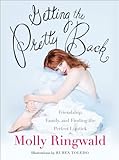
Review: Getting the Pretty Back, by Molly Ringwald

Getting the Pretty Back
Getting the Pretty Back: Friendship, Family, and Finding the Perfect Lipstick
Molly Ringwald
Buy from Amazon >>

Summary (from Publishers Weekly):
Famous for her roles as an angst-ridden teen in John Hughes classics like Pretty in Pink, Sixteen Candles and The Breakfast Club, Ringwald, now a 40-year-old wife and mother living largely outside the celebrity spotlight, seems a credible source of advice for young women and a likely fount of behind-the-scenes Hollywood anecdotes; unfortunately, she provides little of either in this uninspired self-help memoir. Like a well-meaning but distant friend, the actress shares advice and observations on topics like love, clothes, and food, often focusing on the inane and obvious (souvenir t-shirts are both ugly and ill-fitting; rushing into sex is usually a mistake) rather than the personal or perceptive: “When you’re a teenager, you’re forever thinking: Do they like me? When you’re a grown-up… the question becomes: Do I like them?” Ringwald occasionally involves her personal history, including the fact that the early stages of her romance with husband number two were mostly conducted over email, but she skimps on the details that her fans are probably looking for, with surprisingly little reference to the movie work that made her an icon of suburban youth in the 1980s. Color illustrations.

When my friend Deb told me she had a copy of Molly Ringwald’s book, I immediately asked if I could borrow it when she was through. I finally had a chance to read it earlier this week, and I loved it.

First, let’s be clear, in this book Ringwald gives advice on health, fashion, self-esteem, love and any number of things we women need advice about, without claiming to be an expert in any of those. In fact, she freely admits she’s sharing her own experiences in the hope that others will gain from the life lessons she’s learned. Also? She’s the kind of person – at least as presented here – that you’d be instantly comfortable meeting for a cappuccino, or hanging out with at the bookstore. For an actor, she’s incredibly real and accessible. So, don’t expect her to wax rhapsodic about hoodia gordonii or plastic surgery. She’s all about small, common sense changes.

As to my impressions of the book – I loved it! She’s not telling us anything that Tim Gunn doesn’t tell women every day, but she’s filtering it through her own experiences – especially where turning forty, having children later in life than the current trend, and marrying a younger man are involved. She’s candid in the way that someone you grew up watching in cool movies but isn’t actually someone you know seems candid. She’s playful. She’s self-deprecating.

She’s a thoroughly engaging writer, and this is a thoroughly engaging book.

If you’re over thirty-five, you NEED this book. If you’re under thirty-five, go rent Pretty in Pink, Sixteen Candles, and For Keeps and then go buy this book.

Because it really is a wonderful compilation of whimsical turns of phrase and really good advice.

Goes well with French onion soup and a glass of wine.

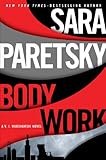
Review: Body Work, by Sara Paretsky

Body Work
Body Work
Sara Paretsky
Get it from Amazon >>

Summary (from Publishers Weekly):
Paretsky’s superb 14th novel featuring PI V.I. Warshawski (after Hardball) delves into Chicago’s avant-garde art scene. At the trendy Club Gouge, where Warshawski is keeping an eye on Petra, a young cousin who caused trouble in the previous book, performance artist Karen Buckley (aka the Body Artist) invites members of the audience to step on stage to paint her nude body. The intricate design that one woman paints on Karen’s back provokes a violent outburst from Chad Vishneski, a troubled Iraqi war veteran. When two nights later, someone shoots the woman who upset Chad outside the club, Chad is the logical murder suspect. Hired by Chad’s estranged parents to clear his name, Warshawski straddles a minefield that reaches from the Windy City’s neighborhoods to the Gulf War battlefields. Scenes with her aging neighbor and a new love interest give a much needed balance to the serious plot. This strong outing shows why the tough, fiercely independent, dog-loving private detective continues to survive.

I’ve been a fan of private investigator V. I. “Vic” Warshawski ever since my mother and I discovered her at the San Jose Public Library on one of the ritual Saturday trips we used to make. Books, coffee, a “little something” in honor of my grandmother, and then back home. Perfect mother-daughter weekends. In any case, I’ve now read more of Vic’s adventures than my mother has, simply because she lives in a place where English-language fiction is difficult to obtain.

Body Work, the most recent of author Sara Paretsky’s novels about the fictional female detectiv,e is one of the most satisfying novels I’ve read in a long while. It had everything from Vic using her picklocks to enter a crime scene (evidently they weren’t Kwikset locks) to Vic babysitting her pesty younger cousin Petra, to Vic sharing meals with her downstairs neighbor/adopted family member Mr. Contreras, to Vic getting brutally beaten while on the job.

Even better, Body Work also has an interesting plot that involves edgy performance art, the blogosphere, the Gulf war, corporate politics, unrequited love, illegal drug running, and international money laundering, and it shows that Ms. Warshawski is comfortable working with 21st century technology even though she has a special affection for old-world pleasures like a proper cappuccino, a soaring Italian aria, and a steaming hot bubble bath at the end of a hard day’s detecting.

And yet, Paretsky gave us even more: she gave us Jake, the classical bass player who is not only Vic’s neighbor, but also her current lover, and one who – we hope – will stick around for another book, even if he is squeamish about the sight of blood – something to be concerned about when you’re close to Victoria Warshawski.

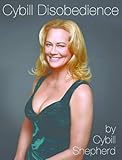
Review: Cybill Disobedience, by Cybill Shepherd

Cybill Disobedience
Cybill Disobedience
Cybill Shepherd
Get it from Amazon.com >>

I have to confess: I really only read Cybill Shepherd’s autobiography, Cybill Disobedience, because I saw it listed as a free digital download on KindleIQ.com, and while I do have standards, I’ll read anything from the backs of cereal boxes to eye wrinkle cream reviews if I’m doing it to test out a new toy. Or at least, the fact that it was a free download was why I began reading Shepherd’s book. She’s so honest and engaging, and funny, however, that very soon I was reading it for its own sake.

The thing about celebrity memoirs is that they’re more interesting if you have a decent working knowledge of the author’s body of work. In the case of Ms. Shepherd, I knew her from Moonlighting and the later sitcom that bore her name – Cybill, and liked both. I also remember her Loreal commercials (for hair color, not for eye wrinkle cream), and sometime in the last year she was in a Hallmark movie (or maybe it was a Lifetime movie?) about a divorced empty-nester who resumes her college education, which movie I quite liked. I knew nothing about her career in film from the decades before Moonlighting, nor had I any clue of her politics or her relationship history.

After reading the book, I was left awed by how very cool Cybill Shepherd is, politically and personally. She’s the kind of person I’d love to have as an ‘affectionate’ auntie, or stand next to in a protest march, and her book was entertaining, interesting, as candid as possible without jeopardizing the semblance of privacy her family needs, and really sort of compelling.

Goes well with sweet tea and barbecue.

Review: The Hypnotist, by M.J. Rose

The Hypnotist

Reading the third book in a series without having read its prequels can sometimes be a little bit weird, even if each novel is a complete story. This may be one of the reasons that M.J. Rose’s latest novel, The Hypnotist has been a “slow” read for me – because I sense that there are relationships and backstories that I’m missing. In fact, my mentioning this here in this blog a couple of days ago caught the attention of the author herself, and she left a note expressing concern. Let me say right now that any author who takes the time to check in with a reader has to be pretty cool, but then, if you’ve read anything M.J. Rose has written, that should be pretty obvious.

While neither the plot nor the structure of The Hypnotist bear any resemblance to one of my all-time favorite contemporary novels, The Eight, by Katherine Neville, I found that this book reminded me of the other nevertheless. Perhaps it’s the way the author excels at conveying a strong sense of place. Much of The Hypnotist takes place in libraries and museums, and I found my breath changing with each change of scene, as if some imaginary curator or librarian might shush me for exhaling too loudly.

But I digress.

The Hypnotist opens with the brutal murder of a young painter, and the near-murder of her lover, one Lucian Glass. Twenty years later, Glass is an FBI agent assigned to the Art Crime Team. He’s involved in the investigation of an extremely unstable art collector who has been destroying masterpieces in order to make some kind of a statement, and it is this investigation that sends Glass undercover to the Phoenix Foundation, run by Dr. Malachai Samuels, an expert in hypnotism and past-life regression.

Reincarnation isn’t just a character hook for Samuels, however. Glass is haunted as much by partly-glimpsed past lives of his own as he is by the memory of his lover, and her death. It’s not surprising, then, that art, history, intrigue, and the study of reincarnation all twist together to form the threads of a gripping tale that I both didn’t want to, and could not put down.

Rose’s characters are well-drawn, with enough detail to make them seem real, but not so much that the reader can’t put his or her own imagination to work. Her plot twists are plausible without being too obvious. Her prose is simple, but effective.

Read this book because the story is fabulous, but don’t be surprised if you, as I did, found yourself wanting to visit Persia, spend a rainy afternoon at an art museum, and curl up in a comfortably worn library chair with a treasured read.

To learn more about the author or her work, check out her website: M.J.Rose.com

Goes well with: mint tea and chicken shawarma, or a hot pretzel with mustard.