Review: Moonlight on the Nantahala

Moonlight on the Nantahala
by Micheal Rivers

Product Description (from Amazon.com):
His life began deep within the mountains of North Carolina. Edward Caulfield was a dedicated craftsman who appreciated the finer things in his life. As a young man he fell deeply in love and married a beautiful young woman he did not want to live without. Fate took her from him early in his marriage and he lived the rest of his life as a shrine to her. In the twilight of his years he met a troubled young woman and their relationship turned the tide for them both. In his efforts to help her, their lives were changed forever learning from each other. In a world filled with romance, deceit, and sorrow Edward left her a legacy fulfilled with the promise of finding, “The Perfect Rose.”

I have to confess: this book was really difficult for me, not because of the book itself but because I read it around the first anniversary of the death of my nephew, and all those emotions, Edward’s loss of his wife – our family’s loss of a delightful young boy – became intertwined. It made it hard for me to separate the story from my own head, at times.

That said, Rivers has created a really lovely mood with Moonlight on the Nantahala, and the slower pace of a simpler time really brings the reader into his space. The story was compelling, and not so much sad as poignant, and ending on a hopeful note. The level of detail was amazing, and the characters all seemed three dimensional.

Lovely work, well crafted, and I want to see more from this author.

Goes well with a mug of herbal tea and a perfect sunset.

Review: Flight of the Stone

Flight of the Stone
by Chris Thompson

Product Description (from Amazon.com):
Flight of the Stone is a fantasy tale full of drama, humour and action along with a little romance.

A desperate Elliot throws a stone to frighten off his pursuers. His actions ignite an alarming chain of events. Witnessing far more than they bargained for, Elliot’s teenage friends Miles and Abbi become drawn into a parallel world laden with excitement, adventure and horror.

As they gradually unlock the hidden secrets of leylines, the three youngsters learn how to travel vast distances in seconds, are terrorised by Fuddles, held captive by the menacing Larc while guided by their virtual mentor, Dylan.

In this other world they discover fascinating things about themselves, the people they live with as well as the world around them. So intense is their journey together they become far more emotionally attached than they ever thought likely.

Much of the story is set in and around the historic town of Christchurch, Dorset, UK and the reader can discover more about the actual places described in the book at Facebook, Flight of the Stone.

My Thoughts:
The WLC provided me with a free pdf review-copy of this book, in exchange for my honest review. It’s worth noting that “Brandon” in the PDF has become “Elliot” in the Kindle edition, which I bought because the Kindle format is prettier. There are a few other differences between the pdf (which is essentially a proof) and the finished book, but they don’t detract from reading either.

I have to confess that I had a difficult time getting into this book, even though I generally like YA fantasy, because we’re introduced to SO many characters (Elliot, Abbi, the Johnson Brothers, Sam, etc.) in just the first few pages. At first it was difficult for me to differentiate them, but within a few pages I was more comfortable with the cast of kids and young adults, and really enjoying the story.

And it’s an epic story. Invisible fields that transport you from place to place (and time), horrible monsters, swords and sorcery, technology, and human guile and wit all combine in various forms to take you into this mad alternate version of the area around Christchurch. At times, I was reminded of the fantasy land in Bridge to Terabithia, and, in truth, there are some similar themes explored in Flight of the Stone, although it’s only in tone and theme that I found them similar.

Overall? An entertaining read, perfect for an imaginative reader of any age.

Goes well with a strawberry cornet (ice cream cone), obviously..

Review: Tides of Love

Seaswept Seduction: Tides of Love
by Tracy Sumner

Product Description (from Amazon.com):
He left all he loved behind…

Will he be able to return and win her heart?

An earth-shattering secret revealed in his recently deceased mother’s diary causes harsh words between Noah Garrett and his brother. Desolate and totally bewildered, Noah leaves Pilot Isle and has no contact with his family or even Elle Beaumont, the girl who has been his shadow all through childhood. Now, ten years later, Noah is a renowned biologist and returns to Pilot Isle to head up a research lab. Coming back home opens up old wounds and uncovers buried feelings. Hoping to have a few days to cope with all the old emotions welling up within him, Noah really isn’t ready to face anyone yet. However, it’s just his luck that the first person he literally bumps into is Elle. The only difference is, Elle is no longer a thin red headed mischievous imp who is constantly in trouble and always needing to be rescued. This Elle is a gorgeous, passionate young woman who sets Noah’s blood on fire.

Marielle Claire Beaumont has loved Noah since she was a child. As a sad little girl who’d recently lost her mother and couldn’t speak English, Elle met Noah when he saved her from taunts at school. Ever since then Elle has loved Noah unconditionally and followed him around like a little puppy. Her world was shattered when he left so suddenly. His silence all these years has been very difficult, and Elle is stunned when she slams into him so unexpectedly. It’s not long before she’s disrupting Noah’s life again as sparks of passion fly in every direction between the two.

My Thoughts:

I actually got this book at the end of February, but haven’t been able to post the review til now because my sites were hacked. Apologies to the author for the delay.

I’ve been reading a lot of books about women on boats, lately, so it seems only natural that I shifted to women on beaches. While I don’t read a huge number of romance novels, or historicals, I enjoy both when done well. Based on my recent reading of Tides of Love Tracy Sumner does them well.

Marielle-Claire (Elle) Beaumont is a smart, feisty young woman, but she’s also written in a manner that doesn’t make her seem jarringly out of period. She’s curious about sex, and appropriately innocent of certain facts, but not so naive that she doesn’t understand the theory. I like that she admits she wants love, that she knows herself that well, and I also applaud the author’s choice to give her not just the means for an education but the desire for one.

Likewise, romantic lead Noah, while prickly and clearly suffering from childhood trauma and innate sensitivity, is well-drawn as a scholarly, reasonably type in a place where sheer physicality rules the day. It’s a classic trope, but it’s one that works, and in this novel, it works especially well – as does the mystery of his real-world romantic experience.

The background characters were also nicely written. The teaser chapters attached to the back of the book show that there’s a sequel that focuses on one of Noah’s brothers, but all the of the townsfolk were interesting people I’d enjoy reading more about.

In reviewing a romance novel, you have to take a moment to discuss the sex scenes. Sumner’s writing in these scenes was a nice balance – not too clinical, not too comical, not too florid. While I’m personally opposed to sex on the beach (sand just should not go in certain places), I had no problem believing the passion that drew these two characters to it.

The plot itself is also decent. Yes, it’s obvious that Elle and Noah will eventually end up together, but we know that of every romance novel pair. What we don’t know is the specific journey, and with her attention to history and careful dialogue Ms. Sumner’s Tides of Love leaves nothing lacking.

It’s light reading. But it’s very satisfying light reading.

Goes well with: a tuna sandwich and lemonade; picnic blanket optional.

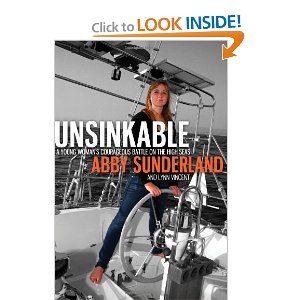
Review: Unsinkable: A Young Woman’s Courageous Battle on the High Seas

Unsinkable

Unsinkable: A Young Woman’s Courageous Battle on the High Seas
Abby Sunderland with Lynne Vincent

Product Description (from Amazon.com):
The stirring narrative of Unsinkable tells sixteen-year-old Abby Sunderland’s remarkable true story of attempting to become the youngest person ever to sail solo around the world.

More people have flown into outer space than have sailed solo around the globe. It is a challenge so immense that many have died trying, and all have been pushed beyond every physical, emotional, psychological, and spiritual limit. In Unsinkable, readers follow Abby Sunderland into those depths. This biography delivers a gripping and evocative firsthand account that starts prior to her departure, travels through her daring (and sometimes near-death) encounters on the open sea, to her dramatic rescue in the remotest corner of the Indian Ocean, and the media explosion that happened upon her safe return to dry land.

Along the way, readers discover what it means to boldly face any challenge, to strive after something great, and to plumb the depths of faith, fear, and desperation only to emerge changed, renewed, and emboldened. In this day and age, when the most productive thing a teenager may do is play videogames, Abby’s ambition and tenacity is a real-life parable of what can happen when we choose to exceed our own limits, embrace faith, and strive after what all the naysayers say is impossible.

My Thoughts:
Having recently re-read one of my favorite books ever, Tania Aebi’s Maiden Voyage, I was in the mood for more stories of circumnavigation. I find the idea of circling the world alone in a sailboat both romantic and insane, as all the best adventures tend to be. I download samples of two books: Abby Sunderland’s story about her attempt to to a solo, non-stop, unassisted campaign was the first I read, and I finished it this morning over coffee, yogurt, and a croissant with Seville marmalade, the grey weather outside my window meshing nicely with Abby’s final days on her boat, Wild Eyes.

As I’m not a parent, I can’t speak to whether or not it was the responsible thing to allow Abby to make the attempt to sail around the world. As I’m no longer sixteen (and haven’t been for more years than I care to count), I can’t speak to whether or not that age is “too young” to do things. I don’t know Abby, but I do know that her story comes across as honest, interesting, and ultimately inspiring. How many of us, after all, have Bucket Lists of things we will never do, let alone attempt?

As a left-wing, liberal, non-evangelical Christian, I was concerned that the religious aspect of Abby’s story – and of her life – would be off-putting, but instead, I found her faith to be representative of what the best religion should be: supporting, uplifting, and helpful, rather than divisive. Her faith seemed to ground her, and her ability to poke a bit of fun at herself endeared her to me.

So, for most of the weekend (when I wasn’t busy shopping, doing laundry, recovering from strep, cuddling dogs, and cooking), I was with Abby on her voyage. At first, the convention of having symbols to mark the changes in point of view bothered me (an anchor for the ‘narrator,’ a sailboat for Abby, and a cross for the rescue team that eventually plucked her from the middle of the Indian Ocean after her boat had rolled over and become dis-masted – and that’s not a spoiler because it was in the news), but the symbols quickly became invisible, and the switches in voice enhanced the over-all story, allowing us to experience the care and concern of the land-based “Team Abby” – which included her family, friends, and a cadre of experts – and even the perspective of the rescue team.

My ultimate impression? Abby is a very lucky young woman, not just because she survived a horrible accident at sea, but because she had the courage and the support to go on her adventure in the first place. Does it matter that she ultimately didn’t succeed in her circumnavigation? Not one iota. Her story is satisfying, and even after all of it, her life is just beginning.

I can’t wait to find out what further adventures she undertakes.

Goes well with: Hot coffee and warm croissants, especially on a cold rainy day.

Unsinkable: A Young Woman’s Courageous Battle on the High Seas
Abby Sunderland with Lynne Vincent
Thomas Nelson Press, April, 2011
240 Pages
Buy this book from Amazon.com >>

The Sunday Salon: Monster Mash?

Illustration from Mary Shelley's Frankenstein

When we think of monsters – not monstrous people or monstrous acts – but Hollywood-style monsters, two of the first that come to mine have to be Frankenstein and Dracula.

Two years ago, as part of an English/Literature tutorial for a friend’s son, we studied Bram Stoker’s Dracula, and noted the differences in the way the character was written and the way he’s appeared since. For example: Dracula can walk about during the day, but his powers are limited to that of an ordinary person; his powers include the ability to take the forms of bat or wolf, fog, or elemental dust.

Then, too, there’s the ending – or rather, the ending of the Count, not quite the ending of the novel:

By this time the gypsies, seeing themselves covered by the Winchesters, and at the mercy of Lord Godalming and Dr. Seward, had given in and made no further resistance. The sun was almost down on the mountain tops, and the shadows of the whole group fell upon the snow. I saw the Count lying within the box upon the earth, some of which the rude falling from the cart had scattered over him. He was deathly pale, just like a waxen image, and the red eyes glared with the horrible vindictive look which I knew so well.

As I looked, the eyes saw the sinking sun, and the look of hate in them turned to triumph.

But, on the instant, came the sweep and flash of Jonathan’s great knife. I shrieked as I saw it shear through the throat. Whilst at the same moment Mr. Morris’s bowie knife plunged into the heart.

It was like a miracle, but before our very eyes, and almost in the drawing of a breath, the whole body crumbled into dust and passed from our sight.

I shall be glad as long as I live that even in that moment of final dissolution, there was in the face a look of peace, such as I never could have imagined might have rested there.

The Castle of Dracula now stood out against the red sky, and every stone of its broken battlements was articulated against the light of the setting sun.

More than one more modern author, among them Fred Saberhagen, has looked at this death scene, and noted that since 1) You can’t kill a vampire with a knife, and 2) Dracula crumbled into dust, he was not actually killed at the end of the novel. A novel, which by the way, he appears on only 58 pages of. The rest of the 200+ pages are spent talking about him, his powers, his deeds, and everyone else’s life. Like the shark in Jaws, Dracula-the-character is scariest when we don’t actually see him.

But Dracula was a past project.

For the last month, I’ve been reading mysteries, partly because I love them, but partly because it’s autumn, and I think mysteries go well with lengthening shadows and crisper evenings, but the book I began this morning takes me back into classic monster fare.

It’s Mary Shelley’s Frankenstein, which, I’m almost embarrassed to admit, I’ve never actually read. I remember seeing Boris Karloff as the Monster in the old movie, and being chilled at the scene with the little girl, the Monster, and the flower. I remember reading riffs on Frankenstein, and of course I know that Rocky Horror for all its silliness is still derivative of Shelley’s work.

So as the nights lengthen further, the weather grows cooler even where I live, in Texas, and the shadows turn into puppet creatures beckoning us to explore the dark and deep parts of our psyches, I’m about to take a break from conventional mysteries and thrillers, leave the comfort of cozy novels, and begin reading Frankenstein.

The Sunday Salon.com

Happy Birthday, Roald Dahl

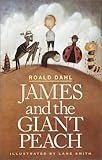
James and the Giant Peach

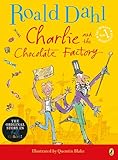
Roald Dahl, author of two of my favorite children’s books, James and the Giant Peach and Charlie and the Chocolate Factory was born on September 13th, 1916. My first introduction to his work was in a grade school classroom in Georgetown, CO. I was in second grade, but taking some classes with third-graders, and one or two with fourth-graders. I don’t remember which class, exactly, had a teacher who spent the last twenty minutes of every day – or maybe every Friday – reading us great stories.

James and the Giant Peach was one of those stories. Another was From the Mixed-Up Files of Mrs. Basil E. Frankweiler, but that book is by E. L. Konigsburg and thus relegated to another post.

Charlie and the Chocolate Factory

In any case, while I was researching something completely different, I came upon a newsletter from Cambridge University talking about the celebration of Roald Dahl Day next week, and about the 50th anniversary of James and the Giant Peach.

The essay is by Professor Maria Nikolaejeva. An excerpt is below, and the full text of the essay can be found here

Dahl is one of those many writers who are significantly more famous for their children’s books than their works for a general (that is, adult) audience. Although his short stories are truly brilliant, he would hardly be hailed exclusively for them among the “50 greatest British writers since 1945” (The Times, 5 January 2008). The fact that this canon includes a number of children’s writers (beside Dahl, C S Lewis, Philippa Pearce, Allan Garner, Philip Pullman and Rosemary Sutcliff) is remarkable in itself; it demonstrates that children’s literature cannot any longer be dismissed as second-rate; and I would argue that Roald Dahl has contributed substantially to this recognition, repeatedly mentioned as the best-loved, best-selling author without the, regrettably, still derogatory appellation “children’s”.

(I refrained from changing the punctuation from British to American.)

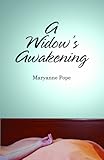
Review: A Widow’s Awakening, by Maryanne Pope

A Widow's Awakening

A Widow’s Awakening
Maryanne Pope

Description (via Amazon.com)
A Widow’s Awakening draws you in from the first page as you listen in on a conversation one month before the death of Sam, a police officer. Readers are given a glimpse into an everyday marriage on the brink of a tragic event. Written as creative non-fiction, the story follows the character of Adri, Sam’s wife, as she learns to come to terms with the death of her husband. The story opens with what will be Adri s last vacation with her soul mate and grips the reader s interest until the end. A Widow’s Awakening is a page-turner full of conversational dialogue that reflects the feelings and thoughts of Adri, who is gripped with guilt over her last conversations with her husband, stunned by his sudden and needless death, and the path she is forced to follow that was not of her own choosing. A Widow’s Awakening is a tragic, heart wrenching, but humourous look at grief while giving the reader hope that life can go on after loss and it s what you do with it that counts. This book has something for everyone. It’s not a depressing book; it s an engaging, inspiring and powerful read. The book fits in several categories: self-help, biography, current events, politics, health, spirituality, psychology, death and dying, and grief. In addition, 20% of the proceeds of the sale of this book are going to the John Petropoulos Memorial Fund, a non- profit organization set up in memory of the author s husband. The Fund’s safety initiatives educate the public that workplace safety for emergency services personnel is a shared responsibility.

Review
This review is months overdue. I read the book early this year, after having a publicist pitch it to me via email. I loved every word, and despite the seemingly dark subject matter, found it to be uplifting and beautifully written. It’s a love-song to the author’s dead husband as well as a song of hope and new life.

Originally, reading this helped me accept the death of my brother-in-law, and I thought about sending it to my sister-in-law, because I thought she might appreciate the notion of having her husband’s presence as a sort of silent guardian, much as Adri did in this book, but ultimately, I decided not to.

So, if I loved this book so much, why am only posting the review five months later? Because just as I’d finished it, my nephew’s cancer was officially terminal. He would die about a month later, in mid-April, and during that time, instead of blogging, I was doing the bare minimum I could for work, and reading a whole bunch of escapist literature because I couldn’t cope with anything else.

My apologies, then, to Ms. Pope, because her book is wonderful, and I would recommend it to anyone who is dealing with grief, or who just wants a really candid look at a woman and her grief.

If you’re a writer, perhaps you’ll even take this book as a warning to find the time to really write while you still can.

A Widow’s Awakening
Maryanne Pope
312 pages, Self-published in September, 2008
Buy this book from Amazon.com >>
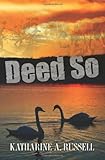
Review: ‘Deed So, by Katherine Russell

Deed So
Deed So
Katherine Russell
CreateSpace, 438 pages
November 2010
Buy this book from Amazon or Read the first chapter for free

Product Description (from Amazon.com):
It is 1962, and Agnes Hayden Bashford, Haddie, a brainy Southern teen from a tradition-bound family, dreams of breaking free from suffocating expectations placed on girls and from Wicomico Corners. She vows to escape to the exhilarating world beyond its narrow borders, like her handsome, older friend Gideon Albright who is going to Vietnam. A series of shocking incidents brings the outside world crashing down on her peaceful village, exposing long-buried family secrets and setting Haddie on a collision course with an unstable firebrand who will have to silence her to protect his identity. Haddie witnesses the fatal shooting of a black teen by a white down-on-his-luck farmer trying to protect his retarded son. The resulting murder trial attracts outside agitators and political aspirants, and pits townspeople against each other. Excited about being a witness in the trial, Haddie sees her moment of notoriety dissolve into frustration and discomfort and tragedy claim the people around her. The racially-charged case exposes civic fault lines and secrets within Haddie’s own family, shattering her comfortable home life, and unleashes an arsonist who terrorizes the community by night. In Deed So, a young girl and an entire town lose their innocence in the last year of innocence, the year before the Kennedy assassination, the civil rights struggle, feminist activism and the Vietnam War changed America forever.

Haddie, the main character in Katherine Russell’s novel Deed So is the same age as my mother. That thought kept running through my head as I was reading her story, and mentally juxtaposing it with the stories my mother had told me about growing up in New Jersey in the same year. Haddie had a friend who was a soldier in Viet Nam – my mother’s only brother chose to go to Canada instead… Haddie was a witness to ethnic persecution – my mother, on a field trip to Washington D.C., saw Dr. King holding one of his first vigils, sitting alone and silently at the Lincoln Memorial. Separating my mother’s real story from Haddie’s fictional one proved difficult for me as I was reading this book.

And it’s a wonderful book, albeit one about some very un-wonderful events. Russell’s characters are vivid and completely three-dimensional, and the opening, in a Southern church supper makes you almost smell the ham, and hear the clinking of silverware against china. Her parents are portrayed not as Evil Adults, but as very human people who love their daughter and try to ride the line between encouraging her precocious intelligence and protecting her relative innocence.

I also enjoyed reading about Haddie’s friendships with the other girls her age – the sneaking of cigarettes and looking at the pictures in Grey’s Anatomy made me laugh – it’s such a universal experience for young girls in the pre-Internet age.

When the book turns darker, first because of a fight that Haddie witnesses, and which results in a court case, and later because of a series of fires that may or may not be related to the trial (I’m not telling!), Russell doesn’t flinch. Her characters represent the broad spectrum of public opinion about the rights and roles of African Americans during the civil rights movement, and while many of those opinions are decidedly unPC by modern standards, they are true to the period, and to the region.

The mark of a good writer, a good storyteller, is to take a difficult subject and present it in a fashion that is both interesting and compelling. In Deed So Russell has done exactly that.

This Isn’t Treasure Island

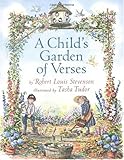
A Child's Garden of Verses

Robert Louis Stevenson’s poems were constant friends in childhood, poems my grandmother and I would memorize and recite. I knew all about having a little shadow, and going up in a swing.

One poem that I never appreciated until this weekend, which has been spent largely in bed, was “The Land of Counterpane,” in which a sick child turned the hills and valleys of his comfortable bed into all manner of landscapes for his imagination.

I don’t imagine my quilt squares as separate countries, but I do still let imagination run wild.

Even days spent propped on pillows have magic.

Originally written 30 August 2009 in another blog.

Teaser Tuesdays: A Widow’s Awakening

A Widow's Awakening

Teaser Tuesdays is a weekly bookish meme, hosted by MizB of Should Be Reading. Anyone can play along! Just do the following:

– Grab your current read
– Open to a random page
– Share two (2) “teaser” sentences from somewhere on that page
– BE CAREFUL NOT TO INCLUDE SPOILERS! (make sure that what you share doesn’t give too much away! You don’t want to ruin the book for others!)
– Share the title & author, too, so that other TT participants can add the book to their TBR Lists if they like your teasers!

No frou frou stories about fashionistas or prom dresses, this week. No comforting Trek fic, not even another sea story. Instead, this:

On January 10th, Nick’s wife is scheduled for a 9:00 a.m. C-section. Why I, the nuttier-than-a-fruitcake recently widowed childless auntie, has been asked to attend the birth, I’m not sure. Perhaps it has something to do with my refusal to tell people how I’m really feeling. And still not having grasped the concept of saying no, off I go.

At 9:30, a baby girl with the middle name of Hope arrives. When she’s shown to me, I shiver.

“You’re being held by Sam,” the baby’s maternal grandmother says to me.

“Huh?”

“The way your body just reacted,” she explains, “it looked like someone was standing behind you, wrapping their arms around you.”

From A Widow’s Awakening, by Maryanne Pope – page 205-206.