
Review: Getting the Pretty Back, by Molly Ringwald

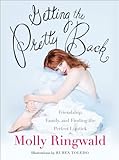
Getting the Pretty Back
Getting the Pretty Back: Friendship, Family, and Finding the Perfect Lipstick
Molly Ringwald
Buy from Amazon >>

Summary (from Publishers Weekly):
Famous for her roles as an angst-ridden teen in John Hughes classics like Pretty in Pink, Sixteen Candles and The Breakfast Club, Ringwald, now a 40-year-old wife and mother living largely outside the celebrity spotlight, seems a credible source of advice for young women and a likely fount of behind-the-scenes Hollywood anecdotes; unfortunately, she provides little of either in this uninspired self-help memoir. Like a well-meaning but distant friend, the actress shares advice and observations on topics like love, clothes, and food, often focusing on the inane and obvious (souvenir t-shirts are both ugly and ill-fitting; rushing into sex is usually a mistake) rather than the personal or perceptive: “When you’re a teenager, you’re forever thinking: Do they like me? When you’re a grown-up… the question becomes: Do I like them?” Ringwald occasionally involves her personal history, including the fact that the early stages of her romance with husband number two were mostly conducted over email, but she skimps on the details that her fans are probably looking for, with surprisingly little reference to the movie work that made her an icon of suburban youth in the 1980s. Color illustrations.

When my friend Deb told me she had a copy of Molly Ringwald’s book, I immediately asked if I could borrow it when she was through. I finally had a chance to read it earlier this week, and I loved it.

First, let’s be clear, in this book Ringwald gives advice on health, fashion, self-esteem, love and any number of things we women need advice about, without claiming to be an expert in any of those. In fact, she freely admits she’s sharing her own experiences in the hope that others will gain from the life lessons she’s learned. Also? She’s the kind of person – at least as presented here – that you’d be instantly comfortable meeting for a cappuccino, or hanging out with at the bookstore. For an actor, she’s incredibly real and accessible. So, don’t expect her to wax rhapsodic about hoodia gordonii or plastic surgery. She’s all about small, common sense changes.

As to my impressions of the book – I loved it! She’s not telling us anything that Tim Gunn doesn’t tell women every day, but she’s filtering it through her own experiences – especially where turning forty, having children later in life than the current trend, and marrying a younger man are involved. She’s candid in the way that someone you grew up watching in cool movies but isn’t actually someone you know seems candid. She’s playful. She’s self-deprecating.

She’s a thoroughly engaging writer, and this is a thoroughly engaging book.

If you’re over thirty-five, you NEED this book. If you’re under thirty-five, go rent Pretty in Pink, Sixteen Candles, and For Keeps and then go buy this book.

Because it really is a wonderful compilation of whimsical turns of phrase and really good advice.

Goes well with French onion soup and a glass of wine.

Review: Body Work, by Sara Paretsky

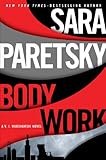
Body Work
Body Work
Sara Paretsky
Get it from Amazon >>

Summary (from Publishers Weekly):
Paretsky’s superb 14th novel featuring PI V.I. Warshawski (after Hardball) delves into Chicago’s avant-garde art scene. At the trendy Club Gouge, where Warshawski is keeping an eye on Petra, a young cousin who caused trouble in the previous book, performance artist Karen Buckley (aka the Body Artist) invites members of the audience to step on stage to paint her nude body. The intricate design that one woman paints on Karen’s back provokes a violent outburst from Chad Vishneski, a troubled Iraqi war veteran. When two nights later, someone shoots the woman who upset Chad outside the club, Chad is the logical murder suspect. Hired by Chad’s estranged parents to clear his name, Warshawski straddles a minefield that reaches from the Windy City’s neighborhoods to the Gulf War battlefields. Scenes with her aging neighbor and a new love interest give a much needed balance to the serious plot. This strong outing shows why the tough, fiercely independent, dog-loving private detective continues to survive.

I’ve been a fan of private investigator V. I. “Vic” Warshawski ever since my mother and I discovered her at the San Jose Public Library on one of the ritual Saturday trips we used to make. Books, coffee, a “little something” in honor of my grandmother, and then back home. Perfect mother-daughter weekends. In any case, I’ve now read more of Vic’s adventures than my mother has, simply because she lives in a place where English-language fiction is difficult to obtain.

Body Work, the most recent of author Sara Paretsky’s novels about the fictional female detectiv,e is one of the most satisfying novels I’ve read in a long while. It had everything from Vic using her picklocks to enter a crime scene (evidently they weren’t Kwikset locks) to Vic babysitting her pesty younger cousin Petra, to Vic sharing meals with her downstairs neighbor/adopted family member Mr. Contreras, to Vic getting brutally beaten while on the job.

Even better, Body Work also has an interesting plot that involves edgy performance art, the blogosphere, the Gulf war, corporate politics, unrequited love, illegal drug running, and international money laundering, and it shows that Ms. Warshawski is comfortable working with 21st century technology even though she has a special affection for old-world pleasures like a proper cappuccino, a soaring Italian aria, and a steaming hot bubble bath at the end of a hard day’s detecting.

And yet, Paretsky gave us even more: she gave us Jake, the classical bass player who is not only Vic’s neighbor, but also her current lover, and one who – we hope – will stick around for another book, even if he is squeamish about the sight of blood – something to be concerned about when you’re close to Victoria Warshawski.

Review: Cybill Disobedience, by Cybill Shepherd

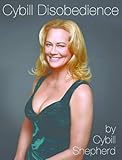
Cybill Disobedience
Cybill Disobedience
Cybill Shepherd
Get it from Amazon.com >>

I have to confess: I really only read Cybill Shepherd’s autobiography, Cybill Disobedience, because I saw it listed as a free digital download on KindleIQ.com, and while I do have standards, I’ll read anything from the backs of cereal boxes to eye wrinkle cream reviews if I’m doing it to test out a new toy. Or at least, the fact that it was a free download was why I began reading Shepherd’s book. She’s so honest and engaging, and funny, however, that very soon I was reading it for its own sake.

The thing about celebrity memoirs is that they’re more interesting if you have a decent working knowledge of the author’s body of work. In the case of Ms. Shepherd, I knew her from Moonlighting and the later sitcom that bore her name – Cybill, and liked both. I also remember her Loreal commercials (for hair color, not for eye wrinkle cream), and sometime in the last year she was in a Hallmark movie (or maybe it was a Lifetime movie?) about a divorced empty-nester who resumes her college education, which movie I quite liked. I knew nothing about her career in film from the decades before Moonlighting, nor had I any clue of her politics or her relationship history.

After reading the book, I was left awed by how very cool Cybill Shepherd is, politically and personally. She’s the kind of person I’d love to have as an ‘affectionate’ auntie, or stand next to in a protest march, and her book was entertaining, interesting, as candid as possible without jeopardizing the semblance of privacy her family needs, and really sort of compelling.

Goes well with sweet tea and barbecue.

Review: The Hypnotist, by M.J. Rose

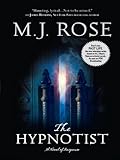
The Hypnotist

Reading the third book in a series without having read its prequels can sometimes be a little bit weird, even if each novel is a complete story. This may be one of the reasons that M.J. Rose’s latest novel, The Hypnotist has been a “slow” read for me – because I sense that there are relationships and backstories that I’m missing. In fact, my mentioning this here in this blog a couple of days ago caught the attention of the author herself, and she left a note expressing concern. Let me say right now that any author who takes the time to check in with a reader has to be pretty cool, but then, if you’ve read anything M.J. Rose has written, that should be pretty obvious.

While neither the plot nor the structure of The Hypnotist bear any resemblance to one of my all-time favorite contemporary novels, The Eight, by Katherine Neville, I found that this book reminded me of the other nevertheless. Perhaps it’s the way the author excels at conveying a strong sense of place. Much of The Hypnotist takes place in libraries and museums, and I found my breath changing with each change of scene, as if some imaginary curator or librarian might shush me for exhaling too loudly.

But I digress.

The Hypnotist opens with the brutal murder of a young painter, and the near-murder of her lover, one Lucian Glass. Twenty years later, Glass is an FBI agent assigned to the Art Crime Team. He’s involved in the investigation of an extremely unstable art collector who has been destroying masterpieces in order to make some kind of a statement, and it is this investigation that sends Glass undercover to the Phoenix Foundation, run by Dr. Malachai Samuels, an expert in hypnotism and past-life regression.

Reincarnation isn’t just a character hook for Samuels, however. Glass is haunted as much by partly-glimpsed past lives of his own as he is by the memory of his lover, and her death. It’s not surprising, then, that art, history, intrigue, and the study of reincarnation all twist together to form the threads of a gripping tale that I both didn’t want to, and could not put down.

Rose’s characters are well-drawn, with enough detail to make them seem real, but not so much that the reader can’t put his or her own imagination to work. Her plot twists are plausible without being too obvious. Her prose is simple, but effective.

Read this book because the story is fabulous, but don’t be surprised if you, as I did, found yourself wanting to visit Persia, spend a rainy afternoon at an art museum, and curl up in a comfortably worn library chair with a treasured read.

To learn more about the author or her work, check out her website: M.J.Rose.com

Goes well with: mint tea and chicken shawarma, or a hot pretzel with mustard.

Carolina Dreams: It’s All Anne Rivers Siddons’ Fault

Anne Rivers Siddons is responsible for one of my ultimate fantasies: a Carolina beach vacation.

I’ve been a fan of the author Anne Rivers Siddons ever since my mother and I started scouring the new fiction shelf at the San Jose Public Library for her work. Sure, she writes male characters that are only slightly more real than the men in Elin Hilderbrand’s Nantucket novels, but her women are strong, and three-dimensional. More importantly, the HOUSES they live in are amazing. When I think of Anne Rivers Siddons, I think first of the beach, then of women characters, and then of architecture.

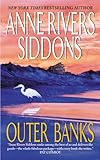
Outer Banks

One of the first Siddon’s novels I remember reading was Outer Banks. It was about true love and lost love, coming of age, finding one’s path, and of the changing relationships between friends, lovers, and families, and of course it had a wonderful house where much of the drama took place.

Granted, Siddon’s houses are nothing like the Carolina Designs homes that people can rent for their very own Carolina vacations. Hers tend to be draughty old summer cottages with sand stuck between the floor boards, and weathered paint. Charming to read about, but not where I’d want to stay.

So, where do I see myself on my fantasy visit to Carolina? Well this house is my ideal. It sleeps ten, so Fuzzy and I could invite the entire family, but everyone would still have their own space. It has cable, wifi and a wet bar (because we all know vacations are all about booze and the internet), and xbox, so my vampire-skin husband would have something to do while I’m basking on the sand or splashing in the surf. It has a lot of bathrooms – really important – and it also has a full kitchen. And did I mention the pool and tennis courts.

I have an aunt whose husband’s family owns a “cottage” in the Hamptons. Like the old homes in Siddon’s novels it’s huge and cold, with beds that include one referred to as the double taco, because it folds you into itself so completely – and not in a good way.

My vacation fantasy does not involve being suffocated by an ancient bed.

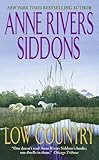
My vacation fantasy draws elements from another of Siddons’ novels, Low Country, which was all about the relationship between Anglo and Gullah communities in South Carolina. As much as I’d love an ‘in’ into the Gullah world, what really drew me about that novel was the food. The characters in that story were tied to their food, to their Sunday dinners, to sharing meals together, and as someone who grew up in a family of amateur and professional chefs, food is a language I speak well.

I long to have my family assembled for a barbecue within sight – or at least scent – of the ocean, with those coastal breezes making everything taste better. I want to sit on a deck at dusk nursing a beer and nibbling on the perfect burger, and not caring that there’s sand in my hair and that my nose is a little sunburnt.

I want to have wonderful days by the sea with people I love, and then, like Ms. Siddons, I want to curl up and write about it, turning it into a novel, a series of short stories, a memoir.

I want to be in Carolina..and it’s all Anne Rivers Siddons’ fault!

Low Country

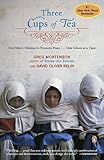
Review: Three Cups of Tea

Three Cups of Tea
Three Cups of Tea
by Greg Mortenson and David Oliver Relin

I initially picked up Three Cups of Tea some time last year, in the same shopping trip that included picking up a couple of different anti aging creams for my mother, having my hair done, and spending some time alone with a grilled cheese and tomato sandwich at Barnes and Noble. I didn’t actually read it until recently, however, because it got lost in my house – so lost, that I actually picked up a second copy thinking I’d never purchased the first!

I’m glad I finally read this book though, because the story is beautiful. I mean, I disconnected a bit in the first third of the book when author Greg Mortenson, whose story this is, was living in his car to save money so he could get back to Pakistan, but by the time I got to the end of his book – which is really just the beginning of his legacy – I was completely invested in the man and his mission.

For the five people who haven’t read it, Three Cups of Tea is the story of an American mountain climber who fails to reach the summit of K2, becomes severely ill during his descent, and gets lost in a remote corner of Pakistan, where local villagers take him in, help him recover, and essentially adopt him. As thanks, he promises to return and build a school where the young women of the village can be educated. He eventually makes good on his promise, first building a bridge, then the first school, then heading a foundation with a mission of building more schools in Pakistan, all for educating women and girls, while still being respectful of local religion and customs.

And to top it all off, this is all taking place at the very beginning of the Taliban’s rise to power.

While, at times, my not-so-inner snob found her skin crawling at the less-than-pristine conditions of Mortenson’s living arrangements, I finished the book with tears in my eyes. I feel this book should be required reading for everyone, everywhere.

Goes well with: Tea and flat bread.

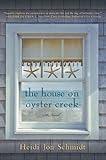
Review: The House on Oyster Creek, by Heidi Jon Schmidt

House on Oyster Creek
The House on Oyster Creek
Heidi John Schmidt
NAL Trade, 368 pages
Get it from Amazon >>

I picked up The House on Oyster Creek because the title and cover blurb intrigued me. It ended up being nothing like what I expected, but that’s not a bad thing.

In this lyrically written novel, you can hear the coming and going of the tide off Cape Cod in the author’s words. Schmidt certainly knows how to set a mood – and she does so, here, with delicacy. When we meet protagonist Charlotte Tradescome, and her husband Henry, we are given the impression that the younger, more vibrant Charlotte loves her thorny, somewhat aloof husband, but is no longer entirely “in love” with him, especially since the birth of their now-three-year-old daughter. …

When Henry’s father dies, and the couple inherit a house on the cape, Charlotte seizes it as an opportunity to take her child away from the hustle and bustle of life in New York City, and give her something “real.” She immediately embraces the new location, the crusty locals who deem her a “washashore,” and the rhythm of life on the shore. She also falls for a local oyster farmer Darryl Stead, while Henry spends his time reading, writing, and hitting the local pub late at night.

In any other author’s hands, Charlotte would divorce Henry, marry Darryl, and proceed to have an epic romance. In Schmidt’s hands, that doesn’t happen, and while Henry is portrayed as the ultimate curmudgeon, we also see that there’s real affection between himself and his wife.

It is, however, the land war that Charlotte accidentally causes that is the center of this story – and a metaphor for the Henry/Charlotte/Darryl triangle. When selling off part of their land, Charlotte left the door open for greedy rich folk to build a house totally out of tune with the coast, and block access to the oyster farms.

Of course Darryl is one of those most affected by that act, and of course they work together to rectify the situation.

Meanwhile, the year turns, the characters grow, and every few scenes, fresh oysters are being cooked and served.

This may not be the best novel in the world, but for summer beach reading, it holds some lovely surprises – pearls in the oysters, if you will.

Goes well with: Fried oysters and cold beer.

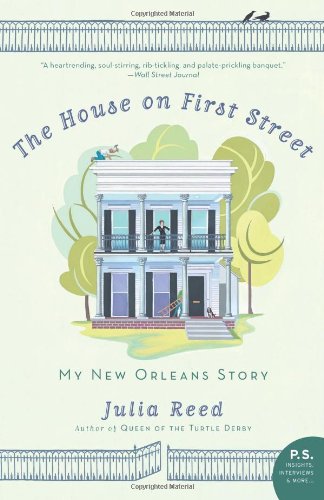
Review: The House on First Street

The House on First Street
The House on First Street: My New Orleans Story
by Julia Reed
Harper Perennial, 224 pages
Get it at Amazon >>

Julia Reed’s The House on First Street: My New Orleans Story may be her memoir of the renovation of the home she buys (across the street from Anne Rice’s old place) with her husband, after many years of living in tiny, funky New Orleans rentals, and not quite cutting ties with New York, but it’s also a love story about old houses and old cities, and the magic that both offer, if you only know how to feel it.

While this book, with it’s comical (to those of us who are merely reading about it) and familiar (to any of us have gone through it) tales of slow, less-than-adequate contractors, dusty floors, paint disasters, plumbing woes and the search for the perfect appliances, fixtures (everything from the most charming door knob for an inside door, to debates about porcelain – should they use Toto toilets or some other brand?), rugs, and furniture is essentially about the relatively common practice of restoring a vintage home, it’s also a first-hand account of the aftermath of Katrina.

The hurricane struck, you see, just two weeks after Reed and her husband had finally moved into the House on First Street. They were lucky – they lost an expensive tree, and had some minor exterior damage – but their neighborhood didn’t flood. Nevertheless, Reed was in position to be in the city sooner than most of the other residents, and while she shares humorous anecdotes about buying barbecue for an entire platoon of National Guards, underlying the wry tone is the poignance of a woman who just wants to go home.

Review: Angelology

Angelology
Angelology
by Danielle Trussoni
Viking, 464 Pages
Get it from Amazon >>

When my friend Deb told me she was reading a book called Angelology, and that I had to read it, too, I was skeptical. I mean, it sounded like some funky new age treatise, and secretly, I was worried about what chemicals might be misfiring in her brain. Then she began to describe the plot, and even before she gave me the book, I was hooked.

Imagine a world where angels walk beside us, not as mystical guardians but as immortal (or as near to it as makes little difference) preter-natural beings with huge mafia-esque family businesses. Oh, they’re not ‘out’ or anything – but they exist nevertheless – at least in the reality Trussoni has created.

Enter Sister Evangeline, orphan, nun, restless soul. She’s been assigned to work in the convent library, and one day while she’s doing just that, she intercepts a letter asking for proof of a connection between her convent’s former Mother Superior and Abigail Rockefeller, yes, the Abigail Rockefeller.

That letter sparks a romp through art, literature and history that even Dan Brown would be humbled by, replete with mystery, intrigue, faith, science, and maybe even a little magic.

To describe the plot more would be to ruin it. Suffice to say Angelology is a gripping paranormal mystery/thriller of epic proportions.

Goes well with a slice of angel food cake, fresh strawberries, and a perfect cappuccino.

Review: Lost & Found

Lost and Found
Lost & Found
by Jacqueline Sheehan
Avon, 304 pages
Get it at Amazon >>

Because I’m a sucker for a cute face – especially when the face belongs to a dog with a number like ls4278 instead of a name, there was no way I could pass by the trade paperback edition of Jacqueline Sheehan’s novel Lost & Found. After all, there’s a cute dog on the cover.
.
This dog, however, does not have a number instead of a name. When protagonist Rocky loses her veterinarian husband in the opening chapter, she decides to leave her job as a psychiatric counselor attached to a local university, and moves to a remote island in Maine to become the animal control warden. Once there, she meets Isaiah, the local vet, Tess, the local therapist, and Melissa, a young girl struggling with anorexia. She also meets Lloyd, after rescuing him from behind a dumpster, where he’s nursing the infected wound caused by an arrow.

Lloyd is the dog on the cover, a black lab who eventually serves as the catalyst for healing and change among all the women in the story.

This is a gentle novel, and I’m reading it on vacation, so even though I’m enjoying the story, it’s making me miss my dogs, more.

Goes well with an animal to cuddle.