In Their Words: Julia Holden

Last year, I read two amazing books by Julia Holden. She was kind enough to grant me an interview when I contacted her to tell her how much I enjoyed her work, and I’ve just come up for air after writing a bunch of articles about term life insurance, so I thought it was time to post it. Because the name “Julia Holden” is a pseudonym, there’s no picture of the author, so instead, I offer pictures of the two books she penned under this name:

* * * * *
Julia’s Bio (in her words):
I have spend considerable portions of my life in Indiana, New York, Massachusetts, Connecticut, Florida, Hawaii, California, and Paris (France, not Texas), although not necessarily in that order. For seven years, I served as an executive for a major motion picture studio in Los Angeles, and I continue to work in and around the entertainment industry. My family and I are in the process of moving from Southern California to glorious, gorgeous Hawaii. For complicated reasons, personal and professional, “Julia Holden” is, alas, a pseudonym.The first, and only, creative writing class I ever took was in high school. My teacher was a nice man who wrote college recommendations for me (I went) and encouraged me to pursue a career in journalism (I didn’t). The teacher’s name was Mr. McCourt. Frank (Angela’s Ashes) McCourt. Who knew?

One Dance in Paris is my second novel, following A Dangerous Dress.

Like Linda Stone, the heroine of One Dance in Paris, I believe deeply in our capacity to reinvent ourselves in fabulous ways, and if that involves jetting off to fabulous places, all the better. Also like Linda (and like Jane Stuart, the heroine of A Dangerous Dress), I am deeply devoted to travel, fashion, and drinking lovely wines and cocktails in exotic locations. I satisfy those cravings in Paris and New York – and now, in my new home of Hawaii – as often as I possibly can. Unlike Linda in One Dance in Paris, I have never danced scandalously on the stage of the Folies Bergère. And, unlike Jane in A Dangerous Dress, I have not met Giorgio Armani.

Yet.

* * * * *
Julia Holden’s most recent novel is One Dance in Paris. She can be found on the web at JuliaHolden.com.
* * * * *
INTERVIEW PART 1 | INTERVIEW PART 2

In Their Words: Julia Holden (Part 1)

INTRO | PART 2

What question are you never, or rarely, asked in interviews, that you really wish people would ask? How would you answer it?
Considering that both my novels are set principally in Paris, I’m surprised nobody’s ever asked me for travel advice. I’ve got a lot of opinions – and if somebody wanted restaurant suggestions, or to know, for instance, where exactly that magical vintage clothing shop on the Left Bank really is, I’d tell them.

Conversely, what question are you often asked, that you really don’t like to answer? What don’t you like about that question (no, you don’t have to answer it)?
People want to know, what’s with the pseudonym? And I just have to say to them, sorry, I really can’t tell you, next question. I think my mistake was acknowledging publicly that it’s a pseudonym. Most readers would be amazed at how many of their favorite writers are … well, somebody else.

Who in your life was/is the greatest influence – good or bad – on your writing?
I took Frank McCourt’s creative writing class in the eleventh grade. That was decades before Angela’s Ashes, so nobody had any idea that he would someday be this amazing success. But I remember, he taught us that if you want to be a writer, you have to write. That sounds obvious, but it’s not. Writers can’t sit around and wait for inspiration. It’s a lot of work, and it requires enormous discipline. And the only way to get better is by doing it a lot. So I learned that from him – and then much later, when he became a huge phenom, that set a pretty inspiring example that it’s possible to make it even if you never managed to be a twenty-something wunderkind.

Do you write in longhand first, or do you compose at the keyboard? Tell us about your preferred pens, ink, paper, or platform and program.
Sometimes I’ll use pen and paper to outline, or make notes – but when it comes to the actual writing of prose, it’s all on the keyboard. Thank you, Hewlett-Packard, and also Microsoft for the ergonomic keyboard I need when I’m cranking under deadline. But if that sounds too much like a commercial, I’ll counteract it by saying that I use Word, but it’s an evil buggy program and I hate it.

What do you consider a “full day’s work” of writing? Do you measure by number of hours, or number of words? Do you spend time doing mundane chores so that you don’t have to write?
I still have a day job, so my “full day’s work” of writing is typically late at night, and, if I’m under serious deadline pressure, on the weekends. I wrote One Dance in Paris literally in just two months to get it in on time – that’s at least five pages a day, every day. And if I skipped a day, I had to make it up the next day, or on the weekend. So I didn’t have the luxury of distracting myself, with mundane chores or anything else, for that matter. Even just remembering, I get exhausted.

* * * * *
Julia Holden’s most recent novel is One Dance in Paris. She can be found on the web at JuliaHolden.com.
* * * * *

INTRO | PART 2

In Their Words: Julia Holden (Part 2)

INTRO | PART 1

What are you reading these days? Or, what types of things do you like to read when you have time?
I just read Patricia Wood’s Lottery, and I’m in the middle of Allegra Goodman’s Kaaterskill Falls. Very, very different books, but both quite wonderful.

Got tunes? What’s flowing from your headphones or speakers while you write?
Nothing. Silence. Total quiet. Sssshhhhhhhhhhh.

How do you start a project? Do you begin with a random idea or an urge to cover a topic, or does research inform your choices? Once you’ve got an idea, do you outline, or just write what comes?
That depends; so far, every project has been different. One Dance came about by kicking ideas around with my editor. Once we had the idea, I wrote a short synopsis – maybe five pages – and I pretty much wrote the book straight from that, without any formal outline. I did have to do some research, though, including reading a very informative but surprisingly dull book on the history of the Folies Bergère. And thank goodness for the Internet, which gives writers instant access to pretty much all the facts we might need.

By contrast, I just finished a screenplay; it took me only a couple of months to write, but before that, I had been cooking the idea for a full two years. And for what I think is going to be my next book project, I’m doing some serious outlining. I can’t tell you why each one is different; it just turns out that way.

Describe your ideal book signing. Is it in a large chain bookstore, or a smaller independent one? Is there a café? Do they have food and drinks that tie in with your book? What is the audience like?
As a pseudonymous author, my ideal book signing would be one that I could actually attend. The ideal audience would be large, enthusiastic, and in possession of substantial amounts of disposable income with which they intended to buy books. Specifically, mine.

Seriously, I would love to do book signings. Maybe someday. Maybe soon. (See answer to next question.)

Tell us a bit about your current project. What’s it about? When is it coming out? Is it drastically different from your last work, or continuing a similar theme? What do you want prospective readers to know?
Right now, I’m going in a very different direction for what I hope will be my next book. I can’t say much, except that it’s about ballet. And I’d like to publish it under my own name. I’ll probably be talking to my editor and publisher about it in the next few weeks … so wish me luck.

And what would I say to my readers? That’s easy: Thank you. Sincerely.

* * * * *
Julia Holden’s most recent novel is One Dance in Paris. She can be found on the web at JuliaHolden.com.
* * * * *

INTRO | PART 1

Full of Grace

by Dorothea Benton Frank

Maria is the daughter of an Italian American couple who relocated to South Carolina to live out their golden years. She lives in a townhouse in Charleston with her neurosurgeon lover Michael, whom her parents refuse to acknowledge because not only are Maria and Michael not married, but he’s also an athiest, as well as not Italian, but Irish.

While many would classify Ms. Frank’s work, including this one, as being somewhat akin to the series romances that came with advertisements to win diamond pendants with your purchase of six volumes – cute pendants mind you, but still – she is more in the Nora Roberts and Anne Rivers Siddons category of fiction – not quite chick-lit, not quite general literature, but definitely elevated above the 200-page formula romance.

In this novel, Frank proves she can write comedy as well as romance, because we get a rollicking family farce involving Catholic dogma, hard science, and endless trays of lasagna, all served up with a southern flair.

I bought this on the $4.98 table the weekend I returned from Mexico, because I knew it would be a good “comfort novel.” I was not wrong.

Hanna’s Daughters

by Marianne Fredriksson

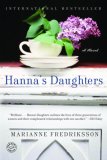
Hanna, Johanna, and Anna – three generations of Swedish women, grandmother, mother, daughter. This novel by Marianne Fredriksson was an impulse buy – I’d just come home from ten days with my mother, and missed the mother-daughter dynamic. I expected something light and fluffy, instead, I got to read the histories of three fictional women, and about how their social inheritance of manners and gender roles informed their lives and choices.

Anna’s story really bookends the other two, for the novel is her interpretation, first as a thesis then as a novel, of the women who raised her, but taken as a whole, it’s a fascinating look at how in some fashion we are all our mother’s daughters, even when we don’t wish to be.

The first third of the novel was difficult to read, both because of the content (there’s a rape of a very young girl) and because the grammar reflects the uneducated way of speaking Hanna had, with funky verb tenses. Until I got to the next section, I was almost convinced that this was just a really bad translation, but it was done for effect.

I wouldn’t recommend this as a light reading, but if you’re in the mood for a respite from dealing with small business phone systems and endless faxes, and want to really explore generational culture…this book is a great addition to the pile.

The Tipping Point

by Malcolm Gladwell

I was first introduced to Malcolm Gladwell’s work via my stepfather, who left me his copy of Blink when he was visiting us over Christmas in 2006. I thought that book was amazing, with all of the insights about the first few split-seconds of every encounter.

The Tipping Point is amazing, but in a quieter way. It’s about social and medical epidemics – about how word of mouth works, about the different types of personalities that drive hot-or-not trends, and about how the two merge in almost every aspect of society. In the journey of this concept, the author talks about needle exchanges, AIDS Patient Zero, vintage shoes, Paul Revere’s ride, and various examples of information collection and critical mass.

There’s really no way to review it without spoiling the experience. Read this book.

Rises the Night

by Colleen Gleason

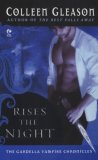
Rises the Night isn’t just the second installment of Colleen Gleason’s series about Victoria Gardella, slayer of vampires and wearer of lace and corsets, it’s also the second novel in this period that I’ve read and enjoyed, and it’s all because Gleason manages to make her characters ride the edge between being truly period and truly contemporary.

As with the original book in the series, a continuing theme is protagonist Victoria’s struggle between the demands of the society in which she lives, and the calling she has answered. While the first novel raised that issue, however, this one really explores it, as well as giving Victoria a bit of dark romance on the side.

I’m afraid to even mention character names because I don’t like to spoil things, and I’m terrible at not giving away plot points. Suffice to say that even though Victoria is wearing bodices and full skirts instead of sleek black port authority clothing, she is every bit as much an action hero as a certain blonde vampire slayer we all watched on television, and every bit as star-crossed when it comes to love.

Read this book!

The Rest Falls Away

by Colleen Gleason

I’m not a huge fan of the Regency period, and especially not a fan of Regency romances. All those demure teas and heaving bosoms tend to cause a lot of eye-rolling around here. When an author takes the time to visit my blog, however, and pitch her own work, without being at all arrogant, but just being another blogger, I take note. Colleen Gleason left a comment here a few weeks back, and even though the period her Gardella Vampire Hunter series is set in is not my favorite, I’m a sucker for bloodsuckers being offed by spunky heroines, so HAD to check out her work.

The Rest Falls Away introduces us to Victoria Gardella Grantworth, debutante (though a little older than the other young women coming out that year, due to family issues), and the latest to be called to the family tradition of vampire hunting. In this – being chosen rather than doing the choosing – she is not unlike the more modern Buffy, whom the author herself notes is an influence.

What follows, once Victoria takes up her stake and commits to her destiny, is not bodice ripping (a little slow unbuttoning, perhaps…) or bosom heaving, but a realistic presentation of what a female action hero would have had to deal with if living in such a time. Skirts not meant for running and fighting, pants not acceptable on the female form, sleeves meant to be frothy rather than fitted…fashion alone is a major issue, and not just in terms of where one can hide a stake.

There is, of course, requisite romance with Phillip, the Marquess of Rockley, and – as always happens when one of the characters is a hero – romance is not a reward as much as yet another thing to be balanced and protected, or pushed aside when a life must be saved.

Gleason’s characters all ring true, even those like Sebastian the owner of the vamp-friendly bar who are a bit over the top, and her plot moves at a comfortable pace. Maybe I was inspired in part by the season – I’m writing this review having just given the last of my candy to a stray trick-or-treater, after all – but not only could I not put this book down, I’m already a third of the way through the sequel.

You’ll note Ms. Gleason’s presence in my blogroll. You’d do well to include her works on your shelves.

More Coming Attractions

I just received the emailed interview from Julia Holden, and while she doesn’t talk about fictional Las Vegas homes for sale (or trailers stashed behind hotels or casinos, for that matter) the subjects do include Paris, pseudonyms, future plans, and the Folies Bergere.

The authors who’ve been contacted are picked because they’re fairly accessible – with websites, blogs, etc., – as well as because I like their work, or think my readers will appreciate what they have to say.

So far, everyone I’ve contacted has been really gracious and returned the questionnaire much quicker than anticipated, which is really good for me.

Ms. Holden’s interview won’t be posted until November, most likely, but I wanted to let you all know it was coming.

A Dangerous Dress

by Julia Holden

I bought A Dangerous Dress after reading Julia Holden’s other novel One Dance in Paris a couple weeks ago, and exchanging comments via her MySpace page. She’s kindly consented to do an emailed interview for me, when she has a few free moments, and I’m sure you’ll all enjoy it.

Anyway, this book shares with the other a trip to Paris, and is still a chick-lit coming of age story, but there are no trips to anything like Caesars Palace this time, though there is a movie set, a news set, and a bank involved.

The lead character, Jane, is working in her uncle’s bank, and feeling a bit humdrum, when she gets a call from a French movie director (who happens to be her college roommate’s father), asking her to please come to Paris and find the perfect 1928 dress for the star of his film. Her expertise, he says, comes from the college paper she wrote years before, about her late grandmother’s very own flapper dress – a dress so exotic, so unique, that it is literally dangerous. Dangerous in that edgy, seductive sort of way.

The dress is, of course, merely a catalyst. Jane jets off to find love, adventure, new skills, more adventure, and a lot of self-awareness, in an entertaining read that goes by way too fast.