Review: Skin and Bones, by D.C. Corso

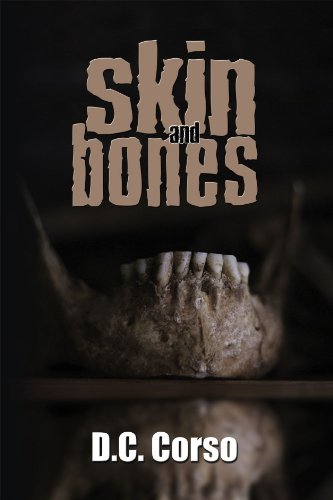
Skin and Bones
Skin and Bones
by D. C. Corso
Bennet & Hastings, 162 pages
Get it at Amazon >>

When I was offered the chance to read D. C. Corso’s debut novel Skin and Bones I jumped at it, because I love mysteries, true crime, and police procedurals, and the story – that of an FBI agent joining forces with a small town’s prodigal daughter to track down a serial killer who preys on children, and set just after September 11, 2001, – seemed like something I’d really enjoy. Imagine my surprise when the book showed up and wasn’t even 200 pages long. Well, don’t let the cover – or the size – fool you, because with this novel, less really is more.

Set on an island off the coast of Seattle, the book opens with what seems like a flashback. I won’t tell you what that scene really is, because the main plot begins immediately after: a young girl is biking to the local minimart to meet her friends for the last slushies of the season, when a truck driver asks her for directions. She approaches, cautiously, and learns that the address the trucker is supposedly seeking is her own. From that point we jump into FBI agent Ash Severin’s world – he’s been sent to Carver Isle to manage the case, but unlike most feds, he works with the local law enforcement, not against them.

At the same time, local girl Parker Kelly has returned home, ostensibly because she’s concerned for her aged mother, but once she arrives on the scene, weird things begin to happen. She hears the signature whistle of her psychotic cousin, supposedly safely locked up in prison, and feels his presence all around her. With her mother dying, and more children being taken, this is the last thing Parker needs.

Ash and Parker initially don’t get along, but eventually her past and his present begin to intertwine – and so do they.

Skin and Bones may be relatively short, but author D.C. Corso writes with a compelling style that is neither too florid nor too plain. Her descriptions are vivid when necessary, and vague when called for, and the characters and settings she describes seem like real people you may encounter in ANY small town. I would heartily recommend it to anyone who loves this genre of literature – it’s a great read…though I’d recommend against reading it in the bathtub while alone in the house.

Trust me on that part.

Review: Hollywood Monster by Robert Englund

Hollywood Monster
Hollywood Monster: a Walk Down Elm Street with the Man of Your Dreams
by Robert Englund, with Alan Goldsher
Pocket, 304 pages
Get it from Amazon >>

I have a memory from when I was twelve or thirteen (but probably twelve): I was sitting in the living room with my mother, stepfather, and stepbrother, textbooks strewn all around us on the floor, watching this movie called V, about aliens coming to earth to steal water and eat people. Mike Donovan, played by Marc Singer, was supposed to be the sex symbol in the show, but I was a geek, even then, and it was the friendly alien, Willie, that caught my attention. That was my first introduction to Robert Englund.

Two years later, had seen all of the V mini-series, and was excited to find out about an upcoming weekly series. I’d also seen one of Englund’s horror movies, Galaxy of Terror (notable for its weirdly impressive cast, and the scene in which Erin “Joanie Cunningham” Moran gets raped by a giant maggot), and was about to be introduced to another of this actor’s iconic characters, one Freddy Krueger, for the first time. While I was never the type of fangirl who wrote letters or anything, I’ll cop to having a crush on Robert Englund from the age of twelve. But we knew I was weird.

Knowing this, it should come as no surprise that when I read on Englund’s website (RobertEnglund.com) that he was publishing a memoir, and that one could buy regular copies from Amazon.com and regular booksellers, or pay a little more for a signed copy, I quickly whipped out my paypal ID, and ordered a signed copy. That was in October. On Halloween (appropriate, no?) I received an autographed photo of Robert Englund as Freddy, with an apologetic note that my copy would be delayed.

Things happened, and all of a sudden, I realized it was almost MARCH, and I’d never received my book. I sent a note to the customer service address, and received an email back that evening, that my order would be “checked on.” That was exactly a week ago, Sunday, February 28th. On Wednesday, March 3rd, I found my book in the mailbox. The cardboard priority mail envelope had been slashed as if by Freddy Krueger’s glove (not intentionally, I’m certain), and the post office had encased it in plastic, but the book was in bubble wrap, and unharmed. I read through all the postcards inside it, looked inside for the autograph (it came with an accompanying doodle of Freddy, drawn by Mr. Englund himself), and then left for Bible Study (and don’t think I don’t recognize a bit of irony in THAT).

I arrived home, did a bit of work, and then settled in to read.

By the time Fuzzy came to bed, I was two-thirds of the way through with the book, and I succumbed to the call and turned on a booklight, so I could finish it before going to sleep.

But, I promised a review. So:

Robert Englund’s memoir of his childhood entry into acting, and his resulting career as a character actor and horror movie icon is a delightful read. Candid and funny, it flows like a really good conversation, leaving you with the feeling that you’ve heard some great stories and sipped some excellent beer. The ghost writer/editor who helped shape the book was able to make everything sound like the voice Englund uses in interviews – a weird combination of erudition, cynicism, and charm, gregariousness. This is a man who takes his craft seriously, but doesn’t take himself too seriously.

I enjoyed learning more about the series of events that led Robert to the role of scream god Freddy Krueger, and about his relationship with role over the years. As much as I’m a bit disappointed that he won’t be reprising the part in the remake of A Nightmare on Elm Street due out this summer, I’ve read enough interviews stating that he’s okay with that decision, that I believe he is, and frankly, I’m enjoying catching him in dark, quirky parts that don’t require him to look like a mangled pizza.

While Hollywood Monster is probably best appreciated by fans, it’s such a great read that even non-fans would probably enjoy it. In fact, I don’t think it feels like a celebrity memoir at all. But then, it shouldn’t, because even though his job site is generally a movie set, Englund describes himself as a “working stiff,” and his book serves to remind us that working actors come in many, many flavors.

Personally, I like the dark, sardonic ones, best.

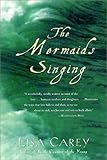
Review: The Mermaids Singing, by Lisa Carey

The Mermaids Singing
by Lisa Carey
Harper Perennial, 288 Pages
Get it from Amazon >>

When you’re on a road trip having a good book to read is just as important as having cheap auto insurance. I thought I’d packed decent reading material for our recent emergency trip to Iowa (my brother-in-law died of brain cancer on the 17th), but when faced with downtime, none of what I’d packed appealed to me. In fact, it wasn’t until we were on the way home, last Thursday, that I found anything that spoke to me.

We were at a used bookstore (Firehouse Books) in Ames, IA, and Fuzzy was checking out when a paperback on the rack near the door caught my eye. I picked it up, somehow KNOWING it would appeal, and said, “Add this. Buy this for me.” And Fuzzy did.

That night, in a hotel room in Emporia, Kansas, I began to read Lisa Carey’s first novel, The Mermaids Singing. It’s a multigenerational tale of three women, Cliona, Grace (Cliona’s daughter), and Grainne (Grace’s daughter), and their relationships with each other and with the men in their lives. It’s candid and well written, and you can hear the Irish accents in the voices of the Irish characters, and smell the sea when Carey writes about sand and surf.

While this novel is technically not that far from the types of romances that Nora Roberts writes, it’s also a deeper story than even Ms. Roberts tends to pen. It opens with Grace dying of terminal cancer, and the chapters alternate in voice, as each of the women, including young Grainne, get their shot at narration.

What I liked most about The Mermaids Singing is that the characters have growth, but not every problem is solved by story’s end. Carey could easily write a sequel to this, if she felt like it, and it would be a welcome tale, but the book is perfectly satisfying without it.

Goes well with a fisherman’s sweater (preferably ‘borrowed’ from a hunky fisherman) and a mug of strong, hot tea.

Review: The Thirteenth Hour by Richard Doetsch

The 13th Hour
The 13th Hour
by Richard Doetsch
Atria, 352 pages
Get it from Amazon >>

Last summer, I got an ARC of The 13th Hour from Atria Books’ “galley grab,” and lost it in the house. A few weeks ago, the author, Richard Doetsch, started following my Twitter feed, and I realized I NEEDED to read his book, so I ordered a copy from Amazon.

I’m glad I did.

This mystery/thriller gripped me from the beginning, opening with Nick and Julia Quinn having the typical sort of argument that all married couples have, only for her to be brutally murdered just a few scenes later. Nick is brought to the local police station as the main subject (House would remind us that it’s always the husband), only to be shoved aside for a plane crash, and then presented with a gold watch and a letter by a mysterious stranger, and told he can go back in time, an hour at a time, for twelve hours, in order to save his wife.

What follows is a fast-paced, action-packed classic thriller, told in reverse, but with forward continuity, in a way that totally works. Even better is the fact that while the eventual ending made sense, it was not at all predictable or cliche.

In my view, mystery and thriller authors have two jobs: the first is to tell a good story, the second is to create a plausible puzzle for the characters to solve.

Mr. Doetsch did both of those, and more, in The 13th Hour.

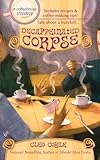
Mini-Review: Decaffeinated Corpse

Decaffeinated Corpse
by Cleo Coyle
Berkley, 288 pages
Get it from Amazon >>

Let’s face it, the recipes in the backs of Cleo Coyle’s coffeehouse mysteries are not exactly keys to quick trim weight loss, but the reality is, as much fun as the recipes are (and I’ve actually tried some of them) it’s the cozy Village Blend coffeehouse and the adventures of cafe manager Clare Cosi that keep us reading.

In Book 5 of the Coffeehouse Mysteries, Clare is investigating her husband’s friend, a coffee grower and playboy from Costa Gravas, who just happens to be the breeder of a decaffeinated coffee plant – as in, no need to water process the beans. There are, of course, corpses in the story, and the mystery this time seemed a bit trickier than the first four novels, but I also read this one out of sequence, since I reviewed another of Ms. Coyle’s books, Holiday Grind in All Things Girl over the holidays.

In that book, the relationship between Clare in NYPD Detective Mike Quinn had become pretty solid; in this one, they shared their first kiss.

As always, Ms. Coyle’s blend of romance, mystery, intrigue, and coffee suits me perfectly when I want light reading.

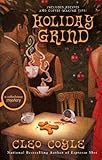
Reviewed Elsewhere: Holiday Grind, by Cleo Coyle

Holiday Blend

From the moment I first picked up a Cleo Coyle novel, I knew I’d found a kindred spirit – two really – one in Ms. Coyle herself, and the other in her lead character Clare Cosi, who cooks with an Italian flair and has espresso running in her veins.

Recently, I read Ms. Coyle’s latest coffeehouse novel, Holiday Grind which features cafe owner and amateur detective tracking down the person responsible for killing her customer (and friend), Alf, who spends his winter days as a street corner Santa Claus.

If you’ve never read a coffeehouse mystery, you should know that all the books are the type of cozy mysteries that go best with froufrou espresso drinks, chocolate dipped biscotti, and the crackling sound from Amish fireplaces.

Look for my review of Holiday Grind later this month in All Things Girl.

Teaser Tuesdays: Holiday Grind by Cleo Coyle

On Teaser Tuesdays readers are asked to:

  • Grab your current read.
  • Let the book fall open to a random page.
  • Share with us two (2) “teaser” sentences from that page, somewhere between 7 and 12 lines.
  • You also need to share the title of the book that you’re getting your “teaser” from … that way people can have some great book recommendations if they like the teaser you’ve given.

My teaser this week is from Holiday Grind, by Cleo Coyle. I’ve been reading it from my cozy house, where it finally feels like November (49 degrees at 6:41 PM) and taking breaks to mock the people across the street who don’t seem to know how their moving truck works.

If you don’t know the Coffeehouse Mysteries, you should seriously check them out. Anyway, here’s the teaser:

There was nothing like walking through the Village on a snowy winter night. The few vehicles on the slippery street crept along no faster than horse-drawn carriages. Every surface appeared flocked with white; the pungent smell of active old fireplaces floated through the air; and bundled couples hurried past dark storefronts, eager to get back to their warm apartments or inside a cozy pub for a glass of mulled wine or mug of Irish coffee.

As I passed by St. Luke’s churchyard, the whole world seemed to go silent, save the icy flurries that still pecked at my parka and the crunch, crunch, crunching of my winter boots. At one intersection I stood alone, watching a traffic light provide a signal for crossroads that had no traffic. Hands in pockets, I waited half amused as the bright red light flipped to green in an unintentional
Christmas display just for me.

from Holiday Grind, chapter 3, by Cleo Coyle.

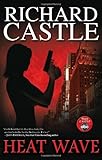
Review: Heat Wave by Richard Castle

Heat Wave
Heat Wave
by Richard Castle
Get it at Amazon >>

Richard Castle might be as fictional as belly fat on a Barbie ™ Doll, but his book, Heat Wave is a fast-paced mystery with just enough romance to keep it interesting.

As anyone who’s ever seen Castle on television knows, Heat Wave is the novel about fictional NYPD detective Nikki Heat and her shadow, journalist Jamie Rook, and both characters are clearly stand-ins for series characters Det. Kate Beckett, and Castle himself.

One might think the fact that this is obviously a well-placed marketing tool makes the book unreadable.

One would be wrong.

Heat Wave is a bit short, coming in at around 200 pages, but it’s funny, interesting, and satisfying, much as the average episode of Castle generally turns out to be.

As it’s a mystery, I won’t spoil the plot, except to mention blackouts, dual murders, and art thievery. If you want to know how those three things combine, and where the aforementioned romance comes in, you’ll have to read the book!

Review: Sarah’s Key by Tatiana de Rosnay

Sarah's Key
Sarah’s Key
by Tatiana de Rosnay
Get it from Amazon >>

While there is no such thing as a term life insurance policy that repays you if you don’t like a book, it’s a pretty safe bet that if you see enough random strangers reading a novel you’re also considering, it probably doesn’t suck. That’s what happened to me with Tatiana de Rosnay’s recently reprinted novel Sarah’s Key: I’d looked at it in various bookstores on more than one occasion, but hadn’t bought it, and then, finally, after seeing too many other people reading it, I took home a copy of my very own a couple weeks ago.

I read it almost instantly, but haven’t had time to post the review until now.

In Sarah’s Key we are treated to not one, but two stories, one taking place in 1942, and the other in modern France. In the past, we are introduced to a young girl named Sarah. She is awakened one morning by loud knocking at the door of her family’s Parisian apartment, and when her mother answers the knock, they find the police waiting. Sarah’s family is Jewish, and they’re about to be part of one of the largest roundups of French Jews. Her father’s been living in the basement for weeks, anticipating such an event, and her little brother isn’t awake yet.

Given time to gather a few things, Sarah wakes her brother, and sends him to hide in the secret cabinet – literally a hollow space in the wall between two rooms – where they often play, and have created a secret lair, as children do, with food and water and books. She locks him in, and promises to come back. Sadly, she and her parents are then hustled off to the Vélodrome d’Hiver, an indoor bicycle racing arena in Paris, then to a camp outside the city, and then off to Auschwitz. While Sarah does manage to escape before the last transport, and is taken in by a French farmer and his wife, she doesn’t make it back to Paris in time to save her brother.

As Sarah’s story is unfolding in the past, however, Sarah’s Key also introduces us to Julia Jarmond, an American journalist who has lived in Paris for 25 years, and is married to a French architect. She shares a special bond with her grandmother-in-law, who is a feisty old woman, and when she is assigned to cover the memorial of the Vélodrome d’Hiver roundups, it is this woman who reveals that the family moved into their vintage Paris apartment only because it was available after being vacated by Sarah’s family.

As Julia begins to research her story, she finds herself compelled to learn about the family who previously lived in the apartment, and eventually, she does track down Sarah’s surviving family members, but only after her marriage disintegrates.

If this sounds like a depressing story – trust me, it’s NOT. It’s imbued with love and hope, and is written so delicately, so gently, that what should be horrifying instead serves as a backdrop for a wonderful exploration of history and the human heart.

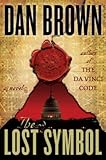
Book Review: The Lost Symbol by Dan Brown

The Lost Symbol
Dan Brown
Doubleday
509 pages
Get it from Amazon

I confess: I pre-ordered Dan Brown’s latest book, The Lost Symbol so I would have it in my hands on the day it was released. It’s not that I think Brown is the greatest writer in the world – he’s not – but he is very good at what he writes: escapist adventure stories rooted in plausibility. Put another way, just as a cigar store Indian can scare you if you turn around suddenly and find yourself facing one, Brown has this habit of sneaking provocative ideas into his fiction, and fiction that stirs controversy and makes you think, is never bad.

And, as they say, any publicity is good publicity.

The Lost Symbol is no exception.

In this installment of the Robert Langdon adventures, our favorite symbologist is sent to Washington, D.C., ostensibly to pinch hit as the speaker in a special event. Almost immediately he finds he was duped, and instead of acting as a guest lector, he must instead turn detective, and try to solve the necessary puzzles to open a metaphysical portal hidden somewhere in the Capitol, all before a life-long friend is cruelly murdered.

What follows is an adventure story that combines the history of the Freemasons with the budding field of Noetic Science, and takes us on a National Treasure-esque tour of D.C. in the process.

Longer than The Da Vinci code, and less controversial than Angels and Demons, The Lost Symbol is an entertaining adventure through history and Mystery, and, at 509 pages, a really satisfying read as well.

Goes well with endless cups of coffee and chocolate chip cookies.