Review: 2 A.M. at The Cat’s Pajamas by Marie-Helene Bertino

About the book, 2 A.M. at The Cat’s Pajamas 2 AM at The Cat's Pajamas

Hardcover: 272 pages
Publisher: Crown (August 5, 2014)

2 A.M. AT THE CAT’S PAJAMAS begins on a quiet morning in a Philadelphia apartment the day before Christmas Eve, where we meet the precocious and smart-mouthed nine-year-old Madeleine Altimari. Madeleine’s mother has recently died, and her father is still lost in his grief. Meanwhile, Madeleine finds solace in music and aspires to become a jazz singer. Just two days shy of her tenth birthday, she is about to have the most remarkable day of her life.

After facing down mean-spirited classmates and rejection at school, Madeleine decides today is the day to find Philadelphia’s legendary jazz club, The Cat’s Pajamas, and make her debut. On the same day, Madeleine’s fifth grade teacher Sarina Greene, who has moved back to Philly after a divorce, is nervously looking forward to a dinner party that will reunite her with her high school love. And across town at The Cat’s Pajamas, club owner Jack Lorca discovers that his beloved venue may close be closed due to financial woes by the end of the night. As we follow these three lost souls over the course of twenty-four hours, we also meet a cast of unique and brilliant characters who surround them – from the warm-hearted cafe owner Mrs. Santiago to Melissa, the former “snake lady” exotic dancer who might be Lorca’s last hope for love. With sharp wit and irrepressible spirit, Marie-Helene Bertino turns Philadelphia into a magical place where anything can happen.

Buy, read, and discuss 2 A.M. at The Cat’s Pajamas
Amazon | Barnes & Noble | Books-a-Million | Goodreads


About the author, Marie-Helene Bertino Marie-Helene Bertino

Marie-Helene Bertino is the author of the story collection Safe as Houses, which won the 2012 Iowa Short Fiction Prize and The Pushcart Prize, and was long-listed for The Story Prize and The Frank O’Connor International Short Story Prize.

An Emerging Writer Fellow at New York’s Center for Fiction, she has spent six years as an editor and writing instructor at One Story.

Connect with Marie-Helene

Website | Facebook | Twitter


My Thoughts

There’s an entire episode of the TV series How I Met Your Mother devoted to the concept that “nothing good happens after two am.” This novel, however, turns that concept on its ear.

Marie-Helene Bertino has created a collection of characters who could populate almost any large city. All of them are a little bit eccentric, incredibly interesting, and compelling to read about. Any one of them could have been the central character in this novel, but the author chose to make nine-year-old Madeleine the focal point, and in doing so, she’s given us the best child character ever.

She’s also proven that you can write a book about a child without it being children’s literature (not that there’s anything wrong with that), which is something a lot of contemporary authors seem to have forgotten.

In any case, nine-year-old Madeleine reminded me of, well, me at that age. Okay, I wasn’t into smoking, and I didn’t curse (much) but the very structured singing practices in my room? Check. The not having a ton of friends? Check. (I have a few very close friends, but I was never one for big crowds.) The never quite fitting in, and mostly not really caring, except maybe a little? Check and check again.

It is these very real factors that made Madeleine sing on the page even when she wasn’t actually, you know, singing.

I also liked the way the novel is set in today’s world, but had a very noir feel to it. No, it’s not a hardboiled detective novel, but it feels like it could slide into such a story for color, and be right at home.

The adult characters are just as well-defined, and well-realized. I was often annoyed with Sarina (Madeleine’s teacher) for not standing up to the principal and being more of an advocate for Madeleine, just as I wanted to slug Madeleine’s father, a lot, and then hug him after. Even the glimpses into the mind of Pedro the dog (no, really) were fascinating to me, because everything just…worked.

At times poignant and sweet, at times pathetic and sad, and at times raucously comic, this novel defies categorization, but should not be overlooked. It’s fantastic, and fresh, and if you don’t read it, you’ll be missing a treat.

(Also, you can feel smug about how you’re ahead of the cultural zeitgeist because 2 A.M. at The Cat’s Pajamas was featured on NPR’s Weekend Edition on Saturday.)

Goes well with espresso and a plate of cannoli…or a caramel apple.


TLC Book Tours

This review is part of a blog tour sponsored by TLC Book Tours. For more information, and the complete list of tour stops, click HERE.

Review: The Little Women Letters, by Gabrielle Donnelly

About the book, The Little Women Letters The Little Women Letters

USA TODAY sings that “Fans of Louisa May Alcott can rejoice” thanks to this charming and uplifting story of the imagined lives of three of Jo March’s passionate, spirited descendants—that’s Jo March from Little Women!

With her older sister, Emma, planning a wedding and her younger sister, Sophie, preparing to launch a career on the London stage, Lulu can’t help but feel like the failure of the Atwater family. Lulu loves her sisters dearly and wants nothing but the best for them, but she finds herself stuck in a rut, working dead-end jobs with no romantic prospects in sight.

Then Lulu stumbles across a collection of letters written by her great-great-grandmother Josephine March. As she delves deeper into the lives and secrets of the March sisters, she finds solace and guidance, but can the words of her great-great-grandmother help Lulu find a place for herself in a world so different from the one Jo knew?

As uplifting and essential as Louisa May Alcott’s Little Women, Gabrielle Donnelly’s novel will speak to anyone who’s ever fought with a sister, fallen in love with a fabulous pair of shoes, or wondered what on earth life had in store for her.

Buy, read, and discuss The Little Women Letters

Amazon | Barnes & Noble | Books-a-Million | IndieBound | Goodreads


About the author, Gabrielle Donnelly (from her website) Gabrielle Donnelly

Gabrielle Donnelly was born in London and has known that she wanted to be a writer for as long as she can remember. She read, wrote, and daydreamed her way through grammar school in North London and to a Bachelor of Arts degree from London University; when she was 22, she got her first job as a reporter in the London office of the DC Thompson newspaper The Weekly News; she has made her living as a journalist ever since.

In 1980, realizing that she had lived for all of her life in London and deciding that she should probably at least briefly experience living somewhere else before it was too late, she moved to Los Angeles for a six-month-long working vacation. She has never returned. She writes about show business for a variety of British magazines and newspapers, and, as a member of the Hollywood Foreign Press Association, votes every year for the Golden Globe Awards.

The Little Women Letters is Gabrielle’s fifth novel. Previously, Holy Mother, Faulty Ground, and All Done With Mirrors were printed in Britain by Victor Gollancz; The Girl In The Photograph was printed in America by Penguin Putnam. The Little Women Letters is the first to be published in both countries, and she says it is the one she has had by far the most fun writing.

A committed singleton throughout her twenties and thirties, she surprised herself and everyone else at over forty by falling madly in love with and marrying Los Angeles-born computer specialist Owen Bjornstad. They live in Los Angeles in a spectacularly untidy house a couple of miles from the ocean, and make each other laugh a very great deal.

Gabrielle is a Corporator of Louisa May Alcott’s Orchard House Museum in Concord, Massachusetts.

Connect with Gabrielle

Website | Facebook


I don’t remember how I heard of The Little Women letters, but it might have appeared on my radar (bookdar?) around Christmas, after watching The March Sisters at Christmas and finding a forum thread talking about other contemporary interpretations of Alcott’s classic story.

I didn’t actually buy my copy until March (we got our check from the class action suit against a certain bookseller named after a river and a tribe of warrior women, and bought a ton of kindle books), but I read it in one sitting on a blustery spring day, and really enjoyed the experience.

At first, I thought it was an odd choice to have only three sisters instead of the expected four, but it made sense in the end. I also liked the twist of Lulu (the Jo surrogate) following a path slightly different than what the reader – at least this reader – was led to expect.

Overall, this is a lovely, entertaining read about fully-fleshed-out, smart, interesting young women, and the convention of treating the source material as if it were real works wonderfully.

Nothing ever seems hokey, and nothing is ever too sweet or too perfect, despite the ultimate happy ending.

Goes well with hot tea and apple crumble.

Review: The Bone Church by Victoria Dougherty

About the book, The Bone Church The Bone Church

Publication Date: April 15, 2014
Pier’s Court Press
Formats: eBook, Paperback

In the surreal and paranoid underworld of wartime Prague, fugitive lovers Felix Andel and Magdalena Ruza make some dubious alliances – with a mysterious Roman Catholic cardinal, a reckless sculptor intent on making a big political statement, and a gypsy with a risky sex life. As one by one their chances for fleeing the country collapse, the two join a plot to assassinate Hitler’s nefarious Minister of Public Enlightenment and Propaganda, Josef Goebbels.

But the assassination attempt goes wildly wrong, propelling the lovers in separate directions.

Felix’s destiny is sealed at the Bone Church, a mystical pilgrimage site on the outskirts of Prague, while Magdalena is thrust even deeper into the bowels of a city that betrayed her and a homeland soon to be swallowed by the Soviets. As they emerge from the shadowy fog of World War II, and stagger into the foul haze of the Cold War, Felix and Magdalena must confront the past, and a dangerous, uncertain future.

Buy, read, and discuss The Bone Church

Amazon | Amazon UK | Barnes & Noble | Book Depository | IndieBound | Add to Goodreads


About the author, Victoria Dougherty Victoria Dougherty

Victoria Dougherty writes fiction, drama, and essays that often revolve around spies, killers, curses and destinies. Her work has been published or profiled in The New York Times, USA Today, International Herald Tribune and elsewhere.

Earlier in her career, while living in Prague, she co-founded Black Box Theater, translating, producing and acting in several Czech plays. She lives with her husband and children in Charlottesville, Virginia.

Connect with Victoria

Website | Facebook | Goodreads | Pinterest | Twitter


My Thoughts

I was expecting The Bone Church to be a bit dark, a bit gritty, and incredibly honest, and this novel was all of those things. What surprised me was that amidst all the grit and darkness, there were these great moments of lyrical beauty and haunting spirituality.

Some of these moments were small – a comparison to the scent of coffee and oranges, the description of the texture of one of the many, many “Infant of Prague” statuettes that glutted the market, but it’s in those small moments, in those details, that Victoria Dougherty’s work really shines.

The story itself is gripping. We are sympathetic to Magdalena’s plight from the beginning, watching as she loses her identity and later, her marriage. We root for Felix, even when his behavior becomes a bit questionable. All of the other characters, many of whom would be easily interchangeable “stock” cold war figures in another author’s hands, have their own complications, secrets, and truths as well.

Put together, the setting, the characters, the period, even the weather, give us a picture of a part of history we typically only see from the point of view of much greater powers, and also serve forth a meaty story, rich with depth and intrigue.

Read this if you want something that manages to combine the best of LeCarre with the best of Sue Monk Kidd – a weird blending, but that’s how it felt to me. Read this if you want to be both entertained and enlightened.
Read The Bone Church if you want a good story that will linger with you for days after you’ve read it.
But definitely, read it.

Goes well with Lapsang souchong tea and navel oranges.


Bone Church Blog Tour

This review is part of a blog tour sponsored by Historical Fiction Virtual Book Tours (HFVBT), who graciously arranged for me to have a copy of the book. For more information, and the complete list of tour stops, click the banner above, or just click HERE.

Review: Star Trek: The Next Generation: The Light Fantastic by Jeffrey Lang


My Thoughts

I pre-ordered the digital edition of this book several months ago when it was first announced, so I knew it would be arriving on my Kindle around 2:00 this morning. I was pleasantly surprised when it actually showed up at midnight, because I’m very nocturnal. Translation: by the time I went to bed around 2 AM, I’d read 81% of this novel.

The Light Fantastic is the sequel to Lang’s own Immortal Coil, which, I confess, left me conflicted when I first read it. The adult part of me, the part that is an improviser and a writer, really liked it, though I felt that Data and Rhea’s relationship was both too fast, and not believable (this despite the fact that I liked Rhea as a character). The part of me that was 16 or 17 when TNG premiered on TV and crushed on Data had other issues, but adult-me was able to ignore them.

But then David Mack gave us is Cold Equations trilogy, and those expanded upon Data 2.0’s mindset and choices, and gave us better insight into the Fellowship of AI, and left a door open for more with this beloved character.

And now Lang has wrapped up a truly amazing arc. We get to find out how Data’s been spending the last two years of his life. We get a glimpse into his life with the newly restored Lal, his daughter, who is in the midst of the android equivalent of adolescence, and then she’s abducted – by Moriarty – yes, the hologram – and we’re thrown into a story that is both a mystery and a story about what it means to grow up, grow old, raise children, and explore one’s identity.

Data as a father is both hilarious and heartbreaking – especially as he’s still acclimating to his new body and his permanently engaged emotions.
Lal as a teenager is also hilarious, and frustrating, and it gave me new respect for the way my own mother must’ve felt when I was a teenager myself.

Geordi, of course, is along for the ride, because no Sherlock can be without his Watson, and along the way we are introduced to a few favorite characters from both TNG and TOS.

Overall, The Light Fantastic is a truly satisfying read, and if Data doesn’t sound exactly the way we’re accustomed to him sounding, well, he himself states in the novel that he isn’t entirely certain how much of him is HIM, and how much is leftover Noonian Soong.

The tag, of course, teases a new mystery, and I have no idea if that will pan out, or if the soft canon of the novels will eventually merge with the soft canon of the STO game and the Countdown to Trek 2009 (in which Data was Captain of the Enterprise), but if it doesn’t, I would totally buy a series of intergalactic mysteries featuring Data and LaForge.

Goes well with French-pressed coffee and a chocolate croissant.

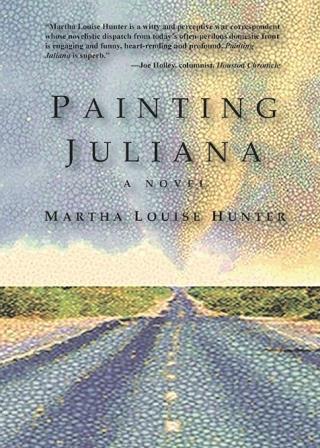
Review: Painting Juliana, by Martha Louise Hunter

About the book, Painting Juliana Painting Juliana

Hardcover: 362 pages
Publisher: Goldminds Publishing, LLC (May 20, 2014)

A young girl’s terrifying nightmare, five mysterious oil paintings and a red, flaming firebird all carry the same message:

Stand still, look up and let the funnel cloud suck you up inside.

It’s the last thing Juliana Birdsong wants to hear. Now a woman who’s losing everything, she’s still running from the dream, and it’s catching up fast. When her Alzheimer’s-stricken father’s canvases come to life exposing secrets, heartbreak and yearnings that mirror her own, Juliana discovers that some memories can be a blessing to forget.

Hit with devastating loss and betrayals, her old life stripped away, Juliana has no choice but to call on the person who’s never helped her before. Steering the chrome handlebars of a vintage motorcycle down a long, tapering highway, she must face her defining moment. It’s the only way she’ll gain the strength and courage to begin painting Juliana.

Buy, read, and discuss:

Amazon | Barnes & Noble | IndieBound | Add to Goodreads


About the author, Martha Louise Hunter Martha Louise Hunter

Martha Louise Hunter has an English degree from the University of Texas. After writing magazine features, working in politics and owning homebuilding and interior design companies, she now has an estate jewelry collection, www.marthasjewelrycase.com.

With four children between them, she and her husband, David live in Austin, Texas. This is her first novel.

Painting Juliana was awarded finalist in the Writers League of Texas Mainstream Fiction Contest.

Connect with Martha

Website | Blog


My Thoughts

As the daughter of a type-A, independent woman who is also a staunch feminist, and as someone who is all those things herself, it’s always a little bit difficult for me to empathize with the kind of women, who, like the Juliana we meet at the beginning of this novel, sublimate all their dreams and desires and let their husbands rule their lives.

For the first few chapters, then, I wanted to grab the lead character and shake some sense into her.

Then my mad “willful suspension of disbelief” skills took over, and I was able to simply experience her story, which is wonderfully told by author Martha Louise Hunter.

I particularly liked Juliana’s interactions with her Alzheimer’s-stricken father, and with her brother and his partner. Those two (three) relationships helped form the picture of how Juliana became the woman we first encounter, but also let us see that she really did have a core of steel, just just needed to use it.

Weaving through the novel was Juliana’s discovery of her father’s artwork, and her response to it, and her eventual assistance in giving him his art back, because while her father was painting pictures, it was very clear that Juliana was painting herself a whole new life.

Hunter’s characters and dialogue never felt flat or false, and even though I initially didn’t particularly like Juliana, I found myself rooting for her in the end, and even applauding her ballsy-est moves.

If you want a great summer read that has a bit more depth than the typical “beach novel,” but isn’t asking you to remember chunks of European history in order to follow the plot, and if you enjoy reading about adult women who reinvent themselves, this novel should appeal to you.

Goes well with anything Tex-Mex and a pitcher of margaritas.


TLC Book Tours

This review is part of a blog tour sponsored by TLC Book Tours, who provided me with a copy of the book. For more information, and the list of tour stops, click HERE.

Review: Chasing the Sun, by Natalia Sylvester

About the book, Chasing the Sun Chasing the Sun

Hardcover: 304 pages

Publisher: New Harvest (June 3, 2014)

Partially inspired by her grandfather’s kidnapping in Peru, CHASING THE SUN: A Novel (Lake Union/New Harvest; on sale June 3, 2014) is Natalia Sylvester’s suspenseful debut about a man whose wife is kidnapped just as their marriage is falling apart.

After going out for an errand, Marabela Jimenez doesn’t return home and her husband suspects she has left him – again. Only, the next day a letter arrives in the mail that reads:

 Querido Andres,

I’m being held by three men who say they’ll keep me safe as long as you cooperate. They say that means no cops and no media. They say they’ll call when they’re ready to talk to you. Kiss our children for me and tell them not to worry. Keep me in your thoughts as I will be keeping you in mine.

Marabela

Despite their crumbling relationship, Andres quickly realizes he must do whatever it takes to get Marabela home. He can’t possibly afford the ransom the kidnappers demand or handle this threat to his family alone so he hires a consultant to help negotiate with the terrorists. He also reaches out to his estranged mother, who has never cared for Marabela and even reconnects with an old friend who may hold the key to his past and his wife’s future. As each day passes without the return of his wife, Andres is forced to come to terms with whether or not what he and Marabela have left is worth saving and how far he’ll go to bring her home.

Set against the backdrop of the political turmoil and terrorist threats of 1992 Peru, CHASING THE SUN is a story of how trauma has a way of exposing our most difficult truths and healing past wounds and regrets.

Buy, read, discuss

Amazon | Barnes & Noble | Books-a-Million | Goodreads


About the author, Natalia Sylvester Natalia-Sylvester_credit-Eric-Sylvester-286x300

Natalia Sylvester was born in Lima, Peru. She came to the U.S. at age four and grew up in South Florida, where she received a B.A. in creative writing from the University of Miami. A former magazine editor, Natalia now works as a freelance writer in Austin, Texas.

Connect with Natalia

Website | Facebook | Pinterest | Twitter


My Thoughts

Despite the fact that this novel opens with a kidnapping, and is mainly focused on a marriage that is falling apart rather than one that is coming together, the author’s sense of place, her vivid descriptions, her three-dimensional characters, are all so compelling that I literally could not put it down, reading it straight through in a single evening.

And not even in the bath.

It’s heart-achingly honest, sad but with bright moments, and ultimately so completely truthful that I felt as though I knew these people. And maybe that’s why it works, because while the situation is anything but normal, the characters are as real, as substantial, as our own family members, friends, and neighbors.

I really like that, unlike any other novel dealing with the same subject, the focus would have been on the one who was kidnapped, the wife, Marabela. Instead, it’s very much Andres’s story, and in choosing to make him our POV character, in choosing to have him be sympathetic, author Sylvester forces us to look at our own culture, our own relationships, and see exactly how we cast our gender and familial roles.

Chasing the Sun is simply brilliant. Deep, satisfying, literary brilliance.

Goes well with arroz con mariscos (though I prefer mine without octopus) and a really good wine.


TLC Book Tours

This review is part of a virtual tour hosted by TLC Book Tours. For more information, and the complete list of tour stops, click HERE.

Review: Danger in her Words, by Barbara Barth

About the book, Danger in Her Words Danger in her Words


Genre: Romance/Suspense

Publisher: Gilbert Street Press

Publication Date: February 19, 2014

Paperback: 238 pages

A TV sitcom pitch gone wrong turns dog-column writer Susan Meyers in a tailspin. Sex Sells was the topic of the day at the writers’ convention. Susan decided to try something new and a steamy romantic novel seemed just the answer. A widow who hadn’t dated in three years, Susan was out of practice with men and sex. She turned to an online dating site to find inspiration for her book and unleashed a predator with the words she wrote. Tucked an hour away from her friends in a small town where she kept to herself, with only her tiny dog for company, Susan felt safe from the world. Little did she know her life was about to change.

A romp of a story about writing and finding yourself in this book within a book. If you love girl-talk, farmhouses, antiques, country towns, a touch of murder, a sprinkle of suspense, and a bit of naughty fun, come join Susan as she learns about life from her character Jamie. Two widows looking for love in all the wrong places might still get it right if they live long enough.

Buy, read, discuss.

Amazon | Barnes & Noble | Goodreads


About the author, Barbara Barth Barbara Barth

Barbara Barth likes a lot of things: turquoise jewelry, surfing the ‘net, and margaritas, to name a few. Then there are the dogs. As many as her house can hold! This Georgia antique dealer and jewelry maker published a hobby newsletter for 13 years. After her husband died she recorded the year that followed in a series of essays. When she isn’t writing you can find her at the local thrift shops or pounding another nail into the wall to hang the paintings she can’t resist. She published a memoir The Unfaithful Widow and Danger in her Words is her debut novel.

Connect with Barbara

Website | Blog | Blogspot Blog | Facebook Author Page | Facebook Discussion Page | Twitter


My Thoughts

When I was offered the chance to read and review Barbara Barth’s first novel Danger in Her Words, I jumped at the chance. Why? Because someday I’m going to be hawking my own first novel, and supporting other women writers is just good karma. Also, I’d just read a bunch of heavy novels, many of which took place in the Interwar period – the span of years between World War I and World War II. I wanted something light, and fun, and if it was a little bit salacious, so much the better.

What I got was a wonderful novel that’s really two stories in one. In one story, author Susan is settling into her life in huge farmhouse in a quiet village, and starting a new career as a fiction writer, while also opening herself to the possibility of a new relationship. She’s funny, and smart, and what I love about her is that she’s not twenty. (As someone who is also a couple of decades beyond twenty, reading about protagonists who are closer to my age, even if we don’t share the same experiences, is immensely gratifying.)

I also love that she has a dog. I work in dog rescue, and have three of my own (plus a foster-dog, most of the time) so if there’s a dog in a story, I’m much more likely to find that story relevant. Daisy is an adorable addition to an already great novel.

The second story is the novel Susan is writing, about a woman named Jamie who is obviously based in part on Susan. Jamie, too, is looking for love, or at least really good sex. Preferably both.

Both the actual novel, Danger in her Words, and the novel-within-the-novel are technically romantic suspense, and author Barth handled both the romance and the suspense well in both cases. A creepy stalker who trawls the internet for victims is incredibly plausible, but Barth never makes her novel preachy, though her characters are all self-aware, making internal observations when they engage in behavior that’s less than safe.

Similarly, the sex scenes are delicious, keeping the reader in the mood and never straying too far into silliness or too far the other direction into tab-A/slot-B clinicality. (Is that a word? It is now.)

I loved reading this book. I found the characters to be bright, realistic, and appealing, and it made me want to go live in a farmhouse (though, mine would have to be in a town where there actually is a Starbucks).

In fact, there’s only one thing I disliked about this novel, and I’m hesitant to write it, because it’s a personal thing, but I’m going to in the interest of honesty. In some of the sex scenes, the author uses the word ‘dick’ in reference to male anatomy. Now, this is a perfectly appropriate use of the word; it’s just that for me the word ‘dick’ isn’t at all sexy. When I use it, it’s a pejorative, as in Wil Wheaton’s go-to admonishment, “Don’t be a dick.” (For the record, I prefer ‘cock.’ Now you know.)

But that’s a minor thing, and, as I said, it’s my issue, and should in no way imply that Barbara Barth wrote anything other than a wonderful sexy novel that you should all go buy and read right now.

Goes well with homemade fried chicken and sweet tea from a local diner.


This review is part of a blog tour hosted by WOW – Women on Writing via their blog The Muffin. For more information, and the complete list of tour stops, click HERE.

Review: Lovers at the Chameleon Club, Paris 1932 by Francine Prose

About the book Lovers at the Chameleon Club, Paris 1932 Lovers at the Chameleon Club, Paris 1932

• Print Length: 448 pages
• Publisher: Harper (April 22, 2014)

Paris in the 1920s. It is a city of intoxicating ambition, passion, art, and discontent, where louche jazz venues like the Chameleon Club draw expats, artists, libertines, and parvenus looking to indulge their true selves. It is at the Chameleon where the striking Lou Villars, an extraordinary athlete and scandalous cross-dressing lesbian, finds refuge among the club’s loyal denizens, including the rising photographer Gabor Tsenyi, the socialite and art patron Baroness Lily de Rossignol, and the caustic American writer Lionel Maine.

As the years pass, their fortunes—and the world itself—evolve. Lou falls in love and finds success as a race car driver. Gabor builds his reputation with vivid and imaginative photographs, including a haunting portrait of Lou and her lover, which will resonate through all their lives. As the exuberant twenties give way to darker times, Lou experiences another metamorphosis that will warp her earnest desire for love and approval into something far more sinister: collaboration with the Nazis.

Told in a kaleidoscope of voices, Lovers at the Chameleon Club, Paris 1932 evokes this incandescent city with brio, humor, and intimacy. A brilliant work of fiction and a mesmerizing read, it is Francine Prose’s finest novel yet.

Buy. Read. Discuss.

Amazon | Barnes & Noble | Indie Bound | Add to Goodreads


About the author, Francine Prose Francine Prose

Francine Prose is the author of twenty works of fiction. Her novel A Changed Man won the Dayton Literary Peace Prize, and Blue Angel was a finalist for the National Book Award. Her most recent works of nonfiction include the highly acclaimed Anne Frank: The Book, The Life, The Afterlife and the New York Times bestseller Reading Like a Writer.

The recipient of numerous grants and honors, including a Guggenheim and a Fulbright, a Director’s Fellow at the Dorothy and Lewis B. Cullman Center for Scholars and Writers at the New York Public Library, Prose is a former president of PEN American Center, and a member of the American Academy of Arts and Letters and the American Academy of Arts and Sciences. She lives in New York City.


My Thoughts

As I was getting ready for the last day of Dallas Comic-Con on Sunday, I was listening to Weekend Edition on NPR, and this book – Lovers at the Chameleon Club, Paris 1932 was mentioned. Immediately, I grabbed my phone and tweeted, “Does anyone ELSE get excited when a book they’re already reading is mentioned by @NPR or @NPRbooks?” It was gratifying to learn that I am not the only one.

I had to leave the room before the show was over, so I didn’t get to hear the whole story, but that doesn’t matter. It was nice to know I was ahead of the curve on this book. At least, a little bit.

The Interwar period has been sort of haunting me lately, and Lovers… is just one of those pleasantly insistent ghosts. Told in many voices – a family historian, a young photographer, etc., it unfolds like a flower, or one of those paper “cootie catchers” we all made in childhood. There are stories within stories, and all involve rich characters, lush descriptions, and enough of the politics of the day to make you feel as if the Nazis are peering over your shoulder as you read.

I mean, seriously, Francine Prose nails it when it comes to “ominous.”

She also nails it when it comes to her vision of an underground club in Paris. What could have come off as a poor man’s La Cage aux Folles, instead, is so well described that I could smell the smoke from the cigarettes (I’m betting they were Gauloises) in their holders, and hear the soft, bubbling fizz of champagne and the gentle clinks and clicks of glassware and tableware. I could also envision the clothes, because we all know that the ambiguous cross-gender counterculture embraces the BEST couture in any age.

But it’s the story that’s important, and in telling Lou Villars’s story, Francine Prose shows us a spiral into evil, deception, and betrayal that manages to be gripping, sad, horrifying, and poignant all at once.

What would you do for love? What would you do for notoriety? For success? For money? For survival?

Lovers at the Chameleon Club, Paris 1932 asks these questions, and if the answers aren’t always happy ones, at least they are finely crafted and brutally, brilliantly honest.

Goes well with champagne, dahling…or possibly absinthe.


TLC Book Tours

This review is part of a virtual book tour hosted by TLC Book Tours. For more information, and the complete list of tour stops, click HERE.
Review: Star Trek: The Next Generation – Dark Mirror, by Diane Duane

My Thoughts

Thanks to the Amazon class action suit about ebook price fixing, and a lovely $60 payout, I’m catching up on many, many Star Trek novels that I missed during the years when I wasn’t reading them for whatever reason.

One such acquisition was the Star Trek: The Next Generation novel Dark Mirror, by Diane Duane. It’s TNG’s chance to experience the “mirror universe” we got to see on-screen in both TOS and DS9, and, as I expected it to be, it was well written, with a few moments that really delighted me.

One was the introduction of the dolphin, Hwiii, a hyperstring researcher who ‘swims’ through the ship in a sort of water skin. Another was when Data, meeting Hwiii, tilts his head for a moment and then ‘speaks dolphin,’ because, of course he does.

I liked that Geordi and Deanna were the initial away team to the mirror Enterprise, and that they both got to use the knowledge they gleaned both from study and experience. Some of my favorite episodes were when Troi actually got to be a psychologist, and in this novel, she uses that training as much as she uses her innate empathetic abilities.

Similarly, Geordi’s incredible depth of knowledge is highlighted in this book, as he works, sometimes with colleagues, and sometimes alone, to figure out a way to save, not just the ship, but the universe itself.

I’m not sure when this was originally written but it felt like early TNG-fic. Data is very ‘sciency’ but doesn’t have as much depth as he does in later novels – even in later pre-emotion-chip ones. It’s obviously before the contemporary push for continuity within the novels, but it’s still an entertaining read.

Trek fiction is my crack. This was a delightful fix.

Goes well with Sashimi and tempura and Kirin beer.

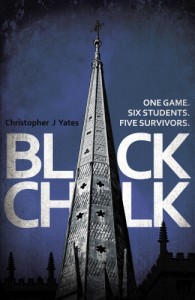
Review: Black Chalk, by Christopher J. Yates

About the book Black Chalk

Black Chalk by Christopher J. Yates

Hardcover: 352 pages

Publisher: Random House UK; First Edition edition (April 1, 2014)

One game. Six students. Five survivors.

It was only ever meant to be a game.

A game of consequences, of silly forfeits, childish dares. A game to be played by six best friends in their first year at Oxford University. But then the game changed: the stakes grew higher and the dares more personal, more humiliating, finally evolving into a vicious struggle with unpredictable and tragic results.

Now, fourteen years later, the remaining players must meet again for the final round.

Read & discuss Black Chalk

Amazon | Barnes & Noble

Add BLACK CHALK to GoodReads


About the author, Christopher J. Yates

Christopher J. Yates

Christopher J. Yates studied law at Wadham College, Oxford from 1990-93 and initially pursued a career in law before he began working in puzzles, representing the UK at the World Puzzle Championships. Since then he has worked as a freelance journalist, sub-editor and puzzles editor/compiler. In 2007 he moved to New York City with his wife, and currently lives in the East Village.

For more information on Christopher, please visit his website, christopherjyates.com.

Click here to read the first two chapters of Black Chalk


My Thoughts

Wonderfully constructed, wonderfully plotted, and completely gripping – that’s my description of Black Chalk. We’re dropped into the narrative with a visit to the apartment of someone who has physical mnemonics for every part of his life, and left to wonder what caused this obsessive hermit behavior.

All too soon, we spiral into the rest of the story, one that spans 14 years, includes six people, and is completely entangled in a psychological game that began when they were freshmen (freshers) in college and continues to influence their adult lives.

With twists and turns that are the textual equivalent of the best roller coaster rides this book’s only flaw is that at some point, it had to end.

Goes well with A bento box and Japanese beer.


TLC Book Tours

This review is part of a blog tour sponsored by TLC Book Tours. For more information, and the complete list of tour stops for Black Chalk, click here.