V: the Second Generation by Kenneth Johnson

By: Kenneth Johnson
Published by: Tor
Publication date: February, 2008

I was twelve or thirteen when the original V miniseries was broadcast, and a bit older when V: the Final Battle came out. At first, I wasn’t interested, but my step-brother got me into the show, and, because I gravitated toward underdogs even then, I’ll confess that I had a bit of a crush on Willie (played by Robert Englund). This was before I’d seen A Nightmare on Elm Street, of course.

When we were at the bookstore the other night, looking for a diet book I eventually chose not to purchase, Fuzzy’s eye was caught by the trade paperback version of V: the Second Generation, and knowing that I like the series, and have ALL the tie-in books upstairs in a box, he grabbed it for me.

I read it on Friday night.

I have been sort of following news of Kenneth Johnson’s career (also I was in high school with his niece), so I knew he had dropped out of being involved with the second miniseries, and had refused to be part of the short-lived weekly series, and that this book would ret-con most of that.

I was expecting it to be awful.

It was actually a pretty good story. In this version, which picks up twenty years after the original mini-series, which ended with Juliet Parrish and Elias sending a message in the general vicinity of enemies of the alien Visitors, the reptiles are controlling most of earth, 50% of the water has been taken into their mother ships (there’s a five-page description of the Pacific Desert and an image of the Golden Gate Bridge stretching across dry sand), scientists, called Scis, are living in ghettos reminiscent of the Jewish ghettos from Nazi Germany, and the Resistance is nearly dead.

As well, there are a bunch of alien-human hybrid children (all under the age of twenty), referred to as Dregs, who are caught between the human and alien cultures.

We are introduced to several new characters – Ruby, a hybrid 12-year-old adopted by Julie, Nathan, a member of the Visitor Friends (now called Teammates) youth group who was befriended by a fifth columnist, Jon, a brilliant hybrid living on the mother ship and working as a janitor, and Ted, the troubled teenaged son of Willy (which is how Johnson consistently spells Willie’s name, and which drove me nuts) and Harmony (the caterer/waitress from the movie).

Old characters are back as well, Julie, Robert Maxwell (but not his daughters), Willy and Harmony (who didn’t die, because Johnson ignores the second movie), and Martin (again, not dead) the fifth columnist. Mike is presumed dead.

And then there are the Zedti, an alien race who got the transmission and came to help…sort of.

If the novel felt more like a padded film script, well, it’s no secret that Johnson, who was the creative mind behind not only V, but also The Bionic Woman (the original), The Incredible Hulk, and Alien Nation is a great television writer, but not a novelist.

Still, with politics preventing SciFi from working with Warner Brothers to produce a movie version of this story, the book is better than nothing, and was a fun read that kept me occupied for an evening.

Also, there are some great Easter eggs in the text, such as Willy giving Jon a copy of Tenctonese Biogeometrics (the Tenctonese are the aliens in Alien Nation.

Goes well with: 80’s pop hits and a peanut butter sandwich.

A Lick of Frost

by Laurell K. Hamilton

If sex really does assist in weight loss, Merry Gentry is probably the healthiest, fittest faerie princess in creation, but in her most recent appearance, sex takes a back seat to…lawyers.

Yes, it’s true, the most recent offering in the Merry Gentry series not only has a plot, but there’s so little sex it can’t rightfully be termed faerie porn, though there’s still a lot of commenting on the beauty of her posse of gorgeous preternatural men.

The plot, by the way, involves Merry’s uncle, Kind of the Seelie Court, pressing charges against one of her men for the alleged rape of one of the women in his court. The legal conference takes up the first quarter of the book, and then we move into the political machinations of the UnSeelie vs. Seelie leadership.

If this sounds like a really flippant review, let me just say, I loved this book. The character death at the end made me cry, and there were so many plot twists, including answers to some lingering questions, that despite the tears I came away from the book feeling really satisfied.

The problem is, there’s no way I can say any more than this without spoiling everything.

If the last book in this series was PWP, this one completely made up for it.

Read with a box of tissues close by.

The Amber Spyglass

by Philip Pullman

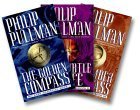
There are books that you can read while laying flat on a mattress, and there are books you have to sit up to read. The Amber Spyglass, the final installment in the His Dark Materials trilogy is one of the latter. Despite the fact that I was nursing the cold that wouldn’t die while reading it, I was completely upright, reading about Lyra and Will, and their final journey through the world of the dead, and back to their own separate universes, finding love, and maturity, along the way.

Is it wrong of me to wish that my Zorro-dog was really a daemon like Pantalaimon, not for the shape-changing feature (which goes away once you reach a certain level of maturity anyway) but for the ability to communicate? As I was reading about Lyra and Pan I was often distracted by their relationship, wishing I could explain to Zorro why he’s taking all these pills.

Even so, it was a satisfying end to the story, and I’m probably going to pick up Lyra’s Oxford as well.

The Subtle Knife

by Philip Pullman

If reading fantasy novels that made you think counted as using exercise equipment I would be incredibly buff, because this week, I finished The Subtle Knife, the second novel in the His Dark Materials trilogy that opened with The Golden Compass.

In this installment of Lyra’s story, which opens in “our” version of Earth rather than hers, we meet young Will Parry, son of a missing adventurer and a mother who has clearly had a grief-induced nervous breakdown. Will accidentally finds a doorway to another world, which just happens to be the same world Lyra arrives on following the end of the first book. They eventually join forces, helped along the way by Lee Scoresby, Iorek Byrneson (the armored bear king), witches, angels, and human scientists, as they must also outwit not only Lyra’s mother (Mrs. Coulter) but her father the previously-assumed-to-be-a-white-hat Lord Asriel.

While this is very much a middle novel, setting up relationships and feeding us information to prepare us for book three (which I also finished this week), it was still a satisfying read. Lyra and Will both develop from precocious kids into complex characters, and learn to use their innate skills (like lying and storytelling, or the art of not being noticed) to help their cause.

There is, of course, much talk about Dust, or elementary particles, of Shadows and Spectres and Angels, but it is in no way smarmy or pandering. These books may technically be targeted to young adults, but there’s a reason they’re found in the general sci fi/fantasy section of most bookstores.

Tales from the Captain’s Table

edited by Keith R. A. DeCandido

Easing back into the SEO world of cpm and cpa, and various other acronyms, after ten days of beachy bliss was difficult, so I did what every avid reader does: I bought some comfort books. One of these was a Star Trek book: Tales from the Captain’s Table. It’s a collection of short stories from various ship captains in the Trek-verse – Picard, Riker, Demora Sulu, and others, and they’re tied together by the fact that they’re all told in the Captain’s Table, a special bar with entrances from many worlds, where only ship captains are welcome.

Cap, the bartender, is glimpsed in small interludes, and the bar itself reforms to the specifications of whatever a given patron expects. I like storytelling, and I like the concept of the neighborhood cafe / bar / pub, so this book appeals to me on many levels.

While I don’t always like short stories, in this format, they’re the logical choice.

After reading this book, I felt much more at home inside my head.

Rises the Night

by Colleen Gleason

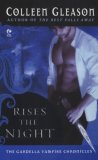
Rises the Night isn’t just the second installment of Colleen Gleason’s series about Victoria Gardella, slayer of vampires and wearer of lace and corsets, it’s also the second novel in this period that I’ve read and enjoyed, and it’s all because Gleason manages to make her characters ride the edge between being truly period and truly contemporary.

As with the original book in the series, a continuing theme is protagonist Victoria’s struggle between the demands of the society in which she lives, and the calling she has answered. While the first novel raised that issue, however, this one really explores it, as well as giving Victoria a bit of dark romance on the side.

I’m afraid to even mention character names because I don’t like to spoil things, and I’m terrible at not giving away plot points. Suffice to say that even though Victoria is wearing bodices and full skirts instead of sleek black port authority clothing, she is every bit as much an action hero as a certain blonde vampire slayer we all watched on television, and every bit as star-crossed when it comes to love.

Read this book!

The Rest Falls Away

by Colleen Gleason

I’m not a huge fan of the Regency period, and especially not a fan of Regency romances. All those demure teas and heaving bosoms tend to cause a lot of eye-rolling around here. When an author takes the time to visit my blog, however, and pitch her own work, without being at all arrogant, but just being another blogger, I take note. Colleen Gleason left a comment here a few weeks back, and even though the period her Gardella Vampire Hunter series is set in is not my favorite, I’m a sucker for bloodsuckers being offed by spunky heroines, so HAD to check out her work.

The Rest Falls Away introduces us to Victoria Gardella Grantworth, debutante (though a little older than the other young women coming out that year, due to family issues), and the latest to be called to the family tradition of vampire hunting. In this – being chosen rather than doing the choosing – she is not unlike the more modern Buffy, whom the author herself notes is an influence.

What follows, once Victoria takes up her stake and commits to her destiny, is not bodice ripping (a little slow unbuttoning, perhaps…) or bosom heaving, but a realistic presentation of what a female action hero would have had to deal with if living in such a time. Skirts not meant for running and fighting, pants not acceptable on the female form, sleeves meant to be frothy rather than fitted…fashion alone is a major issue, and not just in terms of where one can hide a stake.

There is, of course, requisite romance with Phillip, the Marquess of Rockley, and – as always happens when one of the characters is a hero – romance is not a reward as much as yet another thing to be balanced and protected, or pushed aside when a life must be saved.

Gleason’s characters all ring true, even those like Sebastian the owner of the vamp-friendly bar who are a bit over the top, and her plot moves at a comfortable pace. Maybe I was inspired in part by the season – I’m writing this review having just given the last of my candy to a stray trick-or-treater, after all – but not only could I not put this book down, I’m already a third of the way through the sequel.

You’ll note Ms. Gleason’s presence in my blogroll. You’d do well to include her works on your shelves.

Halloween Hit List: Carpe Demon (& Sequels)

Since it’s Halloween week, I thought I’d spotlight some of my favorite books with monsters, vampires, and other supernatural themes. As it’s Monday, and I’ve got a slight cold (just enough to make me crabby) I thought I’d start with a lighter offering.

Julie Kenner’s Demon Hunter
books, which began with Carpe Demon are all about Kate: wife, mother, and secret demon hunter who has to balance raising a teenager, keeping her young son from her second marriage in baby clothes, helping her husband’s career, and, oh, yeah, killing demons in places like Wal-Mart and the school basement.

Along the way, she drags in a good friend, and has many adventures of both the comic and creepy sorts, with some great sale items picked up along the way.

If you’re tired of the protagonists in such books being teenagers and college students, and want to read about a horror heroine with chick-lit sensibilities, you must check these out.

STTNG: Q & A

Star Trek: The Next Generation - Q & A

by Keith R. A. DeCandido

The thing about Star Trek novels, for me, is that they’re sort of like Caribbean cruises: you get a taste of the exotic, but you do so from a safe, comfortable environment.

Keith R. A. DeCandido’s Q & A, his latest addition to the Star Trek: the Next Generation collection is no exception. In fact, it’s like the part of the cruise that involves fruity drinks with cute umbrellas and dancing into the night, and that, really, is how it should be.

In this novel, we see a different side of Q, the part that actually has a purpose, and a motivation beyond just having fun – though fun is never ignored if it comes up – but we also get to have some emotional closure for the loss of Data in Nemesis, as Geordi warms to the woman who has his friend’s old job, and some story swapping and healthy reminiscing goes on. We have Picard and Beverly Crusher in an actual, healthy relationship, and we have the usual saving the universe story, and all that is wonderful.

But then DeCandido transcends wonderful, by mixing in references not just to every single appearance by Q in the television canon – EVER – but also by relating the plot to key moments from the show that many of us would never have expected.

If you’re any kind of fan, you’ll appreciate the in-jokes. If you’re not, you’ll still enjoy the story. Either way, for a good time, read Star Trek the Next Generation: Q & A as soon as you can.

Harry Potter and the Deathly Hallows


by J. K. Rowling

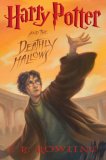
And so it ends – the series that has gripped children and adults alike for ten years now has come to a close. I read it overnight, after having to put it aside for several hours and leave the house (actually, I took it with me, but there was no opportunity to read). I was expecting to either love it or hate it. Instead, while there are a few elements I would change, if I could, I left the book feeling satisfied.

As I discussed with a friend, the Harry Potter books are not high art, but that’s okay, because we need mind candy. We need to sometimes read things just for the pleasure of falling into the story. These books are great for that, because whether it’s Hermione, the ultimate geek girl, Harry, the orphan who overcomes his upbringing, Ron the perfectly normal kid, or even Tonks, who hates her “normal” image, or silky, snarky Severus Snape, we find someone to identify with. For me, it was a blend, for others it’s one character, but the identification is there.

With this book, there is no more tossing it off as kiddie lit, though. This book is bloody, and violent. Our heros are fighting a war, and while they may use wands and magic instead of guns and bombs, people are still getting hurt and killed.

Spoilers Abound:
Continue reading