In Their Words: a guest post from Julia Ibbotson

I love learning about how and why authors choose their material, and I love even more when authors find inspiration in their normal lives, so when I was offered the opportunity to have Julia Ibbotson write a guest post about her amazing book, The Old Rectory: Escape to a Country Kitchen I had to accept. I think her story is compelling, and I want to make all the recipes RIGHT NOW. But don’t take it from me, let Julia tell you about it in her words.
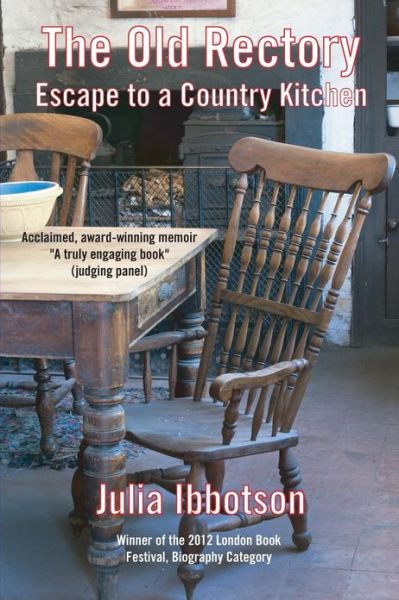
The Old Rectory by Julia Ibbotson

English afternoon tea and cakes in a Victorian rectory….
I wrote my first novel at the tender age of 10 years old, and I was desperate to be an author. The book was about my passions at the time: horses, farms and childish adventure, set in quintessential English countryside with afternoon tea and cakes on the large rectory lawn after a gallop in the hills…a local mystery solved over tea, in a sort of early teashop/coffee house mystery style. The stuff of romantic dreams for a little English girl from the city suburbs! But it never even made it to the publisher’s desk, and remains unpublished to this day!

Then, many years and two marriages and a long career in education later, on a romantic whim, my husband and I bought a dilapidated Victorian rectory in the middle of the English countryside, a mile from the nearest village, and spent the next four years renovating and restoring the house and gardens to their former glory.

I researched the house’s history: who lived there? What was it like for them? What happened to them? And because I love cooking for family and friends, I also wanted to incorporate recipes in my book: what were our family favourites? What recipes did previous occupants make? What did they eat in Victorian times or in the world-wartime when food in England was scarce? I documented it all and found my friends from across the world loving the idea: “Write a book about it!” Biting my nails with doubt, I decided to take a chance.

It was to be, I decided, the true story of our renovation of the rectory, but also about the history of the house and the village, and, because the kitchen was, and is, the heart of the home, I wanted food to somehow be the thread that held it all together. So I included recipes at the end of each chapter: cream scones, chocolate fudge cake, sticky toffee pud….

I wrote every weekend after a long week at work as a senior university lecturer. I wrote in my vacations. I took some annual leave simply to write. Once again, the creative juices began to flow, after many years of writing academic texts to a formula. I found that I was really enjoying it; so much so, that if I didn’t get to write on a particular day I felt lost.

Yes, some days it was hard going, some days I spent far too long on the distractions of Facebook and other social media, some days there was too much coffee drinking. At times I doubted my ability to write a whole book. But overwhelmingly I loved it. And gradually I got into a routine of writing and scheduled my days in the same way that I scheduled my professional days in my paid work. After all, I wanted to be a professional writer!

My book took shape and took on a life of its own. And then it was adopted first by an American publisher and now, this year, by a UK publisher. It felt wonderful! An author at last!
The Old Rectory has won awards at international book festivals and five star reviews, so this new author is beaming over her tea and cakes on the rectory lawn – or even over bubbly and chocolate fudge cake (from the recipes in the book, of course)!

I am now engaged in writing the first novel of a trilogy which follows a woman’s life through from the 1960s to the millennium. The first is called Drumbeats and will be out later this year; it’s set in the 60s in West Africa. It is a story about romance and tragedy against the backdrop of a small war-torn nation, about a young girl finding out what it means to grow up. Please do look out for it. Like The Old Rectory it will be available from amazon.com, amazon.co.uk, and Barnes & Noble, in paperback, Kindle and Nook.

Thanks for sharing my English afternoon tea and cakes on the rectory lawn today!

About the Author:
Julia Helene Ibbotson

Julia Ibbotson is the award-winning author of The Old Rectory: Escape to a Country Kitchen, first published to acclaim in the USA and now re-launched with a brand-new cover by her new English publisher in the UK. Julia has been writing creatively all her life (unpublished!) but her day jobs to pay the mortgage have been as a school teacher and latterly a university academic, gaining her PhD at the age of 57. She delights in being a wife and mother to four, with four little grandchildren. She loves reading, gardening, growing food, cooking for family and friends and country life. Having published many academic texts and papers, she came late to actually publishing her creative writing, at the age of 60 plus, when she was persuaded to write the story of the renovation of her Victorian rectory in The Old Rectory. She has combined memoir, history, research, story and recipes in this first published book, which has won a number of international book festivals in the biography category, gained 5 star reviews on Amazon, and has been widely featured (along with her house) in the media. She has begun to delve into the world of blogging, Facebook and now has her own website at www.juliaibbotson.com at which she also posts blogs regularly, about writing, life and her passions. Her new project is a trilogy of novels following the life story of a new character, Jess, through from fleeing to West Africa as a volunteer teacher/nurse in the 1960s to the millennium. The first of the series, Drumbeats, is due to be published later this year. You can find out more on her website and on her author page on Amazon.

Connect & Socialize with Julia!
TWITTER| FACEBOOK| YOUTUBE
The Old Rectory banner

About the Book:

Author Julia Ibbotson and her husband glimpsed the old Victorian rectory on a cold January day. It was in dire need of renovation, in the midst of the English moorlands and a mile from the nearest village, but they determined to embark on a new life in the country, to make the sad neglected house glow again and to settle into the life of the small traditional village. As Julia researches the history of the house and village, supervises the renovations and cooks for family and friends, she records their journey. This real-life, award-winning account focuses on the quest to “live the dream” and, in the end, to find what is important in life. As the book foregrounds the centrality of the kitchen as the pulse of the family and home, each chapter ends with delicious but easy recipes, both current favourites and those from the historic period unfolding within the chapter: Victorian, Edwardian, wartime and present day. Reviewers have been fulsome in their praise, including “ enchanting”, “a talented writer”, “charming story”, “delightful”, “a jewel”, “ a great writer”, “inspirational”, “truly engaging”, and “destined to become a classic”.

Purchase your copy at AMAZON.

Watch the Book Trailer:

This post is part of a virtual blog tour.

Review: Whirlpool, by Eileen Enwright Hodgetts

Whirlpool
Eileen Enwright Hodgetts

Product Description (from Amazon.com):
The year is 1923 and the jazz age is in full swing. Evangeline Murray, a young widow from Ohio, is recruited by the Women’s Freedom Movement to represent the spirit of modern womanhood by going over Niagara Falls in a barrel. Evangeline eagerly embraces her opportunity to achieve fame and fortune, until she sees the power of the River and begins to understand the risk she is taking. Joshua McClaren, an enigmatic battle-scarred veteran of World War I, and the best boatman on the river, reluctantly agrees to launch the headstrong Evangeline. Joshua has seen hundreds of bodies surface in the Whirlpool below the Falls, and has faced death on the battlefields of Flanders and has no respect for the charming, impetuous Mrs. Murray, and her desire for fame. Before the barrel can be launched, each of them will have to face their own demons, painful secrets will be revealed and the Niagara Rivers will claim two more lives. Inspired by true stories of the Falls, Whirlpool is a romance, an adventure, and the closest that most of us will ever come to taking the fateful plunge over the Falls.Whirlpool is a fiction that is based on reality. Seven people have tried to ride over Niagara Falls in a barrel. Four have succeeded and three have died. The first person to make the attempt was Annie Taylor, a middle aged school teacher from Michigan who made a successful journey in 1901. Barrel riding at Niagara Falls is now forbidden by law, but at the beginning of the 20th century Niagara was a haven for daredevils of all types, and many of their exploits are included in the novel.

My Thoughts:
We live in an age where people put anything and everything on YouTube, to the point that, even when something disturbs us, we’re largely unaffected by it. If someone were shoot Niagara Falls in a barrel today, we’d share the video on Facebook, and make rude comments about what they were wearing. In 1923, however, stunts like that weren’t widely disseminated by smartphones and wifi tablets – it was up to the person doing it to make a splash (yes, that was a pun) with the press.

Whirlpool is, in part, about a young widow going over the falls in a barrel to make a political statement about women’s equality (something, I might point out, that we’re still fighting for almost a hundred years later), and that character, Evangeline Murray is a good choice for the role: independent, smart, and with little to tie her to the rest of the world.

But while Whirlpool is about Evangeline, it isn’t only about her. She’s part of a quartet of women – trouser-wearing Cornelia, simpering Iris, and sturdy Nell are the other three – and all of them are equally three-dimensional, interesting, and different from the rest. Reading about them is watching feminism launch its own wooden barrel, and I found myself nodding my head to various things each said.

Then there are the men. Standout, of course is Joshua McClaren, Nell’s widowed brother, who is a WWI vet and an expert on the river and, as much as anyone can be, the Falls.

(The Falls, it must be said, are a character – or characters – in their own right.)

Of course there are the inevitable romances, political exchanges and near-death experiences, but what, in other hands, would play like a Silhouette romance is, thanks to author Hodgetts’ deft care, a really compelling story of people who could be real, and situations that feel like the real life stories they were based upon.

Whirlpool is an excellent read, not just because of the period, not just because of the history lessons it sneaks in, but because, first and foremost, it’s a really good story.

Goes well with: A hot toddy. And maybe some bread pudding.

Review: The Sparrow and the Hawk by Meg Lacey

The Sparrow and the Hawk
by Meg Lacey

Product Description (from Amazon.com):
Jillie Harte, code name the Sparrow, a documentary film maker is an agent for the NAS (Normal, Abnormal, Strange) Agency. Her assignment-find The Carmaletta Choker before it falls into the wrong hands and destroys the world. Franklin Doherty and associates are suspected of having the choker, and they are definitely the wrong hands! To get close to Franklin, Jillie is producing a film on “Decoration, Fashion and Accessories Throughout History,” featuring his antique collection. Her assignment is complicated by Griff Ryland, her new, hot cameraman, who is also looking for the necklace. Griff is an enigma. Is he friend or foe? And why is she so distracted by his “pure sex on a stick” appeal? Like the Sparrow, Griff, aka the Hawk, needs to retrieve the choker. It disappeared from his dimension years before, and his job is to bring it back. Since he can shapeshift into a hawk or a mountain lion at a moment’s notice, Griff feels certain of success. But he doesn’t bargain for a sassy, sexy redhead-and for his overwhelming urge to settle their differences in bed. Now Griff and Jillie must not only overcome the deadly dark forces who want the choker, but they must also face their developing relationship. And they thought saving the world from evil and chaos was hard!!!!

My Thoughts:

When I received the ARC of The Sparrow and the Hawk, the latest novel from Meg Lacey, I was already excited. I’d been asked to review it, and was already in love with the story just from the description.

Reading it only cemented my love for this genre-blurring adventure. It’s a paranormal romance, but it’s also an urban fantasy, a black comedy, and a mystery/thriller with a dash of horror. It’s fast-paced, funny, and completely absorbing, and the only flaw is that it’s BOOK ONE in an intended trilogy, so while the core story is wrapped up, there are enough dangling threads to leave readers like me knotted up in frustration and anticipation.

Let’s talk about the main characters: Jillie is an unconventional heroine. Sure, she works for the NAS (Normal, Abnormal, Strange) agency, but she’s also very real – and flawed. She’s a little impulsive and she acts like she has something to prove – as if she’s not working for her own fulfillment but to please her dead mother. Then there’s Griff, whose back story unfolds more slowly. We, the reader, know he’s a shapeshifter, but Jillie does not, though she does know (as do we all) that he’s sex on a stick. (A note about Lacey’s world building here: I like that Griff’s shapeshifting comes at a cost – he has to expend real energy in order to do it, which means it’s not an instant fix to every problem.)

The other characters, sinister Declan, flamboyant Franklin, and Nigel (who seems to run hot and cold) as well as the women (Perdita, especially) are all vivid, as well. Franklin’s house really caught my attention, reminding me of a cross between the Winchester Mystery House and the game board from Clue. (When Jillie makes an offhand remark about the game of Clue, I felt vindicated.) And Franklin himself is a character I would have liked to know better. When we meet him is mostly-dark, but I think seeing his progression – descent, even – would make an interesting pre-quel.

Lacey knows how to set a scene. From Franklin’s house to the Arizona desert to a sort of otherspace within each where the walls between normal and strange completely crumble, there is always a sense of place. You can’t always track the journey from point A to point B, but you always know what each point looks and feels like.

Bottom line? I loved this novel. I’m looking forward to a time when my review queue is a little thinner so I can re-read it. I CANNOT WAIT for the next in the series.

Goes well with…hot tea and a chocolate chip muffin.

In Their Words: Author Kyra Gregory talks about SECRETS CLAD IN LIGHT

When I sat down to read Kyra Gregory’s novel Secrets Clad in Light I wasn’t sure what to expect, but her unconventional 19th-century romantic thriller hooked me fairly quickly. (Read the review here.) Today, Kyra answers my questions about the book, among other things.

Kyra, tell us a little bit about who you are and what hooked you on writing.

I’m a young writer on the island of Malta. I’m quite an introverted personality but I love putting everything out there into a story.

It started out very simply; at a point in my life when I felt like I had nothing I wanted something that was my own. It had to be something I created that nobody could touch or try to take away from me. Writing came quite naturally to me, I still don’t quite know exactly how it started but when a friend of mine found out he pushed me to keep doing it because he said my words made people feel something.

Kyra Gregory (provided by Kyra Gregory)

Secrets Clad in Light is set in the 19th century. What about that period inspires you? Why choose that period for this story?

I’m not sure what it is that I love about that period. It’s so different to now in so many ways but the 19th century was when some things really began advancing, such as medicine. The clothing, the speech, the setting; I think it’s all so beautiful and interesting.

I wanted to write a story in that period for a really, really long time but it was killing me trying. When you write a story set in the past you have to be really committed to the history; you can’t easily blow up a building or something to that extent without needing to provide some sort of explanation as to why we don’t know of this. Unless, of course, you’re writing fantasy. Still, I’m not one to easily give up so I thought I’d try one more time; I was successful finally.

The lead character in this book is in love with another man. Did you set out to write a gay love story, or do you think of it as a love story in which the characters happen to be gay?

Before I started publishing I always saw what I wrote as simply a romance novel or love story, regardless of who the characters were in love with. It was only once I started publishing that I paid more attention to this; to me, it’s still just a love story and the characters happen to be gay.

In addition to romance, Secrets Clad in Light is also a mystery/thriller, and I don’t think Sherlock Holmes would have felt out of place in this story (or at least his Baker Street Irregulars wouldn’t have). Are you a fan of the mystery/thriller genre in general? Did those elements of the story make it more difficult to plot than if it had been JUST a romance?

I do really enjoy the mystery/thriller genre, but I never had any faith in actually writing it. I don’t think there was a week growing up where someone in the house didn’t watch a Sherlock-Holmes-type mystery. I never planned on writing one, but Mary was just so stubborn that she was pushing the story in that direction. I chose to go with it. That direction caused me quite a bit of trouble but I love to experiment with new things so the challenge was fun.

Your characters, particularly Henry and Mary, are very vivid, complex people, each with their own set of secrets. Did you base them on people you know, or are they entirely your own creations?
They developed all by themselves; I gave them a few traits as the story started, but before I knew it they had completely developed.

Henry remained quite similar to what I had first imagined him to be, although he wasn’t really inspired by anyone I knew. Mary, though, became something entirely different; I still look back sometimes and wonder, “What happened to you?” Even as I ask that though, I have no longer have a clue what it was that I had expected from her.

Henry’s love-interest, Seth, is injured when we meet him, and spends the vast majority of this novel recuperating and essentially mute. Did your decision to effectively deny him any dialogue cause any challenges when trying to define his personality?

I often asked myself if I had made a mistake doing that. I really and truly enjoy writing dialogue, so when it came to him I did begin to wonder what on earth possessed me to do something like this.
Then I would remember how much conversation between people is more body language than actually spoken word and it made things a bit easier.

I still feel that there is a certain part of his personality that would have shone better had he been able to speak, but also if that were possible I feel like the story would have been very different.

We, the reader, are doled out pieces of Mary’s story in tiny bits, as she warms up to Henry. As the author, do you have a fully-developed backstory for her? Is there any chance of another book with Mary’s story expanded?

For quite some time while writing, I only knew as much about Mary as Henry did. Now, I can say that I have a bit more of her past, and her personality, figured out. That being said, I’m not too sure if it will ever be revealed. There’s something appealing in keeping it a secret. I’m not too sure though; maybe if I can come up with a story on Mary’s terms she’ll allow me to reveal what I know. I’m sure she’ll find some new secrets to keep from me by that time.

I really loved the two main settings in the novel – the sewer lair where this unconventional family coalesces, and the abandoned bakery they move into later. What inspired you to use the sewers?

Something interesting about the 19th century is the distinct line between the different classes. Most recently we often see the 19th century, and similar periods, as quite extravagant and I wanted something different.

I thought it suited the characters also. In the sense that on the surface late 19th Century London was seen as something thriving, improving, but a lot of people forget what was beneath the surface of it all; that there were still plenty that were poor, hungry and living in slums. The characters are similar; though they appear to be one thing to the social circles they form part of there are layers to their personalities that were kept hidden for the sake of those ideals.

Is there a specific passage in Secrets Clad in Light that you particularly love? What is it?

I truly enjoyed writing the scene between Mary and Henry in the church. It was a moment in which, unexpectedly, Mary and Henry opened up to each other a little about their pasts, their fears and hopes. It felt very easy to write and there was something about it that really touched me.

This is your second direct-to-Kindle publication. What made you decide to publish your work this way?

Although I had never thought of trying to make a career out of my hobby a few years ago I sent a manuscript out to a few publishers just to challenge myself as a writer and see what kind of feedback I would receive.

I got a few rejections, one no-answer and one acceptance. That acceptance was on the condition that I changed the gay romance into a straight one. I’m a control freak and, while I appreciate people’s opinions and advice, in the end I just want to do things the way that suits my vision the best. I don’t like being told a project can’t go the way I want.

For this, self-publishing was the way to go. I started with Kindle to test the waters and I hope to branch out a little more soon.

What should we look for from you in the future?

I want to keep trying new things because I love the challenge. Very soon I will be re-writing and extending a series that I started a few years ago so there’s that to look forward to. I have quite a few projects lined up and hopefully it won’t be too long of a wait.

Social media is a key part of promoting any book these days; where can readers connect with you on the web? How about Facebook, Twitter, and Pinterest?

I try not to have too many sites and such; it’s difficult to keep many up to date constantly but I’m always on twitter and recently started a page on facebook. Of course, there’s also my blog.
Twitter: @Kyra_Lyrical
Facebook: Kyra Lyrical
Blog:KyraLyrical
Goodreads:Kyra Gregory

Review: Secrets Clad in Light, by Kyra Gregory

Secrets Clad in Light
by Kyra Gregory

Product Description (from Amazon.com):
London, 1888. Henry decides to abandon all social conventions and rescue his lover, Seth, from an abusive household. He has replayed the moment in his head and has always known it wouldn’t be easy. He has never thought that it would be Seth who would cut his time too short. With Seth barely breathing, Henry must make the hardest decision of his life: try to save Seth, possibly condemning him to a life of suffering, or let him pass on in peace. But the arrival of a young stranger forces Henry’s hand, doing little to ease his qualms of uncertainty as everything he thought he knew changes.

Caught between self-doubt and his own selfish desires Henry learns to fight it all, using this stranger as a light to shine on what he hopes is the right path… All the while aware that there is still so much he doesn’t yet know…

My Thoughts:
Like many mystery lovers, my introduction to Victorian England was through the Sherlock Holmes mysteries. While Kyra Gregory’s novel Secrets Clad in Light doesn’t feature any detectives at all, she’s captured an underside of London that Holmes and his Baker Street irregulars would find familiar. Add to the general mood a subterranean lair in the sewer tunnels and, later, and abandoned bakery turned into a home, and the vivid descriptions will have you (at least at times) wishing for a hot shower and a change of clothes.

But a sense of place is only part of a story, and in the other parts – character and plot – Gregory does not disappoint. Her lead character, Henry is complex and three-dimensional. You see his love for Seth, his concern for him, his concern that he is forcing a relationship, or not making the right choices. In the mysterious Mary, part healer, part helpmate, we glimpse the way women of this period were still hobbled by the conventions of society. And then there’s Seth, Henry’s love, who is injured in the first pages of this novel, and remains essentially mute through the end of the book. In other hands, such a character would fade into near-nonexistence, but Gregory uses body language and non-verbal noise to convey his thoughts and feelings, and leaves us with a man who is no less vivid as his speaking associates.

Also of note is Gregory’s choice to do a period romance about two men. While the story is, itself, chaste (especially as modern romances go), in the late 19th century, such a relationship was certainly not one that would ever be displayed openly – even if “openly” meant “to other denizens of the sewers.” Still, the book puts plot and setting above social commentary. The lovers happen to both be men, but that relationship serves the story without overpowering it.

It struck me, as I was writing interview questions (check back here on 9/25 for the answers) for the author, that the late 19th century, right at the cusp of electricity obliterating gaslight, was really the last time that people in the modern world could live “off the grid.” I have to wonder if that knowledge inspired the author at all, but whether or not it did, Secrets Clad in Light is eminently readable, and even has a compelling twist ending.

Goes well with a steaming mug of English tea (Darjeeling perhaps?) and a bowl of stew.

Review: Summerland, by Elin Hilderbrand

Summerland
Elin Hilderbrand

Product Description/Synopsis (from Amazon.com):
A warm June evening, a local tradition: the students of Nantucket High have gathered for a bonfire on the beach. But what begins as a graduation night celebration ends in tragedy after a horrible car crash leaves the driver of the car, Penny Alistair, dead, and her twin brother in a coma. The other passengers, Penny’s boyfriend Jake and her friend Demeter, are physically unhurt – but the emotional damage is overwhelming, and questions linger about what happened before Penny took the wheel.

As summer unfolds, startling truths are revealed about the survivors and their parents – secrets kept, promises broken, hearts betrayed. Elin Hilderbrand explores the power of community, family, and honesty, and proves that even from the ashes of sorrow, new love can still take flight.

My Thoughts:
Summer just wouldn’t be summer without a new book from Elin Hilderbrand, and her latest novel, Summerland was exactly what I needed this year.

I should confess that my introduction to Hilderbrand’s Nantucket came about two years ago when I was browsing in Half Price books with my husband and many visiting relatives. I found her first seven novels there, took them home, and spent most of April reading them before boxing them up and sending them to my mother in Mexico.

This year’s read, Summerland seemed a little more poignant than previous novels, mainly because it opens with the death of a teenager. As well, a good chunk of this novel actually takes place in Australia, where one of said teenager’s friends is ushered by his depressed mother and well-meaning father.

Nevertheless, Hilderbrand works her magic, and gives us slices of summer at the beach like no other can (although Ann Rivers Siddons and Dorothea Benton Frank certainly have their own charm). As always, her female characters are well developed, though not without flaws, and her male characters aren’t quite as rich (though, in this novel, the men we meet are better developed than they have been so far).

While I am always happy to have a new Hilderbrand novel on my summer reading list, one thing that always disappoints me is the fact that her various novels don’t seem to occupy the same version of Nantucket, but separate versions that exist separately for each book. Still, her work is always entertaining.

Goes well with…lemonade and homemade berry pie.

Retro-reading: STTNG: A Time To…

It’s no secret that I revel in escapist reading from time to time. Between January of this year, and the beginning of July, I’ve been re-reading the Star Trek: The Next Generation – A Time To… series, a collection of nine novels, the first eight of which are in pairs, that span the time between the last two Next Gen movies (Insurrection and Nemesis).

The specific novels are:
STTNG: A Time to be Born, by John Vorholt
STTNG: A Time to Die, by John Vorholt
STTNG: A Time to Sow, by Dayton Ward & Kevin Dilmore
STTNG: A Time to Harvest, by Dayton Ward & Kevin Dilmore
STTNG: A Time to Love, by Robert Greenberger
STTNG: A Time to Hate, by Robert Greenberger
STTNG: A Time to Kill, by David Mack
STTNG: A Time to Heal, by David Mack
STTNG: A Time for War, A Time for Peace, by Keith R.A. DeCandido

You can read them individually, I suppose but they’re better savored as a whole collection, and while each of them have great moments, together they give a really plausible picture of how Starfleet reacted to the events of First Contact and Insurrection, explain why Data says in Nemesis that he has no feelings after two and a half films worth of emotion chip issues, and set-up the wedding of Will Riker and Deanna Troi, and their move to the U.S.S. Titan.

It’s no secret that I’m a great fan of Keith DeCandido’s work, so it should come as no surprise that his book, the last in the series, is my favorite. His take on the canon characters is always spot-on, but he also adds a political background – think “The West Wing in Space” – that I maintain would be an awesome series in and of itself (he revists the political aspect of the United Federation of Planets in a subsequent novel, Articles of the Federation).

Star Trek novels are my comfort-books, and I often read them when my day job has me so exhausted that I don’t have the brain power for reading deeper fiction, or writing my own stuff. There’s a ten-year span of TrekFic that I think of as the “DeCandido Years” where continuity was followed and all of the writers used some of the same original characters. These are, in my opinion, the best of the genre, and the A Time To… books are the best of the era.

Review: The Bookie’s Son

The Bookie’s Son
by Andrew Goldstein

Product Description (from Amazon.com):
The year is 1960 and the place is the Bronx. All twelve-year-old Ricky Davis wants to do is play stickball with his friends and flirt with the building super’s daughter. But when his father crosses gangster Nathan Glucksman and goes into hiding, Ricky has to take over his father’s bookie business and figure out a way to pay back his debt—before the gangsters make good on their threats. Meanwhile, Ricky’s mother, Pearl, a fading beauty of failed dreams, plots to raise the money by embezzling funds from one of her boss’s clients: Elizabeth Taylor. Fast-paced, engrossing and full of heart, The Bookie’s Son paints the picture of a family forced to decide just how much they’re willing to sacrifice for each other—and at what cost.

My Thoughts:
The Bookie’s Son came to me from the publicist, who described it as a “coming of age” novel, which it is, in that protagonist Ricky Davis, whom we first meet when he’s borrowing his grandmother’s false teeth to play-act with (and what kid hasn’t been tempted to do the same?) goes through a lot of life lessons, including his Bar Mitzvah, over the course of the book, but to me, it read like a dark comedy as well, because even though the situations were often grim (Ricky watches his father collect debts on behalf of a crimelord, etc.) they’re treated with an all-too-human sense of humor.

That balance of humor and drama is one of the things that makes this novel sing, but another is the author’s use of language. I grew up in a culturally Catholic, New Jersey Neopolitan family. It’s a culture that speaks with a very specific rhythm, enhanced by the use of Italian terms and local slang. Goldstein’s book is set in the Bronx in the 60’s, in a Jewish family, but that, too, has a very specific linguistic rhythm, which can be difficult to capture on the page. And yet Goldstein has, to the point where the reader – or at least this reader – can hear that slightly nasal Bronx accent, hear the faint Eastern European accent in the Yiddish words, hear the kids using their street language among themselves, and slightly better language at home…and you are there. There among the clattering dishes, ringing telephones, guys (most likely in scary plaid pants) calling to place bets…sure, his descriptions are good, but it’s use of language that really puts you in the scene.

I have to confess, that it’s Ricky’s MOTHER I was most drawn to – maybe because I’m a woman, or maybe because I want to know more about the process that makes a person willing to sacrifice herself (not her life, but her SELF) for others. Sure, she’s drawn a bit like a comic character, and in other hands her job as the assistant to a theatrical lawyer who handles clients like Elizabeth Taylor and Marilyn Monroe would be written for pure hilarity, but in Goldstein’s hands, she has this lovely pathos to balance the preposterous-ness, and comes across as vibrant and interesting.

While I wouldn’t necessarily have chosen this book from the shelf in a bookstore, I’m really glad I crossed paths with it, because The Bookie’s Son is a great story about people who are as real as any of us, leading gritty, funny, earthy, HUMAN lives. Also? It can’t be said enough: the dialogue is to die for.

Goes well with: blue Jell-o, or a chocolate egg cream, but not together because that would be gross.

The Sunday Salon: A Tale of Three Lauras

Over the last week or so, I’ve been living on the prairie. Not the North Texas prairie that is still crusty with drought, despite recent and forthcoming rain, though of course, technically our city IS on the prairie, but the prairie as brought to life by Laura Ingalls Wilder and two of her modern fans.

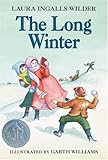
The Long Winter

I grew up reading the Little House… books, and re-read them when I moved to South Dakota to marry Fuzzy in 1995. They have new dimension when your husband is from a town just half an hour from the real Little Town on the Prairie, and your new niece and nephews attend Laura Wilder Elementary School!

I read The Long Winter last winter (and early Spring) after we returned home from a trip to Iowa in early February (for a family funeral) and after I found the amazing blog/website Beyond Little House. The members of that site were in the middle of a read-along of that book, and I wanted to participate, but was so busy…and then life exploded in other ways.

During the intervening years, I’ve visited a few of the home sites (De Smet, many times, Plum Creek, Walnut Grove, keep meaning to visit Independence, but never have), read a good portion of the published literature about Mrs. A. J. Wilder, and considered a Laura project of my own.

That consideration has been sparked, recently, by two new(ish) Laura-related books by fans who are roughly my age.

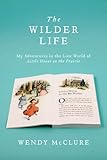
The Wilder Life

The first I encountered is a humorous memoir by Wendy McClure. It’s called The Wilder Life: My Adventures in the Lost World of Little House on the Prairie, and it’s about the author’s journeys to the various homesites, and her attempts to bring a bit of “Laura World,” as she calls it, into her own world. (It’s at this point that I must confess: My mother used to make sunbonnets for me, I dressed as Laura for Halloween, 1977, and I have boiled syrup to pour over snow, but I have never considered buying a churn and making my own butter.)

McClure’s book resonated with me for another reason – her partner’s name (at least, the one in the book) is the same as Fuzzy’s real name.

Unlike McClure, however, I loved the television show. Oh, I knew it wasn’t accurate, but just as I’ve often said of the Harry Potter movies, that show was what might have resulted had the real Laura sold her story to the media herself. Also? It was fun to watch. My friend Jill would come over on Monday nights and we’d do our homework while waiting to see if Laura and Almanzo would finally kiss.

I was, however, a fan of the books first, and there were times in Colorado when there were three feet of snow on the ground and school was closed for days because the buses couldn’t get over the pass that I had the barest glimpse of what that Long Winter might have been like. (After my first real winter in South Dakota, I realized that Colorado winters were mild by comparison. I also realized that as much as I might like to imagine living on the prairie in a claim shanty, I’m a modern woman, and I am DONE with serious winter.)

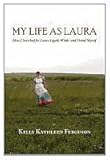
My Life as Laura: How I Searched for Laura Ingalls Wilder and Found Myself

I devoured McClure’s book and wanted more. Coincidentally, I was led to my other Laura-book of this week, another memoir, by a woman just two years older than I am. Her name is Kelly Kathleen Ferguson, and her book – which I read in one day, and finished while soaking in a tub of lavender-scented bubbles – is My Life as Laura: How I Searched for Laura Ingalls Wilder and Found Myself.

Ferguson is a bit wilder than McClure, in that – on a mission of self discovery – she donned a prairie dress, and wore it on a two week marathon visit to all of the midwestern homesites of the Ingalls and Wilder clans. Her book is also funny, candid, and, at times, poignant, and as I read it I almost – ALMOST – wanted to be single again, so I could just uproot myself and move to another city and write.

Her description of her time at Prairie Manor, specifically, made me want to go back to Dakota and spend the night there, even though I HATE the prairie in summer. I was even ThisClose to calling Fuzzy’s family and asking if we could drive up and crash their Thanksgiving, just so we could drive a few miles on the Laura Ingalls Wilder Memorial Highway during the trip.

But that’s the beauty of books – they allow you to live vicariously through another person, and then, put them down having learned something about yourself as well as something about the author.

I enjoyed both of the books I read this week, and have arranged to interview Ms. Ferguson for All Things Girl. I’ve also started a fresh re-reading of all the Little House books, because even if I don’t do anything with it, I have to write the Laura-related story that has been perking in my brain for the last 16 years.

And if I’m sort of wishing I could have a Christmas party where we all get a tin cup, a penny, and a stick of candy, in a room decorated by paper chains and popcorn strings, well, I know of at least two women who probably have the same kind-of wish.

Sunday Salon: Re-discovery

The Sunday Salon.com

Have you ever bought or borrowed a book, either because it looked interesting, or because a friend recommended it, and then found that you’ve actually read it before?

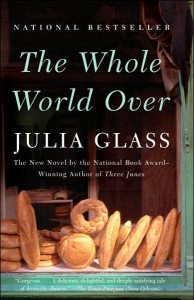
That happened to me recently. I was exchanging emails and blog comments with my friend Becca, because I’d mentioned that one of my favorite books to re-read was Bread Alone. She suggested I might like The Whole World Over, by Julia Glass. Later that weekend, I bought a copy at the local used bookstore, in hardcover, for under $5.

That evening in the bubble bath, I cracked open the book, only to find the opening pages eerily familiar. Sure, there’d been a sense of deja vu when I’d looked at the cover in the store, but I’d just assumed I’d seen similar cover art. Nevertheless, I began reading the book anew.

And the thing is, I don’t mind this sort of rediscovery. I remember that I’d enjoyed the book the first time I’d read it, but I read very quickly, so there are times when, depending on my mood in the moment, certain things catch my attention differently. Example: When I was little, and read Little Women for the first time, the part that I cried through was when Beth died. When I read it again as a young adult, who’d had some experience with love and relationships, I was moved by the scene where Jo refuses Laurie, because on one level, we want these two brash kids to be together, but anyone who’s had a best friend of the opposite gender knows that those relationships never work when they cross into romance.

The Whole World Over, then, is going to remain my “bathtub book” for the next couple of weeks. I know the story well enough that I don’t need to race through it to see what happens, but that doesn’t mean I won’t appreciate a slow, savoring read of it while I soak in lavender-scented bath bubbles.

What about you? Do you ever “re-discover” a book? Do you embrace the situation, or feel cheated out of a new story?