Teaser Tuesday: The Zookeeper’s Wife, by Diane Ackerman

On Teaser Tuesdays readers are asked to:

  • Grab your current read.
  • Let the book fall open to a random page.
  • Share with us two (2) “teaser” sentences from that page, somewhere between lines 7 and 12.
  • You also need to share the title of the book that you’re getting your “teaser” from … that way people can have some great book recommendations if they like the teaser you’ve given.

My teasers are:

But spring floated outside the small rupture in time the war had gouged. For people attuned to nature and the changing seasons, especially for farmers or animal-keepers, the war snagged time on barbed wire, forced them to live by mere chronicity, instead of real time, the time of wheat, wolf, and otter.
The Zookeeper’s Wife: A War Story, by Diane Ackerman. Page 223.

Review: Dog Years, by Mark Doty

Dog YearsDog Years
by Mark Doty
Get it from Amazon

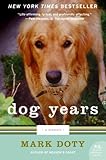
Dog Years was, perhaps, not the best choice of read for a time when I was convinced we were going to lose our chihuahua, Zorro. (He’s got a heart condition, and while we know we don’t have much time with him, he’s no longer in that “death rattle” stage.), but I couldn’t resist the happy golden retriever on the cover.

This memoir of the author’s last months with his partner Wally, of the new relationship with partner Paul, and of his two dogs, Arden and Beau, is a rambling story, loosely chronological, but not entirely orderly, in much the same way that walking the dog around the block really involves zigging this way to sniff a fence post, or zooming the opposite direction to pee on that particular blade of grass, or going wildly off course because it was imperative to chase a bird/cat/squirrel/kid on a bicycle.

A gentle read, parts that stood out for me were moments on the beach at Sandy Hook, NJ, which is where I grew up, and the daily routine of dog stewardship (because really, they own us more than we ever own them), and the pain of loss when each finally went to his end – this isn’t a spoiler – it’s obvious from the back cover that the dogs would not survive the book. I laughed when I read about Arden spitting out his medication, and cried when I read that he suffered from anxiety attacks after 9/11 (the dogs lived a good part of their lives in New York).

Dog Years is, in many ways, a memoir of a man told through the eyes of his dogs, though it’s never in their voice. Author Mark Doty is also a poet, and you can hear the poetry underlying the rhythm of his prose.

Goes well with:: Cool water and bits of cheese to share with a cuddly canine friend.

Teaser Tuesdays: Immoveable Feast, by John Baxter

Teaser Tuesday asks readers to:

  • Grab your current read.
  • Let the book fall open to a random page.
  • Share with us two (2) “teaser” sentences from that page, somewhere between lines 7 and 12.
  • You also need to share the title of the book that you’re getting your “teaser” from … that way people can have some great book recommendations if they like the teaser you’ve given.

My teasers are:

There are always two possible strategies in preparing a meal for the French.

One was novelty. I could present the family with something so exotic that sheer strangeness would keep them interested. I’d done this a few times when I first cooked in France. At various times, dinner guests had been treated to Indian curries, Thai shrimp salad, and Mexican chicken with bitter chocolate mole sauce. We had once – not an experience to be repeated – even taken them to an Australian restaurant that served kangaroo.
Immoveable Feast: A Paris Christmas, by John Baxter. Page 60.

Schuyler’s Monster by Robert Rummel-Hudson

Schuyler's Monster Schuyler’s Monster
by Robert Rummel-Hudson
Get it at Amazon.

Sometime in late 2006 or early 2007, I stumbled across the blog of one Robert Rummel-Hudson, and quickly became engaged. His writing style is upbeat and candid. He’s funny, but isn’t shy about using the word “fuck” when it’s appropriate, and he’s clearly completely devoted to his young daughter, Schuyler. At the time I first “met” his words, he’d just sold his book, and was beginning the long path to publication. When I re-encountered his work about a week ago, sparked by watching Autism: the Musical on HBO, I found that not only had the book been released, but I’d missed the signing in my local bookstore. (We both live in the same metro area, but my end of it is a good hour or so from his end.)

I was disappointed, but vowed to buy the book anyway. That weekend at Borders, among all the new non-fiction about romance, modern philosophy, and diet pills, I saw the book, Schuyler’s Monster, and it was even an autographed copy. I grabbed it, stopped at Jamba Juice, and headed home to read the entire book in one sitting.

I’m not a parent, nor am I particularly interested in children, and I’m generally one to avoid disabled-kid stories like the plague because they tend to be over emotional and / or horribly fluffy. Schuyler’s Monster is neither. Rather, it’s a love story from a less-than-perfect (and therfore more than perfect) father to his (in his word) “broken” daughter.

Why broken? Because Schuyler, for all she’s a bright and mischievous child, has a neurological disorder that not only compromises her fine motor skills, but also makes her unable to form intelligible speech.

The book is as much about Rob’s reaction to his daughter’s disability, and their journey toward helping her work around it as it is an ode to playful and loving father-daughter relationships. Who wouldn’t want a dad who let you watch monster movies, even if you were really too young? I know I would.

This book was moving, yes, but it’s also funny, sweet, nostalgic, and triumphant. Like Rob’s blog, it’s upbeat and blunt. Unlike Rob’s blog, the word “fuck” isn’t used terribly often, if at all. (I should note, I don’t judge blogs by whether or not people curse. I just believe that if “fuck” is the most appropriate expression of frustration, joy, whatever, cheating on it’s use is, well, cheating. I don’t believe people should ever be afraid of language.)

(And actually he doesn’t use it that often in his blog, either).

Seriously, though, it’s a great book. You should read it for the writing alone, even if you don’t like disbled-kid stories, either.
The South Beach Diet Quick & Easy Cookbook, by Arthur Agatston, MD

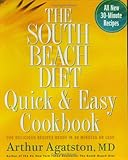
South Beach Quick & Easy The South Beach Diet Quick & Easy Cookbook
by Arthur Agatston, M.D.
Get it from Amazon.

Both of my kitchen sinks are full tonight, because while I was willing to cook, and I emptied the dishwasher I wasn’t in the mood to reload it, but that’s okay, because the one article that’s due tomorrow has been written.

Meanwhile, I can wax rhapsodic about this cookbook. I was looking for quick-meal cookbooks that were also healthy, and found this one at Half Price Books. So far, I’ve made about ten things from it – tonight we had roasted asparagus, and chicken breasts stuffed with spinach and chevre – and I’ve liked everything I’ve made.

More importantly, Fuzzy’s eating what I make, without complaining, even when it isn’t orange.

So, it’s a situation made of win.

When you’re trying to eat healthier, having a cookbook that is simple and doesn’t require hours of prep is essential. I’m all for elaborate meals, but I have a life, you know? If you’re a health conscious person with a busy schedule, I’d recommend this book.

Goes well with a shrinking waistline.

The Tipping Point

by Malcolm Gladwell

I was first introduced to Malcolm Gladwell’s work via my stepfather, who left me his copy of Blink when he was visiting us over Christmas in 2006. I thought that book was amazing, with all of the insights about the first few split-seconds of every encounter.

The Tipping Point is amazing, but in a quieter way. It’s about social and medical epidemics – about how word of mouth works, about the different types of personalities that drive hot-or-not trends, and about how the two merge in almost every aspect of society. In the journey of this concept, the author talks about needle exchanges, AIDS Patient Zero, vintage shoes, Paul Revere’s ride, and various examples of information collection and critical mass.

There’s really no way to review it without spoiling the experience. Read this book.

Bright Lights, Big Ass

by Jen Lancaster

I was a fan of Jen Lancaster’s blog, Jennsylvania before she published her first book, Bitter is the New Black, though I’ve drifted away from regular reading, as happens when there are day jobs and weekend activities, and one’s OWN blog to maintain. Still when I finally got around to reading her second offering, Bright Lights, Big Ass I was happily dropped right back into Jen’s world, in which, like mine, work really does take place while wearing comfy pajamas, but only after reading email, drinking coffee, playing with dogs, etc.

In this book, Jen discusses house hunting, horrible neighbors, weight gain, weight loss, and why she is not among the contestants on Biggest Loser, even though she tried.

As always, her writing is a blend of joyous snark and candid vulnerability, wrapped in pink and orange tissue, and tied with a bow. She even manages to make me forget her Republican tendencies, and just enjoy the ride.

Which really, is as it should be.

A Writer’s Paris: A Guided Journey for the Creative Soul

Quote:

There are always reasons not to write. They appear as wantonly as toadstools after the rain. Entertaining those reasons even for a split second is the path to uncreativity. Write, even if you have a twinge, a doubt, a fear, a block, a noisy neighbor, a sick cat, thirteen unpublished stories, and a painful boil. Write, even if you aren’t sure. Come to Paris, even if you don’t speak French.

Why I Chose This Book:
The small mustard covered volume was staring at me from an end cap full of France-themed books, mostly novels (and I did pick up two of them) but this book as well. It’s designed to look like a moleskine notebook, with a two-inch-wide paper band its only real decoration. I liked the title, it seemed to speak to me.

About the Book:
A Writer’s Paris is part guide book and part writing guide, using the rhythm and flow of the City of Light as a source of inspiration, as much as a recommended place to spend a month writing. The author is a writing coach/life coach kind of person, and has written many works that encourage readers to pursue their creative urges. The particular book is gentle when it needs to be, firmer when it must be, and completely entwined with the seduction that is Paris.

Much of it was common-sense reminders that we all, as writers, need to hear: write every day, make the time, skip tv and write, don’t talk about it, just do it, etc. A good portion of it, however, recommended various neighborhoods in Paris, told you to visit the Louvre, yes, but remember that you were there to write, and even to stop passers-by and ask, “Which of these two things would you rather read a novel about?” then offer two things, to help choose one of the topics in your head. (The improviser part of my personality finds this exercise really appealing.)

Do I recommend this book?
Yes, absolutely. If you are a writer, or think you want to be, you need to read this. If you are involved in any other creative pursuit, you might also benefit from it.

Blink: The Power of Thinking Without Thinking

by Malcolm Gladwell

There books you read that are mildly entertaining, which is great, but there are also books that completely change your perception of the world. For me Blink is one of the latter.

Describing it is difficult. It’s about improv, criminology, psychology, marriage counseling, body language and human interaction…sort of. But it’s also about – more than anything – the split second judgements we make all the time. The first impression that occurs before a first impression is even registered.

And it’s fascinating.

Gladwell’s informal style and self-effacing humor helps, of course, but mostly it’s the material that intrigues.

And, unfortunately, defies description.

My Horizontal Life: A Collection of One-Night Stands


by Chelsea Handler

Chelsea Handler’s tongue just might poke itself through her cheek, if the tone of this collection of anecdotes and vignettes is anything to judge by. A funny, candid, and at times tragically pathetic glimpse at single life with just a touch of neuroses, Ms. Handler’s work is incredibly readable, and compelling in the “I can’t wait to see what she does NEXT” sort of way.

It’s adult content, but that’s as it should be, because to tame it would be to ruin it.

Great beach reading.