Review: Semper Cool: One Marine’s Fond Memories of Viet Nam by Barry Fixler

Semper Cool
Semper Cool
Barry Fixler
Exalt Press, 320 Pages
December, 2010
Buy from Amazon >> or Read the first chapter for free

Description (from Publishers Weekly):
From Publishers Weekly
Many Vietnam veterans look back in anger on their wartime experiences, but Fixler, who endured one of the bloodiest battles of the war, isn’t one of them. The gruesome 77 days he spent defending an isolated hilltop near the border with North Vietnam forms the core of this nostalgic memoir. Growing up in a predominately middle-class Jewish neighborhood, Fixler was dazzled by his father’s stories of WWII and volunteered for Vietnam to earn his respect. As a teen, Fixler got into his fair share of trouble and that cockiness seeps into these pages. Arrival at the Marine Corps’ Parris Island boot camp is compared to “being thrown into a Nazi concentration camp.” He celebrates his sexual escapades and never sugarcoats the nasty business of war; he’d do “everything again in heartbeat.” Yet as wistful as he is about the “discipline” and “camaraderie” of the Corps, he’s unrelenting in his scorn for the soldiers who return in psychological pieces, suggesting that soldiers should just get used to killing. Nowhere near the league of We Were Soldiers Once…and Young, Fixler is nonetheless an intriguing, rare bird: a man who survived “hell in the raw” without a trace of trauma-or remorse.

Semper Cool is an interesting book. You don’t expect to find veterans talking about Viet Nam as if it was a long, black comedy bit, and yet at times Fixler seems to do just that.

Don’t get me wrong – this book is eminently readable. Fixler’s voice is alternately self-deprecating and wise-cracking. He doesn’t shy away from visceral description, and his scene-painting is very vivid. It’s just jarring to read something where someone comes home from a tour of Viet Nam seemingly unaffected.

And maybe the fault lies with me – maybe I have come to expect jarring horror stories about this period so much that when I read a story that doesn’t dwell on the horror my brain can’t accept it.

Bottom line: If you’re reading this for an unbiased look at Viet Nam, don’t. If you’re reading it for an entertaining look at one man’s experience, and how he personally grew after an experience that broke others, you’ll be satisfied, as I was, once I stepped away from the book, and stepped back with a fresh perspective.

Review: The Cure for Anything is Salt Water

The Cure for Anything is Salt Water
Mary South
Harper, 224 pages
June, 2008
Buy from Amazon >> OR Read the first chapter for free >>

Description (from Publishers Weekly):
A mid-life crisis and a latent sense of adventure caused book editor South to give up her life in publishing and take up residence on the Bossanova, a steel-hull trawler she bought before knowing how to captain it. The subtitle is largely hyperbolic-South’s time “at sea” was really a short, if perilous, sail from Florida to Sag Harbor, where the boat is now docked-but South makes an interesting memoir from her skillful observation of the sailing life: “Good seamanship isn’t the thoughtless instinct that salty dogs make it seem to be. It’s the good habit of always asking yourself the right questions in the right order and answering them thoughtfully.” Sometimes, she seems to have forgotten landlubbers might pick up her book; a sentences like, “One danger is that your bow will slow and your stern will get kicked out to the side, causing you to be beam-to,” is just one head-scratcher of many for the uninitiated. She can be clumsy when transitioning between sailing stories and other aspects of her life (“This sailing was happiness. For a time, happiness, too, had been Leslie.”), but her clear-eyed perspective and involving stories keep the narrative moving. This small but well-observed memoir is a worthwhile read for anyone stuck in the workaday rut.

I was reading a bunch of ocean-themed books, some fiction, some not, on my Kindle during November and December, and Mary South’s memoir The Cure for Anything is Salt Water popped up on a list of suggestions. I downloaded the sample chapter to my kindle, read it, started reading other stuff, and then finally downloaded the whole book as a Christmas gift to myself. (I almost gave myself an iphone 4 after I cracked the glass on my 3GS, but we ultimately decided I should wait til summer, and the iPhone 5, and books are better, anyway.)

I really enjoyed South’s storytelling – though sometimes the transitions from the “present” story of sailing her steel barge from Florida to Sag Harbor to the “flashback” story of how she got to that point in time were a little awkward, and sometimes she used more sailing jargon than I think most people understand. I mean, I read a LOT of sailing books, and I knew most of the terms she used, but there were several I had to look up. Also, there was far less sailing in the book than I’d hoped for – just the one trip.

Those quibbles aside, however, I really enjoyed the book. Ms. South is witty and engaging, and some of her comments about lesbian dating made me laugh. I kept following my husband around reading passages and laughing delightedly.

Also, I totally related to the desire to chuck it all, pack up the dogs, and live on a boat. Well, maybe not a boat, but if there’s a small coastal village in Scotland or Ireland with a good pub, great cafe, a decent bookstore, and high-speed internet access, I’m SO there.

But I digress.

Mary South’s book isn’t just a mid-life crisis memoir. It’s a really engaging peek at two worlds: that of being a single woman over thirty-five, and that of being the captain of your own ship.

Both were enjoyable.

Goes well with: Freshly caught blue fish and a glass of wine.

Review: A Diamond in the Desert, by Jo Tatchell

A Diamond in the Desert
A Diamond in the Desert: Behind the Scenes in Abu Dhabi, the World’s Richest City
Jo Tatchell
Grove Press, Black Cat, 304 pages
October, 2010
Read the first chapter for free >> or Buy the book from Amazon >>

Description (from Publishers Weekly):
A glittering emblem of global modernity carries a tinge of tribal clannishness and xenophobia in this revealing travelogue through the capital of the United Arab Emirates. Tatchell (The Poet of Baghdad), an English journalist who spent her youth in Abu Dhabi, compares the present city, with its skyscrapers, lavish malls, and Guggenheim branch, to the bedouin past it has all but obliterated. She finds that Abu Dhabi’s 420,000 official citizens, with an average net worth of million in oil wealth, have traded their camels and tents for SUVs, condos, and glitzy, indolent jet-setting; surrounding them is a sea of exploited foreign guest workers, 80% of the population, who build and run the city while living in a stateless limbo. (There are secrets lurking behind the shopping and partying, she finds during a Kafkaesque quest to locate the national newspaper archive.) The author’s teeming, sharply etched portrait introduces readers to tycoons, a wastrel playboy with a pet panther, a bored housewife trying to score bootleg liquor, avant-garde artists, nostalgic British expats, and a Lithuanian prostitute. Tatchell’s keen powers of observation and personal connections enable her to convey the hidden reality of this mirage-like city.

I don’t know what the best under eye cream might be, but I do know that the best way to get a free pedicure is to walk barefoot in sand, and speaking of sand, there’s a great moment in Jo Tatchell’s memoir A Diamond in the Desert: Behind the Scenes in Abu Dhabi, the World’s Richest City where Jo, visiting her childhood hometown as an adult, finds that she misses the desert sands that have been supplanted by modern construction. She sees some sand between a couple of buildings and takes off her shoes so she can feel it on her feet. It wasn’t a huge moment, but it’s the kind of detail and emotional connection that is what makes this book so delightful on so many levels.

But I digress.

When Ms. Tatchell contacted me and offered me a copy to review, I didn’t connect her name with the voice I’ve heard from my radio when she’s been on NPR, and I’m glad of that, because I would have been slightly intimidated. Who am I to review her work? I confess, I also felt a bit inadequate. I read a lot; I try to keep myself aware of the goings on in the world outside the bubble of SEO copywriting and improvisational comedy in which I reside, but the history of the Arab world is so rich and complicated that I don’t feel I have an accurate grasp on it.

Despite this, or maybe because of it, I quickly found myself engrossed in Tatchell’s book. As many reviewers have said, it’s part memoir, part travelogue, part history, but it’s also a completely human story. In many ways, it’s also a twist on the whole “you can’t go home again” theme, because Tatchell did spend part of her childhood living in Abu Dhabi in the 1970s at the dawn of OPEC (which period I really only knew through works of fiction like The Eight before reading this book). Going back to any childhood home as an adult makes us see it with new eyes. Things we thought were huge often seem diminished, things we remember as sparkly and new often seem dingy and faded, or, conversely, things we remember as worn down are likely to greet us in new, gentrified forms.

Beyond the homecoming aspect of A Diamond in the Desert, however, there is also a look at modern Arab culture that most Westerners will never really experience, and it’s shared candidly, without any political agenda. Tatchell’s observations are honest ones. She sees the changes in “her” city, both good and bad. Abu Dhabi, after all, is one of the few Arab countries with a decidedly pro-Western stance, modeling a form of tolerance we could learn from , and demonstrating that cultural evolution is possible, and even necessary, in a world so full of dynamic change.

Not that Abu Dhabi is perfect, of course. Tatchell never implies that it is, and she shows us its faults as well . In everything from the glossing over, nay, the total erasure of a child abduction that happened in her youth, to the careful non-existence of newspaper archives from the same period, to her recollection of a party she attended as a young woman where the host kept a panther on the balcony (I felt bad for the panther), she shows us Abu Dhabi as naked as a city can be under the cloak of civilization all cities wear.

Tatchell may not love Abu Dhabi unconditionally, but her respect for the city, the country, the culture all shine through. She shows us a different life, and while she may comment on apparent social and/or political inequities (women, for example, are still not treated as equals there, but then, we Westerners aren’t exactly enlightened about the treatment of women (or GLBTQQI folks, or ethnic minorities, or, or, or…) either. We just cover it better.) she does so without harsh judgement.

If you want a scandalous story about murder and crime and intrigue, this is not the book for you. If, on the other hand, you want an honest glimpse behind the veil of culture, with hints of intrigue and peeks at darker politics, as told from someone who has lived in the culture, you should race to the bookstore or click on one of the links above, and buy this book today. You won’t regret it.

And you might even learn something.

I know I did.

Goes well with mint tea and chicken shawarma.

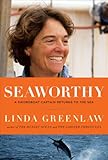
Review: Seaworthy, by Linda Greenlaw

Seaworthy
Seaworthy
Linda Greenlaw
Viking, 256 pages
June, 2010
Read the first chapter for free >> or Buy this book from Amazon.com >>

Product Description (from Publishers Weekly):
After a 10-year hiatus from blue-water fishing, Greenlaw (Hungry Ocean) went cautiously to sea, seeking a payday and perspective on her life. Thanks to The Perfect Storm phenomenon (both book and film), she was celebrated as America’s only female swordfish boat captain. She was now also a mother and an author who relished a new challenge, traveling 1,000 miles from her Maine home with an eager crew of four guys—three of them experienced sailing buddies—looking for swordfish on the 63-foot, six-and-a-half–knot steel boat Seahawk on the Grand Banks of Newfoundland. It was a 52-day trip—and a sensational misadventure. Nearly everything that could go wrong, did, including her arrest for illegally fishing in Canadian waters. Greenlaw chronicles it all—a busted engine, a malfunctioning ice machine, squirrelly technology—with an absorbing mix of nautical expertise and self-deprecation. After inspecting the Seahawk, Greenlaw calls it rough, but stable and capable. Then she writes, “Although I was referring to the boat, I couldn’t help thinking the same could be said of her captain.” From mishaps to fish tales, Greenlaw keeps her narrative suspenseful. Between bad luck and self-doubt, she moves from experience to wisdom, guiding both crew and readers on a voyage of self-affirmation.

The thing about Linda Greenlaw’s books is that even if you have no real interest in commercial fishing, her storytelling style is so engaging, that for a moment at some point, you’ll wish you were on the boat with her. Well, you will if you’re not me. I love scented bubble baths, mochas, and mani-pedis too much to ever live the rough life of a fisherman, though I’ll admit that it must be nice to spend weeks at a time without all those ads exhorting you to “watch this” or “click here.”

Like many people, my first introduction to Greenlaw was through the book and the movie The Perfect Storm, but my first introduction to her writing was one of her books about lobstering and living on an island – I still haven’t managed to read The Hungry Ocean (I really want to, though). So this book, Seaworthy was my first experience with Greenlaw writing about her first passion, sword fishing, and for a moment, even I did want to be there.

Greenlaw’s writing, though, is so vivid that you almost are there with her in the wheelhouse of her boat, listening as she leads her crew into a battle against the sorry shape of their boat, the fish, the sea, the weather, and the calendar. It’s her first time back on a sword boat in ten years, and she admits to feeling rusty, but capable. Her crew, made mostly of people who have spent their lives fishing, clearly has deep respect for her, and if their interactions seem casual to the reader, then it’s best to remember that this is not a ship at war, but a commercial fishing boat.

It was only a line item at the end of the acknowledgments that made me realize Seaworthy was somehow connected to the Discovery Channel’s series Swords: Life on the Line which I vaguely remembered seeing ads for (I’m so talented, I missed both season one AND season two, however, despite the fact that they follow Shark Week, and you all KNOW I LOVE Shark Week.). Netflix had season one streaming, however, so while I was in bed with a nasty cold over the weekend, I watched all eight episodes.

The events relayed in Seaworthy roughly coincide with season one of Swords but the book includes events not shown in the series, and also goes into more detail. I’m looking forward to the second season, when it’s available on DVD or in streaming format.

As for this book, I read it in Kindle format, so I’ll probably have to archive it to save space at some point, but it’s definitely something I plan to re-read. It was a wonderful memoir, full of jeopardy and laced with humor. That Greenlaw went back out on a sword boat the next year, explains much about both the author, and the book.

Goes well with grilled cheese sandwiches and tomato soup.

Review: The Wave: In Pursuit of the Rogues, Freaks and Giants of the Ocean by Susan Casey

The Wave
The Wave
Susan Casey
Doubleday, 352 pages
September, 2010
Read the first chapter for free >> OR Buy the book from Amazon.com >>

Description (from Publisher’s Weekly):
Casey, O magazine editor-in-chief, travels across the world and into the past to confront the largest waves the oceans have to offer. This dangerous water includes rogue waves south of Africa, storm-born giants near Hawaii, and the biggest wave ever recorded, a 1,740 foot-high wall of wave (taller than one and a third Empire State Buildings) that blasted the Alaska coastline in 1958. Casey follows big-wave surfers in their often suicidal attempts to tackle monsters made of H2O, and also interviews scientists exploring the danger that global warning will bring us more and larger waves. Casey writes compellingly of the threat and beauty of the ocean at its most dangerous. We get vivid historical reconstructions and her firsthand account of being on a jet-ski watching surfers risk their lives. Casey also smoothly translates the science of her subject into engaging prose. This book will fascinate anyone who has even the slightest interest in the oceans that surround us.

I was browsing books on the Kindle when I came across the latest from Susan Casey, who wrote one of my favorite books, The Devil’s Teeth: A True Story of Obsession and Survival Among America’s Great White Sharks about the white sharks near the Farallon Islands, and the scientists who observed them. I love ocean stories, have been reading a lot of memoirs lately, and knew the author’s work, so I tried the sample chapters and was instantly hooked.

What I love about Casey’s work is that she blends science with interviews and personal observation, and The Wave combined all three to perfection. While the chapters didn’t always alternate between scientists and surfers, most of them did, and looking at waves from these two, radically different perspectives really worked. As I was reading, I could almost feel a surfboard beneath my feet (and I don’t even surf!) and taste the salty tang of ocean air.

If you love the ocean, are fascinated by climate change, or are just seeking a glimpse into the life of big-wave surfers, this book is for you.

Goes well with clam chowder and a cup of brisk, black tea.

Green Books Campaign: Bayou Underground: Tracing the mythical roots of American popular music, by Dave Thompson

Bayou Underground
Bayou Underground: Tracing the mythical roots of American popular music
Dave Thompson
Paperback, 256 pages
ECW Press, September 1, 2010
Printed on FSC-certified paper that is 30% recycled/post-consumer waste product
Buy this book from Amazon >>
Live in CANADA? Buy this book from Indigo

This review is part of the Green Books campaign. Today 200 bloggers take a stand to support books printed in an eco-friendly manner by simultaneously publishing reviews of 200 books printed on recycled or FSC-certified paper. By turning a spotlight on books printed using eco- friendly paper, we hope to raise the awareness of book buyers and encourage everyone to take the environment into consideration when purchasing books.

The campaign is organized for the second time by Eco-Libris, a green company working to make reading more sustainable. We invite you to join the discussion on “green” books and support books printed in an eco-friendly manner! A full list of participating blogs and links to their reviews is available on Eco-Libris website.

Product Description (from the publisher):
Permeating the shadows and the darkness of the bayou—a world all its own that stretches from Houston, Texas, to Mobile, Alabama—this study of marsh music leaves New Orleans to discover secret legends and vivid mythology in the surrounding wilderness. The people and the cultures that have called the bayou home—such as Bob Dylan, Jerry Reed, Nick Cave, Bo Didley, and a one-armed Cajun backwoodsman and gator hunter named Amos Moses—are unearthed not only through their own words and lives but also through a study of their music and interviews with visitors to and residents from the region. The interviews with Jerry Reed and Bo Didley, who both died in 2008, are among the last, emphasizing the book’s importance as a piece of cultural preservation. Part social history, part epic travelogue, and partly a lament for a way of life that has now all but disappeared, this is the gripping story of American music’s forgotten childhood—and the parentage it barely even knows.

Bayou Underground doesn’t come with a digital download code or CD of all the music it references – it couldn’t possibly offer ALL the tracks anyway, but from the very first page of the introduction, I was wishing that at least the tracks being used as chapter titles were available for me to listen to while I read, because while I’d heard of some of them, others were new to me. Despite this, however, Thompson’s book, which is part music history, part memoir, part Americana, had me instantly hooked.

Partly, I suppose I fell into this book after picking it from the list offered for this year’s EcoLibris Green Books Campaign because the combined forces of HBO’s two Louisiana-based series, True Blood and Treme – and especially the latter with it’s special devotion to the music of New Orleans – have had me on a personal mission to better educate my musical ear with respect to blues and jazz this year, and partly it’s because Thompson is an amazing writer, and knows how to hook an audience with a strong opening chord. In this case the first chapter, or “track one” opens with an exploration of Elvis Presley and “swamp rock,” but even though the author leads with a headliner, the book only gets better from there.

Like me, Thompson was inspired by literature. He specifically cites Anne Rice’s first vampire novel Interview with the Vampire (a favorite of mine since I read it when I was 17) and Barry Jean Ancelet’s Cajun and Creole Folktales as the two books that drove him toward a deeper exploration of the music of Louisiana – and I mean ALL the music. He dissects the differences between Cajun and Creole tunes, talks about jazz, blues, and rock, and turns this book into, not just a guided tour, but almost a seance, calling the great musicians – some famous, others less so, into the reader’s presence.

While the music history was fascinating (and sent me to iTunes and / or Napster more than once while I read this book, which I’m going to have to re-read, because I think I missed bits) it was the mythology, folklore and culture that I most appreciated. From local in-jokes about needing directions to a chapter that references Swamp Thing, alligator changelings and the Loup-Garou, not to mention those vampires (both the Rice and Charlaine Harris (Southern Vampire Mysteries) versions), this book is murky, moody, and marvelous, and if you’re anything like me you’ll find your toes a-tapping and your spine a-shivering, often at the same time.

Bayou Underground is a must-read for any serious scholar of American pop music, or American pop culture, as well as for anyone who just wants to know where Louisiana music got it’s distinctive sound.

Goes well with crawfish po’boys and cold beer, or beignets and cafe au lait…or both.

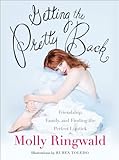
Review: Getting the Pretty Back, by Molly Ringwald

Getting the Pretty Back
Getting the Pretty Back: Friendship, Family, and Finding the Perfect Lipstick
Molly Ringwald
Buy from Amazon >>

Summary (from Publishers Weekly):
Famous for her roles as an angst-ridden teen in John Hughes classics like Pretty in Pink, Sixteen Candles and The Breakfast Club, Ringwald, now a 40-year-old wife and mother living largely outside the celebrity spotlight, seems a credible source of advice for young women and a likely fount of behind-the-scenes Hollywood anecdotes; unfortunately, she provides little of either in this uninspired self-help memoir. Like a well-meaning but distant friend, the actress shares advice and observations on topics like love, clothes, and food, often focusing on the inane and obvious (souvenir t-shirts are both ugly and ill-fitting; rushing into sex is usually a mistake) rather than the personal or perceptive: “When you’re a teenager, you’re forever thinking: Do they like me? When you’re a grown-up… the question becomes: Do I like them?” Ringwald occasionally involves her personal history, including the fact that the early stages of her romance with husband number two were mostly conducted over email, but she skimps on the details that her fans are probably looking for, with surprisingly little reference to the movie work that made her an icon of suburban youth in the 1980s. Color illustrations.

When my friend Deb told me she had a copy of Molly Ringwald’s book, I immediately asked if I could borrow it when she was through. I finally had a chance to read it earlier this week, and I loved it.

First, let’s be clear, in this book Ringwald gives advice on health, fashion, self-esteem, love and any number of things we women need advice about, without claiming to be an expert in any of those. In fact, she freely admits she’s sharing her own experiences in the hope that others will gain from the life lessons she’s learned. Also? She’s the kind of person – at least as presented here – that you’d be instantly comfortable meeting for a cappuccino, or hanging out with at the bookstore. For an actor, she’s incredibly real and accessible. So, don’t expect her to wax rhapsodic about hoodia gordonii or plastic surgery. She’s all about small, common sense changes.

As to my impressions of the book – I loved it! She’s not telling us anything that Tim Gunn doesn’t tell women every day, but she’s filtering it through her own experiences – especially where turning forty, having children later in life than the current trend, and marrying a younger man are involved. She’s candid in the way that someone you grew up watching in cool movies but isn’t actually someone you know seems candid. She’s playful. She’s self-deprecating.

She’s a thoroughly engaging writer, and this is a thoroughly engaging book.

If you’re over thirty-five, you NEED this book. If you’re under thirty-five, go rent Pretty in Pink, Sixteen Candles, and For Keeps and then go buy this book.

Because it really is a wonderful compilation of whimsical turns of phrase and really good advice.

Goes well with French onion soup and a glass of wine.

Review: When Life Throws You Lemons, Make Cranberry Juice, by Shari Bookstaff

When Life Throws You Lemons...
When Life Throws You Lemons…Make Cranberry Juice
Shari Bookstaff
Buy from Amazon >>

Product Description (from Amazon.com):
When my kids were learning to walk, I remember walking behind them, ready to catch them if they stumbled backward. I never dreamed that thirteen years later my kids would be walking behind me, ready to catch me if I stumble backward. I was 42 years old when I was diagnosed with a benign, operable brain tumor in July 2006. Doctors predicted a short hospital stay followed by a speedy recovery. Complications arose, giving me lifelong obstacles that I never could have prepared for. A divorced mother of two beautiful, talented, wonderful children, I had high hopes for a bright and happy future. I tried online dating, which got me a few cups of coffee, but no real dates. A couple of dating disasters later, my dating karma was beginning to change when my brain tumor was diagnosed. My life since that fateful day has been focused on regaining basic human functions: breathing, swallowing, walking, etc. I am working again, and trying to be a good mother to my two beautiful, talented, wonderful children. Putting a positive spin on life’s disasters doesn’t always work, but looking for, and accepting, positive things in spite of life’s disasters works. Instead of making lemonade out of lemons, I add life’s sweet sugar and cranberries to my lemons. This makes life much more palatable.

First I have to say that the title When Life Throws Lemons…Make Cranberry Juice, is perfect. It completely conveys author Bookstaff’s feisty attitude. She’s been through a hellish experience and is still dealing with it, but she’s retained her sense of humor, and that’s admirable.

What I really loved about Bookstaff’s book was that she’s really candid. She talks about how her brain tumor affected her life, her work, her family and while she isn’t bringing us into the bathroom with her, we still get a really good picture of her life, with situations that probably everyone with any kind of disability foes through – friends not knowing how to act, or merely drifting away, having to re-learn to do some of the things most of us don’t even think about, and having to be a support system for her children while needing support herself.

While I enjoyed Bookstaff’s voice in this book, however, there were times when the structure felt a little uneven, as if she’d taken us from point A to point R and then we were backtracking to point C and heading for point W, before getting to the end.

That aside, however, I found this book to be entertaining, educational, and enlightening.

Also, it made me want cranberry juice, with lime.

Goes well with a tall glass of cranberry juice and a slice of lemon pound cake.

Review: Cybill Disobedience, by Cybill Shepherd

Cybill Disobedience
Cybill Disobedience
Cybill Shepherd
Get it from Amazon.com >>

I have to confess: I really only read Cybill Shepherd’s autobiography, Cybill Disobedience, because I saw it listed as a free digital download on KindleIQ.com, and while I do have standards, I’ll read anything from the backs of cereal boxes to eye wrinkle cream reviews if I’m doing it to test out a new toy. Or at least, the fact that it was a free download was why I began reading Shepherd’s book. She’s so honest and engaging, and funny, however, that very soon I was reading it for its own sake.

The thing about celebrity memoirs is that they’re more interesting if you have a decent working knowledge of the author’s body of work. In the case of Ms. Shepherd, I knew her from Moonlighting and the later sitcom that bore her name – Cybill, and liked both. I also remember her Loreal commercials (for hair color, not for eye wrinkle cream), and sometime in the last year she was in a Hallmark movie (or maybe it was a Lifetime movie?) about a divorced empty-nester who resumes her college education, which movie I quite liked. I knew nothing about her career in film from the decades before Moonlighting, nor had I any clue of her politics or her relationship history.

After reading the book, I was left awed by how very cool Cybill Shepherd is, politically and personally. She’s the kind of person I’d love to have as an ‘affectionate’ auntie, or stand next to in a protest march, and her book was entertaining, interesting, as candid as possible without jeopardizing the semblance of privacy her family needs, and really sort of compelling.

Goes well with sweet tea and barbecue.

Review: Fixing Freddie, by Paula Munier

Fixing Freddie
Fixing Freddie
by Paula Munier
Visit Amazon.com for a copy of your own.

When I was offered the opportunity to review Paula Munier’s wonderful book, Fixing Freddie: a true story about a boy, a mom, and a very, very bad beagle, I was excited. I’ve been in a non-fiction mood lately, and I love dog stories, so this seemed like the perfect match for my tastes.

Like someone already skinny who is taking clinicallix to lose weight, I was not disappointed. Munier’s first person account of her marriage, divorce, cross-country move, and first foray into home ownership and puppy parenthood is told with a blend of candor and humor that felt as if she was sitting in my living room telling me about her life. I could see her son playing video games, smell the roasted chicken that the dogs (Freddie had an older friend named Shakespeare), and see Freddie’s cute face. In fact, I was so caught up in the book that I brought it into the bath with me, despite my personal policy against reading hardcovers in the tub. It was that gripping.

Maybe it’s because I have three dogs of my own, at ages 10, 3 and 1.75, two of which I’ve had since they were eight weeks old (the oldest and the youngest) that I could sympathize when Freddie escaped from the yard, got caught on a frozen lake (my dogs have all done the former; my oldest dog has fallen into the swimming pool several times), or eaten something he shouldn’t (Miss Cleo and my chihuahua, Zorro, now at the Rainbow Bridge have eaten things as diverse as an entire t-shirt, the backs of my suede shoes while I was wearing them, the string from a roast, half a London broil, a stick of butter, and, once, all the topping from a pizza, though they left the crust and closed the box when they’d finished), or maybe it’s just that in Freddie we see the lost puppy in all of us – the part of our human selves that wants someone to direct us where to go, feed and bathe us regularly, and let us curl up in a warm bed, in exchange for mere affection and coming when called.

Or maybe it’s just that any woman who’s ever dated (or married) a man can understand Munier’s frustration with that species.

Or maybe it’s because Munier’s story is universal, and boils down to the search for a safe haven and a cozy home.

Fixing Freddie may be essentially a “dog story,” but it’s also a memoir about life and love and growing up, and letting go.

Even if you’re a cat person – even if you don’t even have a pet rock – you will enjoy this book, and come away from it with a new perspective.

Goes well with: roasted chicken, and a begging dog.